


Zucchini Is One of the Safest Veggies for Dogs. The Bitter One Is the Exception.
Zucchini is low-calorie, dog-safe, and easy to feed raw or cooked. But there's one zucchini you should never hand your dog: a bitter one. Here's the compound behind that rule, and how to feed the rest.

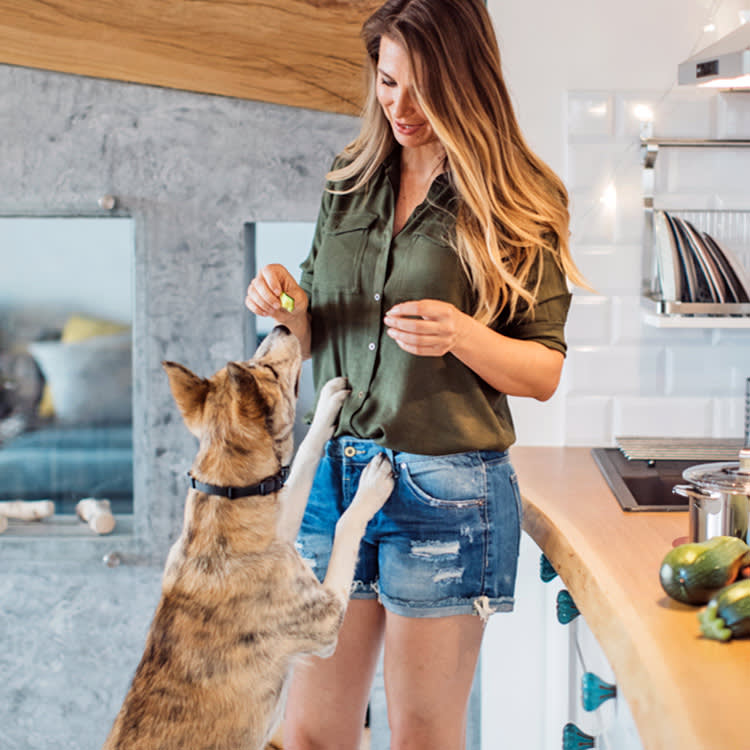
Zucchini lands near the top of the “safe vegetables for dogs” list, and it deserves to. It is low in calories, easy to prepare, safe raw or cooked, and packed with a bit of nearly everything useful. For a dog who could stand to snack lighter, it is one of the easiest yes-foods in the kitchen. There is really only one zucchini you should never feed your dog, and it is not the one people worry about.
It is not the raw one, the seedy one, or the big one. It is the bitter one. And that single exception is the part of the zucchini story that almost never gets told, even though it is the only part that can actually make a dog sick.
Why zucchini is such an easy win
Start with the good news, because most of this vegetable is good news. Zucchini is safe for dogs raw, steamed, boiled, grilled, or roasted, as long as you skip the seasonings. It brings vitamin C for the immune system, vitamin A for eyes and skin, potassium for muscles and nerves, fiber for digestion, and antioxidants, all wrapped in a low-calorie package that suits diabetic and overweight dogs especially well.
Raw versus cooked is a real choice, but a low-stakes one. Raw zucchini holds the most nutrients and makes a nice cooling summer crunch, though it is a touch harder to digest, so chop or grate it small. Cooked zucchini is softer and gentler on the stomach and the easiest to chew. Steaming or boiling with no additives is the best way to cook it. Either way, you have a safe treat.
Zucchini is about as forgiving as vegetables get for dogs, with one real exception people never hear about. If a piece tastes bitter, don’t feed it. That bitterness is the plant telling you it’s loaded with compounds that will make your dog throw up. Trust your tongue and toss it.
The bitter exception, explained
Here is the rule worth remembering above all others: taste the zucchini before you give it to your dog. Most zucchini is mild and sweet. But some, particularly homegrown or stressed plants, develop high levels of natural compounds called cucurbitacins, and those zucchini taste distinctly, unpleasantly bitter. Cucurbitacins are what cause “toxic squash syndrome,” and even small amounts of a genuinely bitter squash can trigger vomiting and diarrhea. Human cases exist, and animals are vulnerable too.
You do not need a test kit. The bitterness is the warning label. If a piece of zucchini tastes sharply bitter to you, do not feed it to your dog, and honestly, do not eat it yourself. A normal, mild-tasting zucchini from the grocery store is almost never a problem. This caution is really about the odd bitter one, and it costs you nothing to check.
The ordinary cautions
Beyond the bitter exception, zucchini’s risks are the usual gentle ones:
- Too much causes gas or diarrhea, especially if your dog isn’t used to veggies. Start small.
- Big pieces are a choking hazard for some dogs. Cut it into bite-sized bits.
- The add-ins are the real danger. Zucchini cooked with onion, garlic, butter, salt, or spices stops being safe. Serve it plain.
How to prepare and portion it
Preparing zucchini for a dog is genuinely simple: wash it, remove the seeds if you like, cut it into small pieces, and steam or boil it without seasoning, or serve it raw and grated. It pairs well with lean protein and plain rice, or works as a food topper.
On amount, keep zucchini and all treats to about 10 percent of your dog’s daily calories. A workable guide is one to two small pieces for a small dog, three to four for a medium dog, and up to half a cup for a large dog per serving. As with any new food, start with a little and watch how your dog reacts.
What newer research adds
Zucchini’s low-calorie profile is exactly the kind of thing vets are leaning on as dog weight climbs. Recent pet obesity surveys estimate a large majority of dogs now score overweight or obese by body condition score, and in 2024 far more owners than the year before recognized their dog was heavier than ideal. Watery, low-calorie vegetables like zucchini fit neatly into that picture as a way to add volume and crunch without much energy.
The core guidance is unchanged: manage weight with portions and movement against a balanced diet, and use zucchini as a smart low-calorie treat inside that plan rather than a free-for-all.
The bottom line
Zucchini is one of the safest, easiest vegetables to share with your dog, raw or cooked, and a fine low-calorie treat for a dog watching their weight. Keep it plain, keep the pieces small, and remember the one rule that actually matters: taste it first, and if it’s bitter, throw it out.
References
- Scientists Highlight Zucchini Poisoning Case — Food Safety News
- Poisoning by Non-Edible Squash: Retrospective Series From French Poison Control Centers — Clinical Toxicology
- 2024 Pet Obesity Survey Results — Association for Pet Obesity Prevention
Common questions
Is raw or cooked zucchini better for dogs?
Both are safe. Raw zucchini keeps the most nutrients but is a little harder to digest, so chop or grate it. Cooked (steamed or boiled, no seasoning) is softer and easier to chew and digest.
Why should I taste zucchini before giving it to my dog?
A bitter zucchini can contain high levels of cucurbitacins, natural compounds that cause vomiting and diarrhea. If a piece tastes noticeably bitter, throw it out rather than feeding it to your dog.
How much zucchini can a dog eat?
Keep it to about 10 percent of your dog's daily calories. A rough guide is one to two small pieces for a small dog, three to four for a medium dog, and up to half a cup for a large dog.
Not a substitute for your vet. Our guidance is educational. For urgent symptoms, contact a vet or emergency clinic right away. Editorial standards
Dr. Park is a board-certified emergency and critical care specialist. She reviews our health and safety content for clinical accuracy and contributes guides on recognising urgent conditions. Her focus is helping owners act quickly and correctly when it matters most.
Meet our experts ↗Keep reading
 FoodLettuce Does Almost Nothing for Your Dog. Here's When It's Still Worth Feeding.Dr. Amara Solis · 5 min
 FoodTwo Goldfish Crackers Are Fine. Here's the Number That Isn't.Dr. Mara Chen · 5 min
 FoodWith Peanuts, Read the Jar Before You Read the DogDr. Lena Park · 7 min
 FoodThe Fruit Is Never the Problem. It's the Pit, the Skin, and the Seasoning.Dr. Priya Nair · 8 min
 FoodScrambled Eggs Are Great for Dogs. Your Skillet Is the Problem.Dr. Mara Chen · 6 min
 FoodPopcorn Is a Great Dog Treat, Until You Touch the ToppingsDr. Priya Nair · 7 min