


Your Cat's Temperament Isn't Fixed. It's a Daily Negotiation
A study of 3,100 owners tied human personality to cat wellbeing, and it reads like a verdict. It isn't. The thing that actually reaches your cat is a handful of daily habits, and those you can renegotiate anytime.

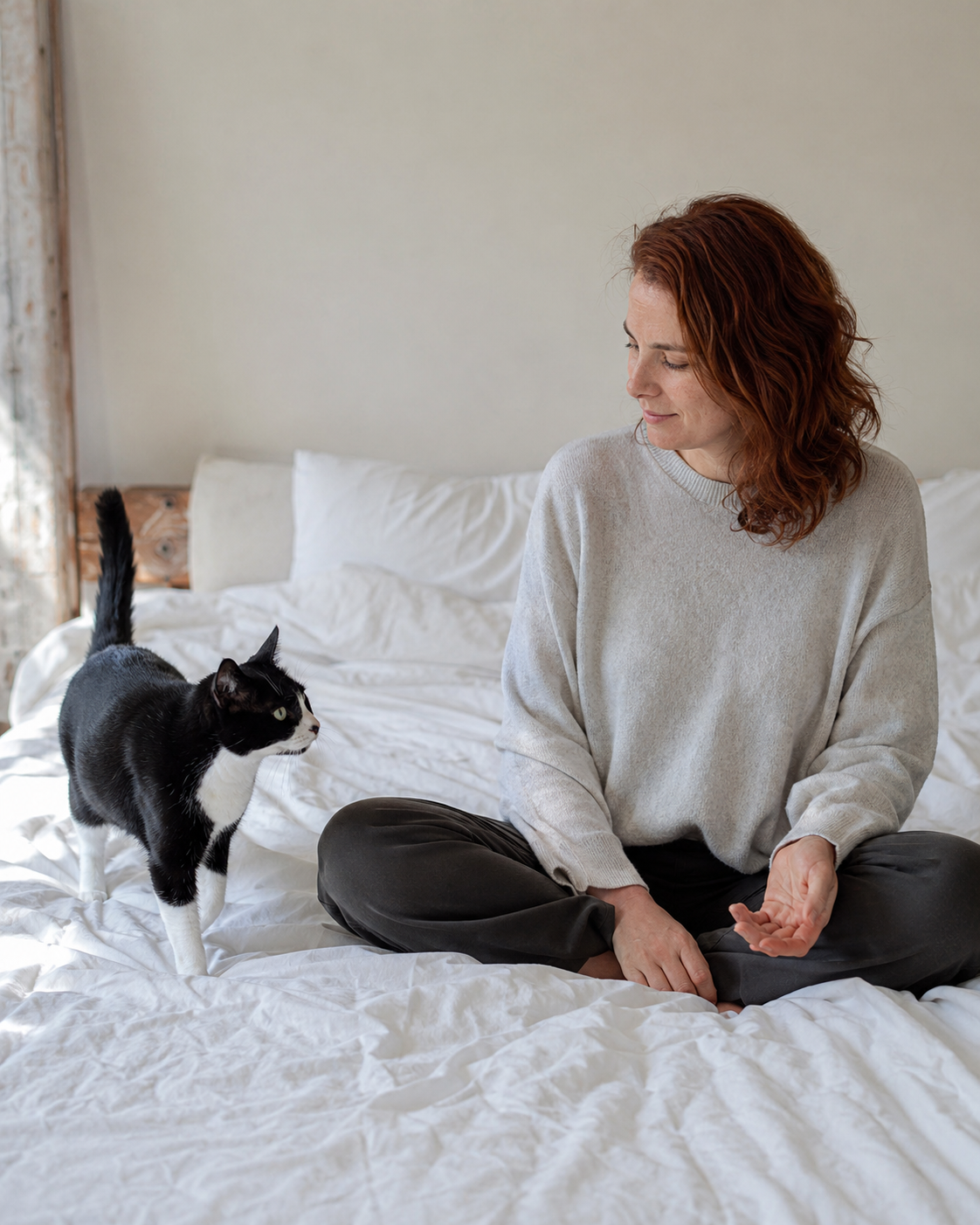
There is a study that people love to share with a wince, because it seems to say your cat’s anxiety is your fault. Neurotic owners, anxious cats. Agreeable owners, calmer and healthier ones. Read as a personality verdict, it is bleak, and it is also useless, because nobody can swap out their temperament on a Wednesday. So throw out the verdict reading. The useful truth underneath it is that your cat’s day-to-day mood is not a fixed trait you were assigned. It is the running total of small interactions, and every one of those interactions is a choice you get to make again tomorrow. Temperament, in other words, is negotiated daily. You are always at the table.
First, an honest diagnostic
Before any fixing, figure out what you are actually looking at. When a cat reads as “difficult,” it is almost always one of two things, and they point in opposite directions.
The first is a cat who is simply wired for less contact. Standoffish is not damaged. Some cats want to admire you from three feet away and find a lap oppressive, and that is a preference, not a problem to solve. The second is a cat who has learned that being near you carries risk, because contact tends to arrive uninvited, go on too long, or end in something they hate. That cat is not aloof by nature. That cat is managing you. The whole game is telling these two apart, because the first needs to be respected and the second needs the pressure taken off. Both, notice, are answered by the same three habits.
The three levers that actually reach a cat
Set personality aside and look at what separates the calm households from the anxious ones, and it comes down to a short, boring, powerful list.
Believe the “no” the first time. When your cat pulls away, flattens their ears, twitches their tail hard, or gets up and leaves, take it at face value and stop. Forced handling is the single most common way owners manufacture the exact anxiety they then complain about. Letting a cat opt out is not neglect. It is the entire foundation of trust, and it is the fastest thing on this list to start doing today.
Guarantee a real exit. Every cat needs somewhere to step fully out of the household’s social life: a high perch, a closet shelf, a covered bed, a quiet room. Humans decompress in solitude and cats are no different. A cat who can always leave rarely needs to escalate to a swat or a hide, because the escape valve is built in.
Fit the affection to this specific animal. Learn where and how your cat likes to be touched, most want the cheeks and chin and not the belly or the base of the tail, and let that map, not some default picture of a cuddly pet, set the terms. Chasing a reluctant cat with more affection is the classic error, and it backfires every time.
People try to fix a standoffish cat by pursuing it harder, and that is exactly backward. The cat settles when the pressure comes off, not when you turn it up. Respecting a cat’s no, giving them an exit, not forcing contact, those correlate with calmer cats, and anyone can practice them regardless of their own temperament. Meet the cat you have.
Run a one-week pressure audit
Here is a concrete exercise the original research never offered. For one week, keep a tally of every interaction you start with your cat, and mark each one: did the cat choose it, or did you impose it? Picking them up, moving them off the counter, holding them for a photo, and continuing to pet after the skin twitches all count as imposed. Most people are startled by the ratio. Simply shifting a handful of imposed contacts into chosen ones, waiting for the cat to come to you, ending the pet before they ask you to, is often the entire fix. You are not becoming a calmer person. You are lowering the number of times a day you override the animal.
What the study actually found
Researchers publishing in PLOS ONE surveyed more than 3,100 cat owners, measuring the owners’ Big Five personality traits (agreeableness, conscientiousness, extroversion, neuroticism, openness) against their cats’ health and behavior. Two links stood out: higher owner neuroticism tracked with more anxious or fearful cats, stress-related illness, and ongoing medical issues, while higher agreeableness tracked with healthier, friendlier, more open cats. The framing came from parenting research, where a dependent child’s environment, above all the parent, shapes a large share of who they become. Cats, the authors reasoned, live under strikingly similar conditions: dependent, home-bound, and tuned to one household’s emotional weather all day.
The crucial line, though, is the one the headlines drop. The authors were explicit that this is correlation, not causation. A stressful week does not rewrite your cat, and being cheerful does not guarantee a cheerful cat. For plenty of people a cat is a genuine source of comfort through hard mental-health stretches, and nothing here suggests your low mood contaminates your pet on contact. The link the study found is not personality reaching the cat by some invisible transfer. It is that certain personalities tend to come bundled with certain habits, and the habits are what land.
Why the biology backs the behavioral fix
If you want a mechanism, cat attachment research supplies one. Cats in secure, trusting relationships engage more and show fewer problem behaviors, while cats who feel crowded trend the other way. Even the bonding hormone follows the pattern: oxytocin tends to rise with contact the cat chooses and fall with contact that is forced on them. That is the whole argument in one sentence. Chosen closeness builds the bond; imposed closeness erodes it. Give the cat autonomy, a predictable routine, and a reliable exit, and the temperament question mostly answers itself, one negotiated interaction at a time.
References
- Finka, L.R., Ward, J., Farnworth, M.J., & Mills, D.S. “Owner personality and the wellbeing of their cats share parallels with the parent-child relationship.” PLOS ONE, 2019. doi.org/10.1371/journal.pone.0211862
- Vitale, K.R., Behnke, A.C., & Udell, M.A.R. “Attachment bonds between domestic cats and humans.” Current Biology, 2019. doi.org/10.1016/j.cub.2019.08.036
- American Association of Feline Practitioners. “AAFP Feline Environmental Needs Guidelines.” Journal of Feline Medicine and Surgery, 2013. catvets.com/environmental-needs
Dr. Park is a board-certified emergency and critical care specialist. She reviews our health and safety content for clinical accuracy and contributes guides on recognising urgent conditions. Her focus is helping owners act quickly and correctly when it matters most.
Meet our experts ↗Keep reading
 TrainingBreed Barely Predicts Your Cat's Personality. Here's the ProofDr. Ravi Mehta · 6 min
 TrainingYour Shoes Are the Most Interesting Thing You Own. Just Ask Your CatSasha Ford · 6 min
 TrainingScience Gave Your 'Unknowable' Cat Five Personality Traits. Here's How to Read Yours.Dr. Mara Chen · 6 min
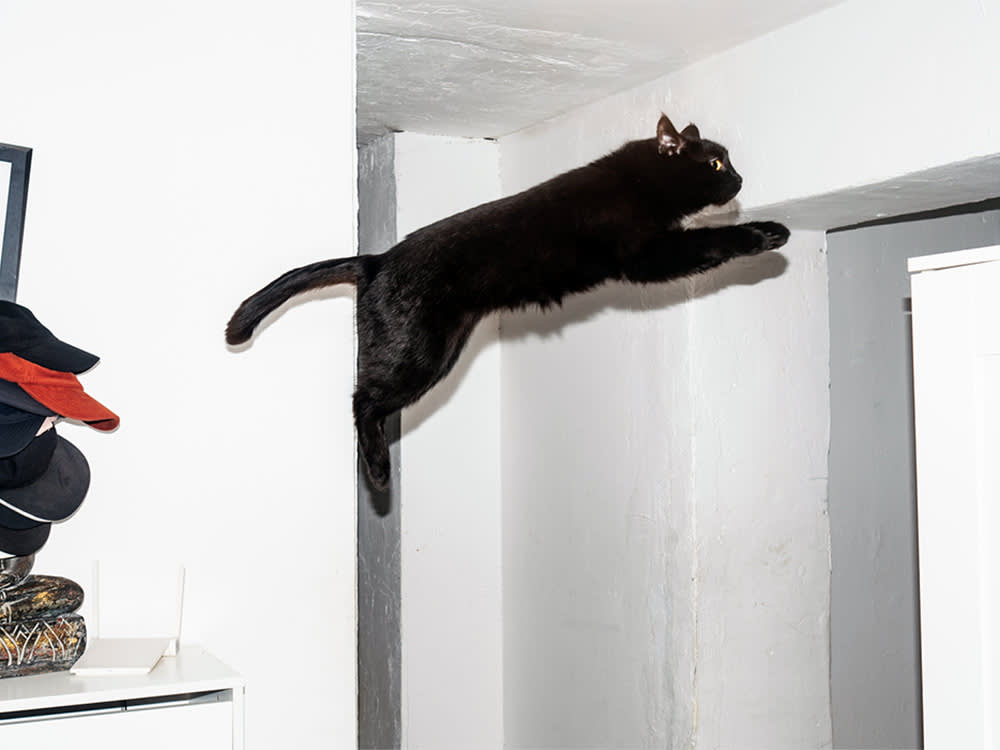 TrainingYour Cat Clears Eight Feet From a Standstill. Here's How.Dr. Amara Solis · 6 min
 TrainingKitten Biting Has a Closing Window. This Is What You Do in It.Dr. Amara Solis · 6 min
 TrainingThe Neck Bite Is Never the Problem. The Body Around It Is.Dr. Nina Kohl · 8 min