


Your Cat Might Be Catching Your Stress. A 3,000-Person Study Says So.
Researchers surveyed over 3,100 cat owners and found your personality tracks with your cat's health and behavior, the same way a parent's does with a child's. Here's the part you can actually do something about.

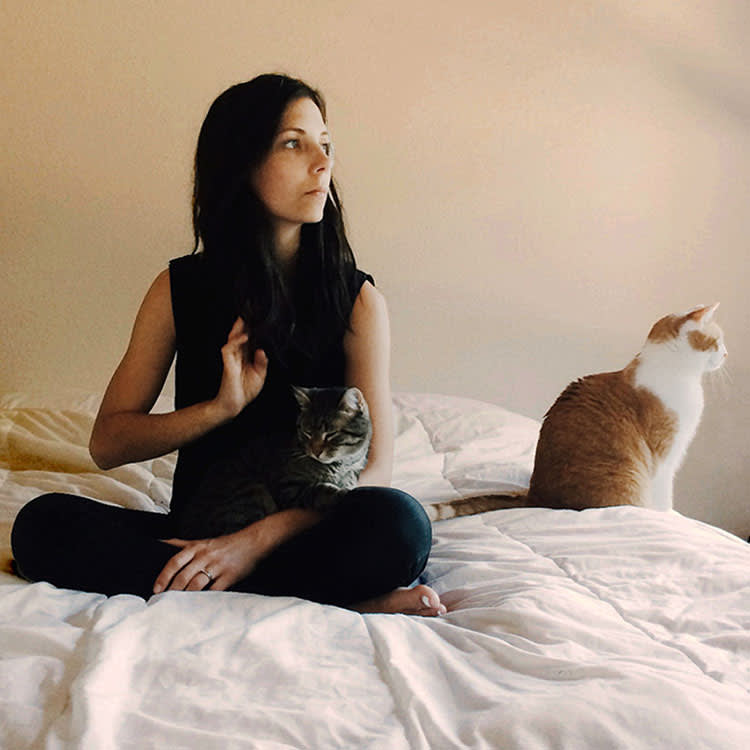
Every cat owner has looked at their pet mid-meltdown, or mid-standoff, and thought some version of “why are you like this?” A large study offers an answer that is a little uncomfortable to sit with: some of the time, the reason might be you.
Not in a blaming way. In the same ordinary, unavoidable way that children absorb the emotional weather of the adults raising them.
What the researchers actually found
A team led by Lauren Finka, along with Joanna Ward, Mark Farnworth, and Daniel Mills, surveyed more than 3,100 cat owners for a study published in the open-access journal PLOS ONE. They were hunting for a link between a person’s personality and the behavior and wellbeing of their cat. They found one.
The framing came straight from human developmental research. Studies suggest that only 30 to 60 percent of human personality traits are inherited, which leaves 40 to 70 percent shaped by environment, and the single biggest environmental factor is the parent-child relationship. The researchers wondered whether the cat-owner relationship worked similarly. So they measured owners on the “Big Five” personality traits and asked detailed questions about their cats’ health, behavior, and temperament.
The connections were real. Owners scoring high in neuroticism, the trait tied to anxiety and emotional reactivity, were more likely to report cats with anxious or fearful behavior, stress-linked illnesses, and even ongoing medical conditions. Owners scoring high in agreeableness tended to report healthier cats with friendlier, more open personalities.
Cats read us more closely than we think
The mechanism the researchers point to is not mysterious. Cats are intensely attuned to human behavior and emotion. They watch us, they learn our routines, and they respond to our states. A separate line of research has shown cats can even detect human stress through scent. So the idea that a household’s emotional tone would leave a mark on the resident cat is not a stretch, it is close to expected.
Cats are constantly sampling the emotional temperature of the home, and they don’t have the option to leave it. That doesn’t mean a stressed owner produces a broken cat. It means the cat is living inside your nervous system to some degree, and the kind thing is to give them room to step out of it when they need to.
The word the researchers keep coming back to: autonomy
Here is where the study becomes something you can use rather than something to feel guilty about.
Finka, the lead researcher, was careful to head off the guilt reading. She stressed that plenty of people living with anxiety or depression are also a great source of comfort to their cats, and that a low mood does not automatically transfer to a pet, any more than a good mood guarantees a happy cat. Correlation is not a curse. Your mood is not a transmitter beaming illness into your pet.
What she pushes instead is respecting a cat’s autonomy. The most protective thing an owner can do, especially an owner going through a stressful stretch, is not to manufacture calm they do not feel. It is to make sure the cat can regulate on its own terms.
In practice that means a few concrete things. Give your cat a genuine retreat, a quiet, elevated, or enclosed spot where it can withdraw from the social life of the home, including from you, without being followed. Read the signals that say “not now,” the flick of the tail, the lean away, the ears going sideways, and honor them instead of pushing for the cuddle. Let the cat choose when and how it gets attention, and where it likes to be touched. Do not put social pressure on an animal that recharges, as we do, with solitude.
None of that requires you to fix your own stress first, which is the quietly generous part of the advice. You cannot always control your anxiety. You can control whether your cat has somewhere to go when the house feels tense.
What newer research adds
The idea that pets pick up our stress has moved from intuition toward measurement. Beyond this survey, researchers have shown that dogs’ long-term stress hormone levels can track their owners’ over months, and that cats can distinguish the smell of a stressed human from a calm one. The direction of travel in the science is clear: companion animals are not sealed off from our emotional lives, they are wired into them.
Two cautions keep this honest. First, this was a survey, which captures what owners report about themselves and their cats, not clinical measurements of either, so the neat parent-child parallel is a strong hypothesis rather than settled fact. Second, correlation genuinely does not prove causation here, a point the authors made themselves. An anxious owner and an anxious cat may share a stressful household, a noisy building, or simply a temperament that drew them together. The practical response, giving your cat autonomy and escape routes, is worth doing either way, which is the best kind of advice: useful no matter which way the causation runs.
References
- Finka, L. R., Ward, J., Farnworth, M. J., & Mills, D. S. “Owner personality and the wellbeing of their cats.” PLOS ONE. journals.plos.org
- “Can cats smell your stress?” Related research on feline detection of human stress signals.
Common questions
Does this mean I'm making my cat sick if I'm anxious?
No, and the researchers were clear about that. Many people manage anxiety or depression and have perfectly healthy, happy cats. The finding is about tendencies across thousands of households, not a verdict on any one home. Your feelings do not automatically transfer to your cat.
What can I actually do about it?
The most useful lever is giving your cat autonomy: quiet retreat spaces, the freedom to opt out of handling, and no pressure to be social when they are not in the mood. You cannot control your own stress on command, but you can build an environment that lets your cat regulate around it.
Dr. Chen is a small-animal veterinarian who leads health and safety coverage at The Pet Times. She writes and reviews the bulk of our illness, condition, and safety content, translating clinical guidance into clear, practical advice owners can act on at home.
Meet our experts ↗Keep reading
 Health & WellnessThe Glow in Your Cat's Eyes Is a Free Eye Exam. Learn to Read It.Dr. Ravi Mehta · 8 min
 TrainingYour Cat Screams at 3am Because You Never Let It Finish the HuntDr. Mara Chen · 8 min
 TrainingThat 'Come Here' Cat Video Works. Your Own Voice Works Better.Dr. Lena Park · 7 min
 TrainingThat Sound Isn't a Meow. And It Isn't Good News.Dr. Lena Park · 8 min
 TrainingPaper Is the Best Cat Toy in Your House. It's Also a Trap.Dr. Ravi Mehta · 7 min
 Health & WellnessYes, Female Cats Spray. Spaying Doesn't Always Stop It.Dr. Lena Park · 7 min