


Yogurt Isn't a Health Food for Your Dog. It's a Brilliant Delivery Device
Plain yogurt is safe for most dogs, but its real value isn't the probiotics on the label. It's what yogurt lets you do: hide a pill, top a bland meal, or occupy an anxious dog. Here's how to use it well.

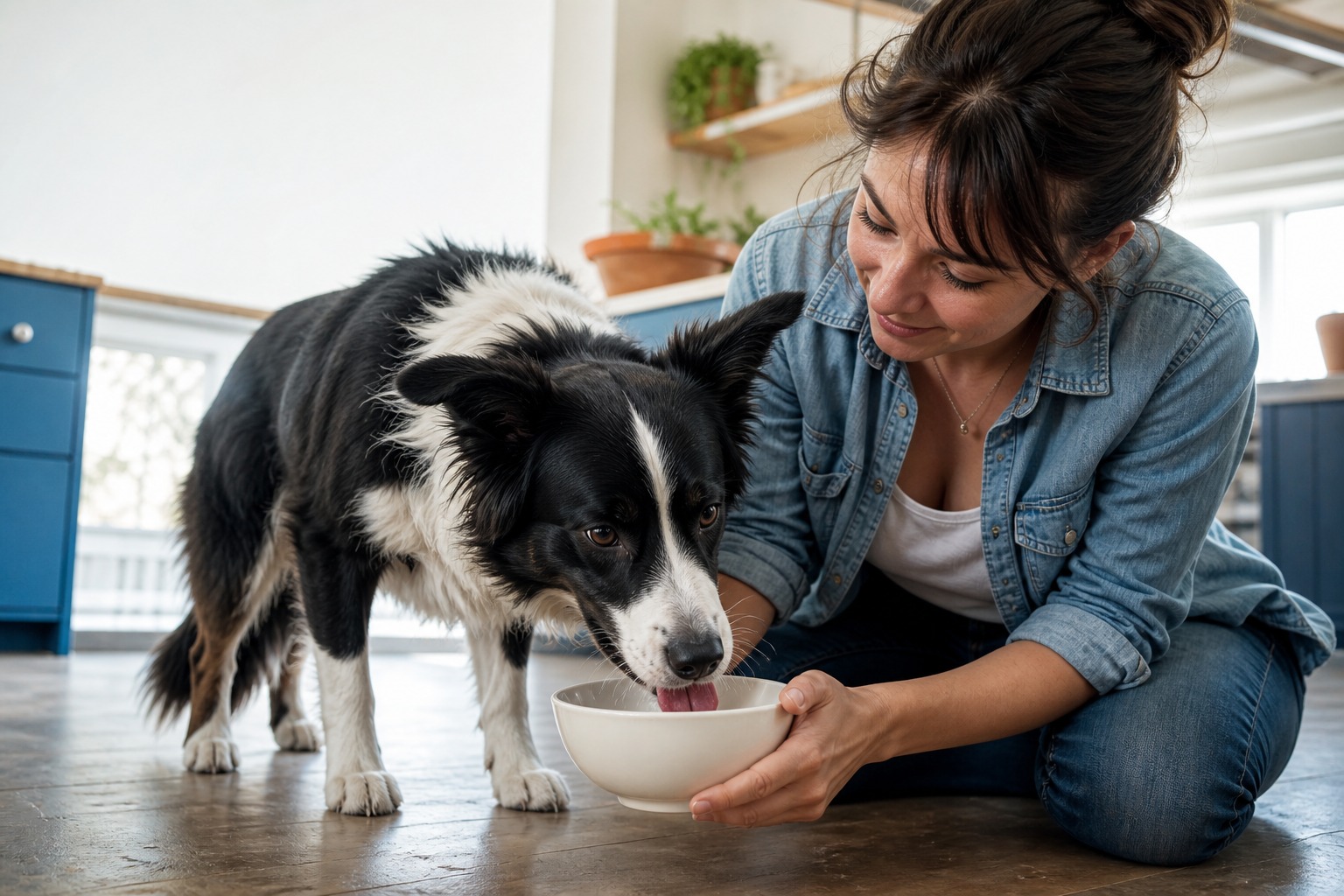
Search “can dogs eat yogurt” and you will get a hundred articles telling you the same thing: yes, in moderation, plain is best. All true, all a little beside the point. Because the interesting question is not whether yogurt is safe. It is what yogurt is for. And the answer that most owners miss is that yogurt earns its place in your fridge less as a health food and more as one of the most useful delivery devices you have for getting things into a dog. Understand it that way and you will use it far better.
First, the one label check that actually matters
Before anything else, the safety hinge: xylitol. This sugar substitute, sometimes labeled birch sugar, turns up in more and more “reduced sugar” and “sugar-free” dairy products, and it is genuinely dangerous to dogs, capable of causing a crash in blood sugar and liver damage. The FDA has flagged it repeatedly. So the single non-negotiable habit is to read the ingredient list on any yogurt before you share it, and to re-read it when you buy a new tub, because formulations change quietly. Everything else about yogurt is a preference. This one is a rule.
With that settled, plain unsweetened yogurt is safe for most dogs. Which brings us to the good part.
Why “delivery device” is the right frame
Think about the moments you actually reach for yogurt. You are hiding a pill your dog keeps spitting out. You are trying to get a picky or recovering dog to eat something bland. You are stuffing a toy to keep an anxious dog busy while you leave. In every one of those, yogurt is doing a job that has almost nothing to do with its nutrient panel. It is creamy enough to coat a pill, mild enough to make plain food appealing, and sticky enough to freeze into a long-lasting occupier.
That is where it shines:
- Pill camouflage. A dollop wrapped around a tablet works when pill pockets fail, and unlike some soft treats it is gentle on the stomach.
- The bland-meal booster. For a dog coming off a stomach upset, a spoonful of plain yogurt stirred into white rice and a little plain chicken can make an unexciting recovery meal worth eating. It is easy to digest and low in lactose compared with milk.
- The frozen occupier. Smear plain yogurt (with a little peanut butter and kibble) into a rubber stuffing toy and freeze it. You have just bought a busy, mildly separation-anxious dog twenty quiet minutes.
Plain yogurt is one of my favorite little tools, and I almost never recommend it for its probiotics. I recommend it because it solves problems. It gets the pill down, it makes the sad recovery bowl appealing, it keeps a nervous dog occupied. Just read the label every single time. Plain and unsweetened is the whole game.
The probiotic myth, gently corrected
Here is the piece that separates this from every other yogurt article: the probiotics are not the reason to use it. It is true that yogurt contains live bacterial cultures, and it is true that a balanced gut microbiome matters for dogs, with a growing body of research tying it to immune function, digestion, and even behavior. But two facts undercut yogurt as a reliable probiotic source.
First, live-culture counts in retail yogurt vary wildly and are not verified for dogs; the number of active organisms in the tub you bought is essentially unknown. Second, yogurt is fairly high in fat, which limits how much you would want to feed for a probiotic effect anyway. If your actual goal is gut support, a purpose-made canine probiotic with a guaranteed colony-forming-unit count on the label does the job far more dependably. Vets increasingly favor those species-specific supplements over food yogurt for exactly this reason. So enjoy yogurt for what it does well, and do not mistake it for medicine.
Choosing the right tub
When you do buy yogurt for your dog, the checklist is short. Look for plain, unsweetened, additive-free, made with active live cultures. Plain Greek yogurt is usually the smarter choice: it is thicker (which makes it a better pill-hider), higher in protein, and lower in lactose, so it sits easier with dogs that struggle with regular dairy. Skip fruit-flavored and vanilla yogurts entirely, since they carry excess sugar or artificial sweeteners. If you want a little sweetness, stir a few dog-safe fresh blueberries into plain yogurt yourself.
And watch the lactose. Some dogs are genuinely lactose intolerant, and yogurt, though lower in lactose than milk, can still cause an upset stomach or loose stools. Introduce it in a small amount and see how your dog does before making it a habit.
Where yogurt fits among other dairy and shareable foods
Yogurt is not the only dairy dogs can have in moderation. Cheese is high in protein and makes an excellent, high-value training treat, though it is fatty enough to stay occasional. Cottage cheese is another gentle option. Beyond dairy, safe sharing standbys include plain eggs and a little honey. The foods to keep firmly off the menu are the usual dangerous ones: chocolate, anything with onion or garlic (which rules out most mashed potatoes), and human ice cream, which can hide toxic ingredients.
The bottom line
Plain, xylitol-free yogurt is safe for most dogs, but its best use is functional, not nutritional. Reach for it to hide a pill, rescue a bland recovery meal, or occupy an anxious dog, and treat any probiotic benefit as a bonus rather than the point. Keep portions small, favor plain Greek, read every label, and let a real supplement do the real supplement work.
References
- Harvard T.H. Chan School of Public Health. “Yogurt.” The Nutrition Source. https://nutritionsource.hsph.harvard.edu/food-features/yogurt/.
- FDA. “Paws Off Xylitol; It’s Dangerous for Dogs.” https://www.fda.gov/consumers/consumer-updates/paws-xylitol-its-dangerous-dogs.
- Blake, A. B., and J. S. Suchodolski. “Importance of gut microbiota for the health and disease of dogs and cats.” Animal Frontiers, 2016. https://academic.oup.com/af/article/6/3/8/4638782.
Common questions
Does yogurt actually work as a probiotic for dogs?
Less than most people assume. Food yogurt is not tested for canine gut bacteria and its live-culture counts vary enormously, so a purpose-made dog probiotic with a guaranteed colony count is far more reliable if that is your goal. Yogurt's strength is as a tasty, versatile food, not a dependable supplement.
What kind of yogurt is safe for dogs?
Plain, unsweetened, additive-free yogurt with live cultures. Plain Greek yogurt is often the better pick because it is lower in lactose and higher in protein. Avoid fruit and vanilla flavors, and always scan the label for xylitol, sometimes listed as birch sugar, which is toxic to dogs.
How much yogurt can a dog eat?
Small amounts. Treats and extras should stay under 10 percent of your dog's daily calories, and yogurt is calorie-dense, so a spoonful for a small dog or a couple for a large one is plenty.
Not a substitute for your vet. Our guidance is educational. For urgent symptoms, contact a vet or emergency clinic right away. Editorial standards
Dr. Nair is a veterinarian focused on diet and feeding. She covers everyday nutrition, treats, and the many "can they eat this?" questions owners ask, grounding each answer in what is actually safe and sensible for dogs and cats.
Meet our experts ↗Keep reading
 FoodCantaloupe Is Great for Dogs. The Rind Is the Part That Isn'tDr. Nina Kohl · 5 min
 FoodZucchini Is One of the Safest Veggies for Dogs. The Bitter One Is the Exception.Dr. Lena Park · 4 min
 FoodOne Tater Tot Won't Kill Your Dog. The Fifth One Might Ruin Your Night.Dr. Ravi Mehta · 5 min
 FoodBlueberries Are the Rare 'Superfood' Your Dog's Aging Brain Actually UsesDr. Priya Nair · 5 min
 FoodMango Is Safe for Your Dog. The Skin Might Not Be Safe for YouDr. Priya Nair · 6 min
 FoodThe Carrot Is the Rare Treat You Can Feed Freely. AlmostDr. Priya Nair · 5 min