


Your Dog Can Love Winter. You're Just Sending Them Out Wrong.
A cold-weather playbook built around one idea: your dog's tolerance for cold is a number you can actually estimate, and everything else follows from it. Eight tips from the walker's beat.

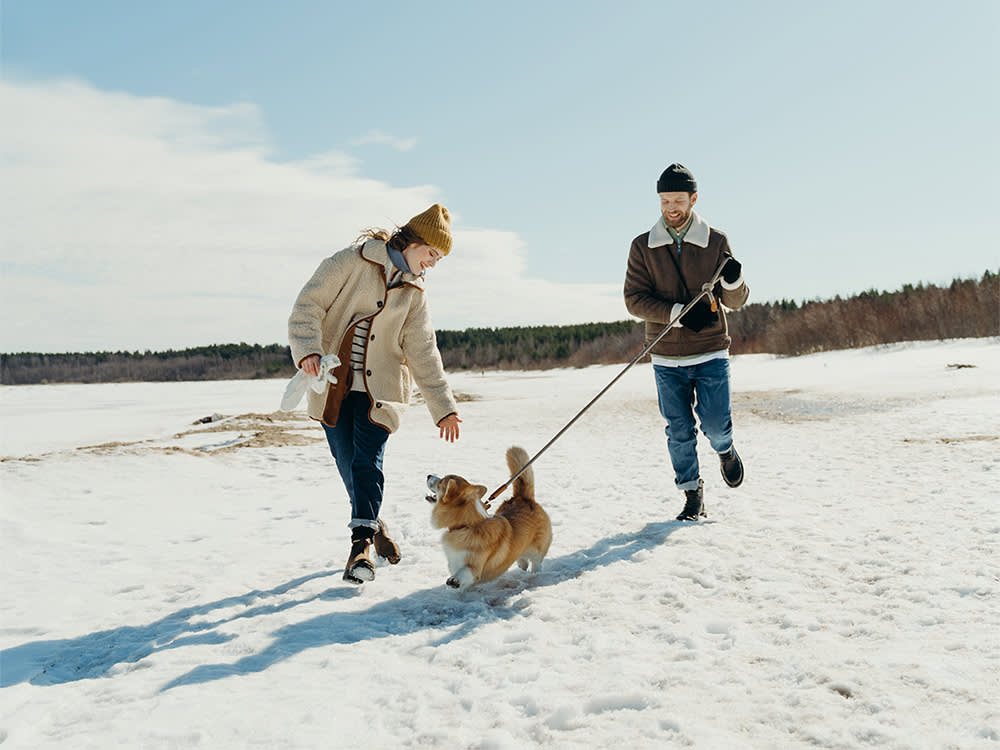
Being a dog’s person does not come with snow days. Whatever is falling out of the sky, there is a creature by the door who needs to pee, move, and burn off the energy that a blizzard does nothing to dampen. The good news is that winter dog care is not really about gritting your teeth through it. It is about one skill that makes every other decision easy: knowing, roughly, how much cold your specific dog can take.
Get that number in your head and the rest of this list stops feeling like rules and starts feeling like common sense. A husky and a whippet are not walking the same walk, and once you accept that, you can stop over-bundling one and under-protecting the other.
The single most useful thing an owner can do in winter is stop treating cold as one temperature. A double-coated northern breed and a lean short-haired dog are living in two different climates on the same sidewalk. Match the outing to the dog in front of you, not to the thermometer alone.
Here are eight things that make the season work, starting with that number.
1. Figure out your dog’s cold threshold
Cold tolerance is not a personality trait, it is a rough calculation, and the biggest variable is coat. Hardy double-coated breeds like Newfoundlands and huskies come equipped for real cold and can stay out longer in nastier conditions. Thin-coated or lean dogs like greyhounds, Weimaraners, and pugs will tap out much sooner and should be layered up as needed.
As a general guide, most healthy adult dogs are fine until it drops below about 45°F, where some start to feel it. Below 32°F, small dogs, thin-coated dogs, and the very young or very old are genuinely affected. At 20°F and colder, any dog is at risk of cold-related trouble like hypothermia or frostbite. Wind and damp make all of those numbers feel worse, so treat them as a starting point and let your dog’s behavior fine-tune them.
2. Read the “take me home” signals
Your dog will tell you when they are done, usually before the thermometer would. Shivering and whining are the obvious ones. So are lifting a paw off the ground, licking at the paws, and tucking the tail. Any of those means the walk is over for today. Next time, add a layer or booties and shorten the loop. The goal is to end the walk while your dog still thinks it was a good idea.
3. Balm the paws before you go, not after
Those ice clumps that build up between a dog’s toes are painful, and they melt into a puddle on your floor the second you get home. Head both off by rubbing a thin coat of paw balm onto the pads before you step outside. The wax keeps snow from packing in, and as a bonus it protects against the dry-cracked pads that show up on cold days even when there is no snow at all.
4. Rinse the salt off the moment you’re back
This is the one people skip. Sidewalk salt and chemical ice melt collect on paws, lower legs, and bellies, and the instant your dog licks them off they can cause mouth irritation and stomach upset, with some products being outright toxic in quantity. Keep a towel and a bowl of lukewarm water by the door and wipe down the paws, legs, and belly after every winter walk. It takes 30 seconds and it heads off the most common cold-season vet call there is.
5. Keep the water flowing
Winter air is dry, and dogs get dehydrated in it just like we do. Offer water before, during, and after any real outing. Staying ahead of your dog’s thirst also cuts down on snow-eating, which matters more than it sounds. A mouthful of clean snow is harmless, but snow in a plowed or treated area can carry antifreeze, non-pet-safe ice melt, and road grime. Fresh water in the bowl is the easiest way to make snow less tempting.
6. Feed to the dog, not the calendar
Most dogs move less in winter, which means fewer calories burned and less food needed to hold a healthy weight. But a hardy dog that spends more time romping in deep snow may actually burn more and need a little extra. Do not run on autopilot. Put hands on even your fluffiest dog every couple of weeks to check for creeping weight gain or loss, and adjust the bowl to match what the season is actually doing to them.
7. Baby your gear
Cold is hard on equipment, and gear tends to fail at the worst moment. Leather leashes, collars, and harnesses crack when they dry out, so clean and condition them through the season. Metal clips and snaps can freeze or stick, so keep spares indoors and wipe the working ones dry after every wet walk. A leash that snaps in 15°F is not a minor inconvenience.
8. Stock up on indoor entertainment before you need it
Winter delivers the occasional storm that shuts everything down, and a bored dog in a small apartment is its own kind of weather event. Lay in a supply of long-lasting chews and puzzle feeders now, so that on the days you cannot get a real walk in, your dog has a job. Chewing burns nervous energy and puzzles burn mental energy, and a dog that has done both is far easier to live with while you wait out the snow.
When it is genuinely too cold, train inside
On the worst days, the honest move is a quick potty trip and then indoor work. Frigid temperatures plus wet conditions are how frostbite and chills happen. A blizzard afternoon is a great time to teach a new trick, sharpen a recall, or run a scent game down the hallway. For high-drive dogs, a treadmill can be a genuine lifesaver in a long cold snap, but introduce it slowly, with guidance from a trainer, and never leave your dog on it alone.
Handle those eight things and winter stops being something you survive with your dog. It becomes the season with the best post-walk naps.
Not a substitute for your vet. Our guidance is educational. For urgent symptoms, contact a vet or emergency clinic right away. Editorial standards
Dr. Mehta is a board-certified veterinary nutritionist who evaluates pet food formulations, ingredient quality, and the science behind dietary trends. He writes and reviews all nutrition content at The Pet Times, including our food rankings and feeding guides.
Meet our experts ↗Keep reading
 LivingThe Real Danger of Tying Your Dog Outside a Store Isn't Your DogDr. Nina Kohl · 6 min
 LivingDon't Teach Your Dog to Swim. Teach Them to Get Out.Dr. Priya Nair · 8 min
 First DaysIf Your Dog Needed Emergency Surgery Tomorrow, Could Your Sitter Say Yes?Claire Sutton · 7 min
 LivingYour Dog Doesn't Hate Fall. It Hates Your Calendar.Dr. Mara Chen · 8 min
 Health & WellnessThe 'Naked Dog' Trend Is Fine. Losing the ID Is the Real Risk.Dr. Nina Kohl · 6 min
 Health & WellnessYou Dog-Proofed the Yard and Forgot the SkyDr. Mara Chen · 6 min