


The 'Naked Dog' Trend Is Fine. Losing the ID Is the Real Risk.
The internet is arguing about whether dogs should wear collars at home. That's the wrong debate. Comfort and identification are two separate problems, and you can solve both without your dog ever going truly untraceable.


Scroll through enough dog videos and you will eventually hit the “naked dog” reveal: someone unclips their pup’s collar, and the dog erupts into a full-body zoomie of apparent relief. The comments split into two camps almost instantly. One side says a collar off is cruelty waiting to happen. The other says forcing a collar on a dog who hates it is the real cruelty. Both are arguing about the wrong thing.
The collar was never the point. Identification is. A dog can be completely collar-free and still findable in minutes, and a dog can wear a collar every hour of the day and still be a stranger to whoever picks them up if that tag is blank or out of date. Once you separate those two ideas, comfort and traceability, the whole debate gets a lot calmer, and your dog gets to be both relaxed and safe.
What the collar is actually doing
Strip away habit and a collar does two jobs. It gives you something to clip a leash to, and it carries your dog’s ID. Only one of those has to happen twenty-four hours a day, and it isn’t the leash clip. You don’t walk your dog around the living room. The reason people feel uneasy about a bare-necked dog is the ID, the quiet insurance that if the front door swings open at the wrong moment, whoever finds your dog can get them home.
That insurance matters more than most people realize. In a widely cited study of shelter animals, dogs with a microchip were reclaimed by their owners far more often than strays overall, and the times a chipped dog was not returned usually traced back to a phone number that was wrong or never registered. The lesson isn’t “the collar is sacred.” It’s that a lost dog gets home on the strength of the information attached to them, in whatever form, not on the collar itself.
Some dogs genuinely hate collars, and that’s real
The pro-collar camp tends to wave off discomfort as a dog being dramatic. It usually isn’t. Plenty of dogs find constant neck pressure genuinely irritating, whether from sensory sensitivity, skin that chafes and gets itchy under the strap, or a coat that mats where the buckle sits. Others carry baggage: a dog who was grabbed by the collar as a form of punishment before you ever met them can flinch at the hardware itself. For a sensitive rescue, peeling the collar off at home can be the moment they finally exhale.
There are also flat-out safety reasons to go collar-free in specific moments. A dangling tag can wedge between crate bars, snag on a floor air vent, or catch in another dog’s mouth mid-wrestle. That last one is not hypothetical, and it can turn a play session into an emergency fast, which is exactly why a crate is one place a collar should never be. If your dog lounges collar-free on the couch or plays naked in a fenced yard under your eye, you are not a negligent owner. You are reading the room.
The three things “fully naked” actually costs you
The trouble starts when collar-free at home quietly becomes collar-free, chip-free, and tag-free everywhere. A dog carrying no identification at all is exposed in three specific ways, and they are worth naming plainly.
The first is the ordinary escape. A gate left ajar, a slipped grip on a walk, a bolt at a firework. A dog with a readable tag can be walking back through your door within the hour. A dog with nothing on becomes a photo on a neighborhood app and a wait.
The second is the emergency you are not present for. A house fire, a car accident where the door pops open in the chaos, a sitter who loses track. In those moments no one who finds your dog knows who to call, and every hour without that answer is an hour your dog spends in a stranger’s hands or a shelter kennel.
The third is simply the law. Most places require a dog in public to wear visible identification, and even where enforcement is loose, a bare dog picked up by an officer or a good samaritan is harder and slower to return than one wearing a tag, chip or no chip.
How to give your dog collar-free comfort and keep them findable
Here is the good news the comment sections miss: comfort and identification do not compete. You can hand your dog the relief of a bare neck at home and still make them nearly impossible to lose. Think of it as layers, not an all-or-nothing switch.
Microchip first, and register it. A chip is the one form of ID your dog can’t wriggle out of, chew off, or lose. It only works if the contact details in the registry are current, so if you have moved or changed numbers since the chip went in, update it today. This is the single highest-value thing on this list.
Match the neckwear to the setting. Off at home, on in public is a perfectly reasonable rule. When they do wear something out, a well-fitted harness with an ID tag spreads pressure across the chest instead of the throat and suits dogs who hate collars, or who pull.
Skip the dangling tag if it’s the problem. For dogs bothered by jingling hardware or prone to snags, a flat collar embroidered directly with your dog’s name and your phone number carries the ID with nothing to catch. Some owners add a small GPS or Bluetooth tracker tag for real-time location on top of a chip.
Build a good association early. A dog who learns as a puppy that a collar predicts walks and treats, not grabs and scolds, is far less likely to fight it later. If your adult dog already hates it, short, rewarded sessions can slowly change the story.
What’s new since the trend took off
The collar-versus-comfort question has quietly gotten easier to answer, because the ID no longer has to live on the collar at all. Smart tags that clip to a harness and ping your phone if your dog wanders out of range are now cheap and common, and many pair with the same app your neighbors already use to report a loose dog. A few even fold a scannable digital profile into the tag, so a finder can pull up your number without decoding tiny engraving.
None of this replaces a registered microchip, and that’s the part worth repeating as the gadgets multiply. Trackers run on batteries and can fall off; a chip does neither. The best setup in 2026 is boring and layered: a current chip underneath, and whatever comfortable, findable neckwear your particular dog will actually tolerate on top.
The way I put it to worried owners is that comfort and safety aren’t a tug-of-war, they’re two different chores. Take the collar off at home if your dog is happier that way, absolutely. Just make sure the findability lives somewhere reliable, ideally a microchip you’ve actually kept up to date, so a bare neck on the couch never becomes a bare neck in a stranger’s car.
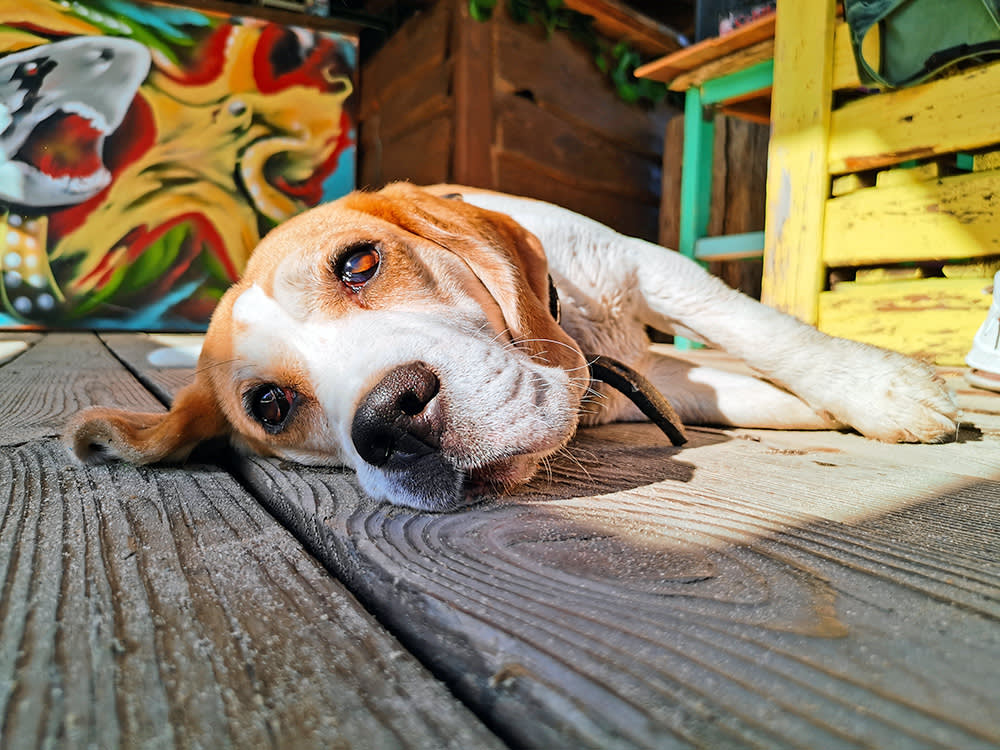
A dog rolling around collar-free on the rug is not a warning sign. It’s a dog who is comfortable. Your job isn’t to win the internet’s argument about the collar. It’s to make sure that if the worst happens, your dog is never truly anonymous, whatever they happen to be wearing at the time.
References
- Lord, Linda K., et al. “Characterization of Animals with Microchips Entering Animal Shelters.” Journal of the American Veterinary Medical Association, vol. 235, no. 2, 2009, pp. 160–167, avmajournals.avma.org.
- American Veterinary Medical Association. “Microchipping of Animals.” AVMA, avma.org.
- American Animal Hospital Association. “Pet Identification.” AAHA, aaha.org.
Not a substitute for your vet. Our guidance is educational. For urgent symptoms, contact a vet or emergency clinic right away. Editorial standards
Dr. Kohl is a board-certified veterinary dentist with a particular interest in preventive oral care. She reviews all dental health content at The Pet Times and contributes practical guides on home dental routines, professional cleaning, and oral disease prevention.
Meet our experts ↗Keep reading
 LivingDon't Teach Your Dog to Swim. Teach Them to Get Out.Dr. Priya Nair · 8 min
 LivingThe Most Dangerous Thing in Your Yard Might Be the Lawn ItselfDr. Ravi Mehta · 7 min
 LivingTied Up for a Few Minutes, Gone in Seconds: A Chicago Dog's Close CallJames Okafor · 5 min
 Health & WellnessYour Dog Isn't Scared of Your Relatives. He's Scared of the Schedule.Dr. Nina Kohl · 8 min
 Health & WellnessThe Coyote Had Her Dog in Its Mouth. The Wall Is the Only Reason She Got Her Back.Dr. Ravi Mehta · 6 min
 Health & WellnessThe Hot Car Isn't What Gets Most Dogs. The Walk Is.Dr. Priya Nair · 9 min