


The Most Dangerous Thing in Your Yard Might Be the Lawn Itself
Fences and pools are the hazards you can see. The stuff that actually sends dogs to the vet is what you spray, spread, and stack. An eight-point backyard audit.

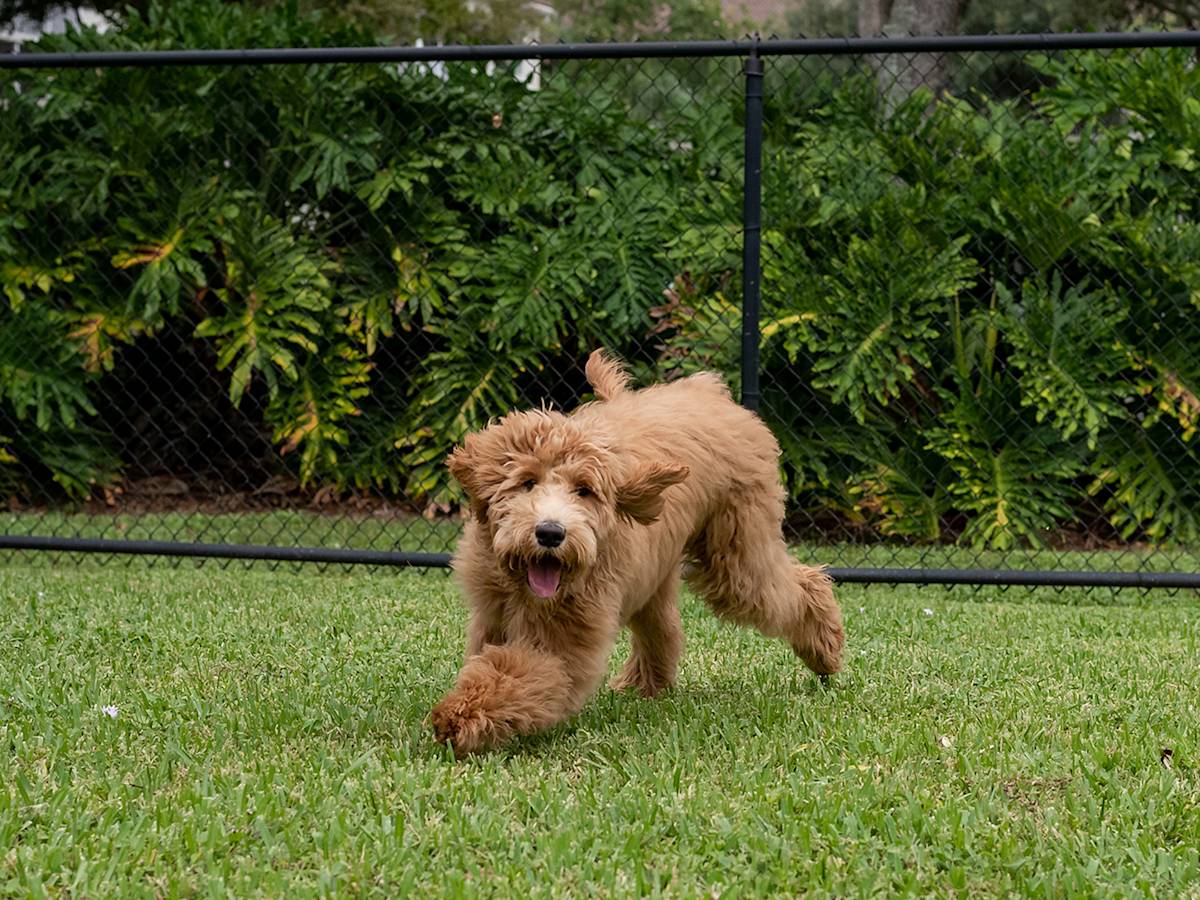
Ask most people to dog-proof a backyard and they picture the obvious: a taller fence, a covered pool, maybe pulling a few flowers. All worth doing. But the hazards that quietly send dogs to the emergency vet tend to be the ones you applied on purpose. The weed killer that made the lawn flawless. The cocoa-shell mulch that smells faintly of chocolate because, chemically, it partly is. The compost pile doing exactly what compost is supposed to do, which happens to produce molds that can trigger tremors in a dog who samples it.
That is the reframe this audit is built on: your dog experiences the yard nose-first and mouth-second, at ankle height, with zero reading comprehension for warning labels. So walk the space the way they do. Here are eight checkpoints, ordered from the hazards you created to the ones the yard came with.
1. The chemistry set: herbicides, fertilizers, and pesticides
This is the big one, and the science is uncomfortable. Purdue University researchers found that Scottish Terriers exposed to herbicide-treated lawns were four to seven times more likely to develop bladder cancer than Scotties on untreated lawns. An earlier National Cancer Institute analysis linked repeated use of the common herbicide 2,4-D to roughly double the risk of canine lymphoma. And a 2013 study that tested real pet dogs found lawn chemicals in the urine of dogs from 19 of 25 treated households, and even in dogs from half of the untreated homes tested, because spray drifts across property lines.
The practical version: choose pet-safe products where you can, follow re-entry times on the label to the letter when you cannot, water treatments in before letting your dog back out, and store every bag and bottle behind a door your dog cannot open. If a lawn service treats your yard, ask exactly what they used and when the grass is safe again.
2. Mulch and compost, the edible-smelling traps
Cocoa-shell mulch contains theobromine, the same compound that makes chocolate toxic to dogs, and some dogs will happily snack on it. Swap it for cedar, pine, or untreated wood chips. Compost is the sneakier cousin: as food and plant matter break down, they can grow tremorgenic molds. Even a small mouthful can set off tremors or seizures. If you compost, use a sealed bin with a latch, not an open pile.
3. The plant list
Azaleas, daffodil bulbs, tulip bulbs, sago palms, and dozens of other common landscape plants are toxic to dogs, some seriously. Before planting season, run your yard against the ASPCA’s toxic and non-toxic plant database and pull or fence off anything on the wrong list. While you are at it, think allergies: many grasses, weeds, and tree pollens are common canine allergens. A dog who comes in itchy after every backyard session may be reacting to the landscaping itself, and a vet can test for environmental allergies.
4. The perimeter, including the parts above the ground
Walk the fence line looking for gaps, loose boards, and soft dirt where a digger could tunnel. Then think about your specific dog. Breeds and individual dogs fail fences differently: an athletic climber goes over, a small terrier goes under, a scent hound follows a rabbit trail through the one gap you missed.
“Owners tend to buy the fence for the average dog. Escapes happen at the specific dog. A husky treats a four-foot fence as a suggestion, and a dachshund never even looks up, because the exit they want is under it,” says Dr. Mara Chen.
Solid privacy fencing has a bonus benefit: dogs who cannot see passersby are less likely to rehearse fence-charging and barking. Measure the height against your jumper, and check the ground clearance against your digger. The same clearing-the-railing logic applies to balconies and raised decks: a dog with strong chase drive should not be out there without a barrier that actually blocks the gap, because a pigeon at the wrong moment can override every bit of training.
One thing that does not belong in your perimeter plan: an electric “invisible” fence. It works by shocking your dog at the boundary, it fails exactly when adrenaline is highest, and a dog who blasts through after a squirrel is then punished for coming home.
5. Water, both the inviting kind and the stagnant kind
If you have a pool, fence it or gate it. Chlorinated water is a bad water bowl, and even confident swimmers drown when they cannot find the steps, or develop water intoxication after hours of retrieving. Know where your dog is any time the pool is accessible.
The opposite water problem matters too. Anything that collects rainwater, from plant saucers to a forgotten bucket, is a mosquito nursery, and mosquitoes transmit heartworm. In urban areas, standing water also carries leptospirosis risk from rodent traffic. The lepto vaccine helps, but it does not cover every strain. Dump the standing water. It takes thirty seconds.
6. Debris with a season pass
Fallen fruit ferments. Stone-fruit pits contain cyanide compounds and are exactly gullet-sized. Sticks splinter, acorns and some seeds are toxic in quantity, and in much of the country, summer means foxtails, the barbed grass awns that burrow into paws, ears, and noses and keep going. A weekly five-minute sweep of the yard, especially under fruit trees, removes most of this category.
7. The stuff you left out
Garden tools, kids’ toys, hoses, and irrigation lines all become chew items for a bored dog, and chewed pieces become intestinal blockages. Dogs will also chew rocks, bark, and siding when the mood strikes. The tidier the area your dog spends time in, the shorter the list of things they can invent trouble with.
8. The supervision rule
Even a perfectly audited yard is not a dog-sitter. You cannot schedule a falling branch, a wandering raccoon, or whatever a neighbor’s kid throws over the fence. For anything longer than a bathroom break, be out there or be within earshot. Your dog prefers it that way anyway. The yard is nice; the yard with you in it is the whole point.
What newer research adds
The chemical story has kept developing since the original round of lawn-care studies. The ASPCA’s Animal Poison Control Center reported that in 2025 it handled calls on more than 376,000 exposures, and yard-and-garden products remain firmly in the top ten: pesticides and rodenticides together accounted for roughly one in ten calls, with insecticides adding almost 4 percent more.
The takeaway for a yard audit is that the risk is not exotic. It is the ordinary products in the shed, applied on ordinary weekends. If you change only one thing after reading this, make it how you buy, apply, and store lawn chemicals.
References
- ASPCA: Toxic and Non-Toxic Plants List
- Glickman, L.T. et al. “Herbicide exposure and the risk of transitional cell carcinoma of the urinary bladder in Scottish Terriers.” Journal of the American Veterinary Medical Association 224,8 (2004): 1290-1297.
- Knapp, D.W. et al. “Detection of herbicides in the urine of pet dogs following home lawn chemical application.” Science of the Total Environment 456-457 (2013): 34-41.
- Hayes, H.M. et al. “Case-control study of canine malignant lymphoma: positive association with dog owner’s use of 2,4-dichlorophenoxyacetic acid herbicides.” Journal of the National Cancer Institute 83,17 (1991): 1226-1231.
- ASPCA: The Top 10 Toxins of 2025
Dr. Mehta is a board-certified veterinary nutritionist who evaluates pet food formulations, ingredient quality, and the science behind dietary trends. He writes and reviews all nutrition content at The Pet Times, including our food rankings and feeding guides.
Meet our experts ↗Keep reading
 FoodThe Christmas Food That Sends Dogs to the ER Isn't Chocolate. It's the Gravy.Dr. Priya Nair · 8 min
 First DaysIf Your Dog Needed Emergency Surgery Tomorrow, Could Your Sitter Say Yes?Claire Sutton · 7 min
 Health & WellnessDon't Skip Your Dog's Summer Workout. Move It. Here Are 7 Ways.Dr. Lena Park · 7 min
 Health & WellnessYour Dog Can Love Winter. You're Just Sending Them Out Wrong.Dr. Ravi Mehta · 7 min
 Health & WellnessThe Coyote Had Her Dog in Its Mouth. The Wall Is the Only Reason She Got Her Back.Dr. Ravi Mehta · 6 min
 Health & WellnessA Dog Diaper Is a Last Resort, Not a Shortcut. Here's How to Use One Right.Dr. Priya Nair · 9 min