


Your Dog Doesn't Hate Fall. It Hates Your Calendar.
Almost everything dogs struggle with in autumn traces back to a human schedule change, not the weather. Here are the eight that bite hardest, and how to soften each one.

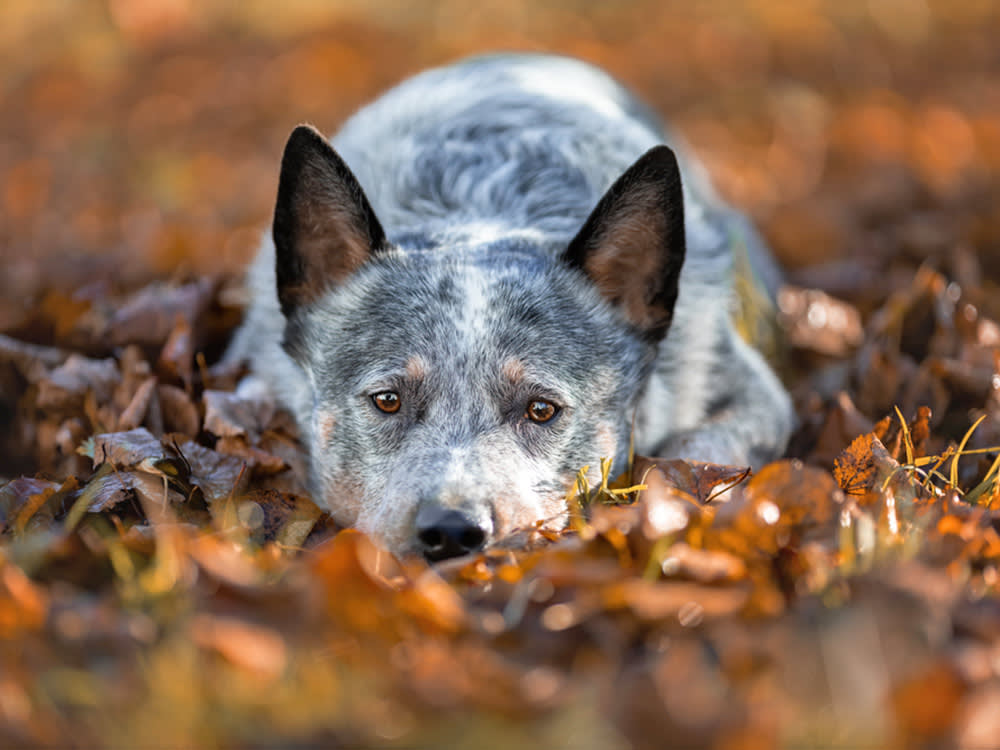
Cold air is not a crisis for a dog. Neither are leaves, or pumpkins, or the fact that you own six flannel shirts.
What actually lands on your dog in autumn is a stack of human decisions that all arrive within about eight weeks of each other: the kids leave the house, the clocks move, the evening walk vanishes into the dark, strangers start ringing the doorbell in masks, and the kitchen fills with food they are not allowed to have. The season is fine. The scheduling is brutal.
Sort the problems that way and the fixes get obvious, because a schedule is a thing you control. Here are the eight that matter most, roughly in the order they hit.
1. The back-to-school cliff
For a dog, summer was a staffing surplus. People were home, the door kept opening, someone was always available to throw something. Then one Tuesday morning, everyone leaves at once and the house goes silent for eight hours.
Separation-related distress reliably ticks up in early autumn, and it is not mysterious. The dog’s day did not gradually change. It fell off a shelf.
What to do: start the shrinking a week or two early rather than on day one. Practice short departures while the kids are still home, so leaving stops predicting an entire empty day. Front-load the morning with a real walk and a sniff, not a rushed pee break. And build the first few weeks of school around a genuinely enriching absence: a frozen stuffed toy, a scatter-fed breakfast on the lawn, a midday walker if you can swing it.
2. The clock change
Daylight saving ends the first Sunday in November, and your dog does not get the memo. What they get is a dinner that is inexplicably an hour late, a walk that no longer exists, and a household behaving as if nothing happened.
Food-motivated dogs take this hardest, and it does not stop at food. The after-work walk, the yard time, the evening game of fetch: all of it gets swallowed by darkness in the space of a weekend.
What to do: move meals and walks in 10 to 15 minute increments across the week before the change, rather than absorbing the whole hour in one night. Dogs adapt to a drift far better than a jolt. Then rebuild the lost evening activity somewhere else in the day: a longer lunchtime sniff, a training session indoors, a scent game in the hallway.
3. Walks that moved into the dark
Shorter days do more than shift a schedule. Less daylight means less light exposure for both of you, and some dogs do get flatter and sleepier as the light drops, in a pattern that looks a lot like the seasonal slump people describe.
You also lose visibility, which is a safety problem on a road at 6 p.m. in November.
What to do: protect at least one walk in actual daylight, even a short one, and treat it as non-negotiable. Get a light-up collar or a reflective harness before you need it. And add mental work to compensate for the lost physical time: a puzzle feeder, a snuffle mat, or five minutes of nose work will tire a dog more than another lap around a dark block.
4. Damp, cold mornings on stiff joints
This is the one genuinely weather-driven item on the list, and it hurts. Chilly, wet weather makes arthritis flare in dogs the same way it does in people, and wet leaves turn every sidewalk into a slick surface. Older dogs and big breeds with osteoarthritis limp more once the mornings turn cold and the pavement stays damp. Slipping on that surface causes exactly the kind of micro-strains that make the next week worse.
What to do: warm the dog up before you ask for anything athletic. Five minutes of easy leash walking before the ball comes out is the single highest-return habit here. Keep their nails short, because a short nail lets the toe grip. Put rugs or yoga mats on your slick floors at home. Lean and senior dogs benefit from a real jacket, not a costume. And if the limp is new, that is a vet visit, not a seasonal quirk.
5. Allergy season, round two
People assume allergies are a spring problem. Autumn is peak season for a lot of dogs: ragweed pollen, dust kicked up from dry leaves, and mold blooming in the damp ones. The signs show up on the skin and around the eyes, not in a tissue box: itching, chewing at paws, a runny eye, ears that suddenly smell.
What to do: wipe the paws and belly after walks. This is unglamorous and it works, because it physically removes the allergen your dog would otherwise spend the evening licking off. Talk to your vet about a suitable shampoo or an antihistamine rather than guessing. Do not reach for a human product without asking first.
The leaf pile deserves its own warning
A big damp pile of leaves is a habitat. It can hide mold and bacteria, it can hide parasites, it can hide sharp sticks at exactly the height of a diving dog’s chest, and in some areas it can hide a mouse, a squirrel, or something with quills that will end your evening at an emergency clinic.
Plenty of dogs also just hate them. The crackle underfoot alone is enough to send some dogs backwards, and dogs are not wrong to be suspicious of a loud, shifting surface that smells of decay.
Let them crash around in a dry pile you raked yourself if they love it. Steer clear of the enormous soggy municipal one that has been sitting at the curb for a fortnight.
6. The noise season
Leaf blowers are the sleeper problem of autumn. They are as loud as a vacuum, they run for an hour, and they can turn a previously neutral dog reactive. Then, on top of that, Halloween arrives with a doorbell that rings all evening, capes, screaming children, and motion-activated decorations that shriek.
That combination pushes even stable dogs past their limit.
What to do for Halloween specifically: give up on the idea that your dog will be a good sport about it. Set up a quiet room away from the front door with white noise, closed curtains, and something long-lasting to chew or lick. Exercise them hard earlier in the day so they arrive at the evening already tired. If your dog is genuinely panicked by the doorbell, disconnect it and post a note; you are allowed to.
7. The costume
Some dogs do not mind. Many do, and the tell is not subtle: they freeze, they lower their head, they refuse to walk, they try to shake it off. If that is your dog, the appropriate number of costumes to put on them is zero.
If you do dress them, the safety rules matter more than the theme. Attach costume pieces to a harness the dog already wears rather than around the neck. Keep pressure away from the throat, the groin, the eyes, and the ears. Avoid anything with tassels, dangling parts, or small pieces that can come off and be swallowed. And never leave a costumed dog unsupervised.
8. The food gauntlet
Autumn is a two-month buffet of things that will hurt them. Halloween candy sits in a bowl for weeks. Chocolate is toxic. Sugar-free candy and gum can contain xylitol, sometimes labeled as “birch sugar” on the ingredient list, and it can be fatal to dogs at small doses. Then the holiday table arrives with its own inventory of hazards: onions in the stuffing, raisins and grapes in the sides, a wine glass at coffee-table height, fatty trimmings that can tip a dog into pancreatitis, and wooden skewers in the bin that smell like the best thing that has ever happened.
The emergency clinics see it every year, and the pattern is always the same: a kind gesture that ends with a very sick dog.
What to do: put the candy behind a closed door, not on the counter. Give the dog their own thing on the big days, so nobody feels the urge to hand them a plate. A spoonful of plain canned pumpkin, no sugar, no pie filling, mixed into their normal food, is festive enough. And save your emergency vet’s number to your phone before you need it, not while you are panicking.
“Almost every autumn case I see traces back to something that changed in the household, not the forecast,” says Dr. Lena Park. “Give the dog a week of warning before the clocks move and keep one walk in the daylight, and you have solved most of it before it starts.”
What’s new since this was written
The clock change itself is under real pressure now, and it is worth watching if your dog is one of the ones who falls apart in November. Multiple US states have passed legislation to stay on permanent daylight saving time, but none of it can take effect without an act of Congress, which has repeatedly stalled. Until that changes, the twice-yearly shift stands, and your dog will keep asking for dinner at what they consider the correct time.
The advice on cold-weather joint pain has also firmed up. Weight is the lever with the most evidence behind it: keeping an arthritic dog lean does more for their winter mornings than any supplement on the shelf, and it is free. If your dog has slowed down this autumn and you are not sure whether it is age, arthritis, or the dark, ask for a proper mobility assessment rather than deciding it yourself.
The bottom line
Fall does not need to be a bad season for your dog. Nearly every stressor on this list is something you scheduled, which means it is something you can stage, soften, or move. Give them a week of warning before the clocks change, keep one walk in the light, wipe the paws, lock up the candy, and let them skip the costume.
References
- Royal Veterinary College VetCompass. Osteoarthritis in dogs: risk factors and management. Ongoing epidemiological research programme.
- American Society for the Prevention of Cruelty to Animals. People Foods to Avoid Feeding Your Pets. Accessed June 2026.
- U.S. Food and Drug Administration. Paws Off Xylitol; It’s Dangerous for Dogs. Accessed June 2026.
- American Veterinary Medical Association. Halloween pet safety. Accessed June 2026.
Dr. Chen is a small-animal veterinarian who leads health and safety coverage at The Pet Times. She writes and reviews the bulk of our illness, condition, and safety content, translating clinical guidance into clear, practical advice owners can act on at home.
Meet our experts ↗Keep reading
 LivingBefore You Bring Your Dog to the Cookout, Answer 8 Honest QuestionsTom Hadley · 9 min
 LivingDon't Teach Your Dog to Swim. Teach Them to Get Out.Dr. Priya Nair · 8 min
 TrainingBefore You Cut a Hole in Your House, Answer This: What Else Can Fit Through It?Marcus Webb · 8 min
 LivingTo Your Dog, the Elevator Feels Like an Earthquake. That Changes How You Should Ride It.Dr. Amara Solis · 6 min
 TrainingSending Your Dog to Its Crate as Punishment Ruins the One Room That's TheirsDr. Amara Solis · 7 min
 TrainingYour Dog Isn't Shy at Your Party. Six Signs They Want Out.Dr. Lena Park · 8 min