


Your Dog Won't Save You From a Bear. It Might Get You Both Hurt.
A sweeping study of 326 bear encounters found most dogs don't defend their owners, and worse, a leashed dog can turn a near-miss into an attack. Here's what the data says and how to actually stay safe in bear country.

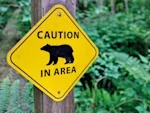
We tell ourselves a comforting story about dogs: that in a genuine emergency, our dog would throw itself between us and danger. Sometimes that story is true, and the news is full of dogs who fended off a rattlesnake or an intruder. But a large new analysis of one very specific kind of danger, the bear, suggests you should not bank on it. When the threat is a bear, most dogs do not step in, and the presence of a dog can actually make the whole situation more dangerous for the human on the other end of the leash.
What the study looked at
The research, nicknamed “The Canine Conundrum,” came out of the lab of bear biologist Tom Smith at Brigham Young University. Smith and his team combed through 326 bear-and-dog conflicts across North America, spanning more than a century, from 1901 to 2023, and covering black bears, brown bears including grizzlies, and even polar bears. That range is what makes the numbers worth taking seriously. This is not a handful of viral anecdotes but a systematic look at what really tends to happen when dogs and bears collide.
The headline finding is sobering for anyone who assumes their dog is a bodyguard. In roughly 80 percent of the incidents, the dog did not respond to the bear attacking its person at all. Smith described dogs that bolted and ran, and dogs that simply sat and watched the conflict unfold.
The numbers behind the headline
Dig into the specifics and the picture gets more complicated, in a way that does not favor bringing your dog along. Dogs actively responded to a bear attacking their owner in about 21 percent of cases, and when they did engage, they were fairly effective, stopping the bear roughly 79 percent of the time. That sounds like a point in the dog’s favor until you read the next line: in those same confrontations, the bear frequently turned its attention onto the human, and about 85 percent of those people were injured, with wounds ranging from minor to severe. Meanwhile, humans managed to rescue their dogs from a bear only about 5 percent of the time, though plenty tried, some going in with nothing but their fists.
Two other figures reframe the risk entirely. In a striking share of these encounters, the dog was the one who started the trouble, drawing the bear into a conflict that might never have occurred otherwise. And when things went badly, dogs paid the higher price by far, with roughly ten times as many dogs as people dying in these encounters, while a small percentage of owners lost their lives too. The takeaway is not that dogs are cowards. It is that a dog and a bear meeting is a bad situation for everyone in it.
Why a leashed dog is a mixed blessing
There is a memorable way biologists frame the leash question: a dog on a leash is, to a bear, essentially a wolf on a rope. Bears and wild canines have an ancient antagonism, and a bear may read your dog as a threat to answer rather than an animal to avoid. That cuts against easy advice. A leashed dog at least stays contained and will not run off to provoke a bear on its own, which matters, because separate research on non-fatal black bear conflicts across the lower 48 states found that about 79 percent of bear attacks on dogs involved a dog running loose. But a leash also ties you physically to the dog, so if the bear attacks the dog, the person holding the other end is very likely to be pulled into it. There is no version of this where the dog makes you safer. The realistic goal is to keep the encounter from happening at all.
The instinct is to think of the dog as protection, and that instinct is exactly the thing to override in bear country. Plan as if the dog is a responsibility you are carrying through a risky place, not a defense system. Keep it close, keep it calm, and keep a can of bear spray where your hand can find it without looking.
What actually keeps you both safe
The good news is that the protective measures are boring, cheap, and effective, and none of them rely on your dog being a hero. Prevention does the heavy lifting. Wildlife agencies recommend removing the things that lure bears near your home and campsite in the first place: feed pets indoors, keep grills scrubbed, and store trash locked away until collection day. On the trail, keep your dog leashed and close so it cannot go find a bear, and carry bear spray somewhere you can reach it instantly. Smith’s own separate research is worth knowing here, because his team has found that bear spray is a genuinely viable deterrent and that reaching for a firearm does not make people safer in these encounters. If you live or vacation where bears roam, the smartest move is simply to give them a wide berth and treat your dog as precious cargo rather than a last line of defense.
References
- Smith, T. S., et al. “The Canine Conundrum: dogs and bear-inflicted human injuries.” Brigham Young University, 2025. https://lifesciences.byu.edu/combating-bear-attacks-with-science-dr-tom-smiths-lab
- Smith, T. S., & Herrero, S. “Efficacy of bear deterrent spray in Alaska.” Brigham Young University News. https://news.byu.edu/news/byu-study-shows-bear-pepper-spray-viable-alternative-guns-deterring-bears
- California Department of Fish and Wildlife. “Keeping Property and Pets Safe From Bears.” https://wildlife.ca.gov/Conservation/Mammals/Black-Bear
Not a substitute for your vet. Our guidance is educational. For urgent symptoms, contact a vet or emergency clinic right away. Editorial standards
Dr. Solis is a board-certified veterinary dermatologist with over twelve years of clinical experience. She advises on skin conditions, allergies, and grooming practices that affect coat and skin health. All dermatology and allergy content at The Pet Times is reviewed by her team before publication.
Meet our experts ↗Keep reading
 Health & WellnessLeaving Your Dog Out in the Cold Isn't Just Cruel. In These States, It's a Felony.Dr. Priya Nair · 5 min
 Health & WellnessSummer Grooming Isn't About the Haircut. It's a Health Check.Tom Hadley · 5 min
 TrainingYour Dog Hates These 8 Smells. Some of Them Can Actually Hurt Them.Dr. Amara Solis · 7 min
 Health & WellnessCan You Overexercise a Dog? The Signs You've Pushed Too FarDr. Amara Solis · 6 min
 Health & WellnessThe Winter Sidewalk Danger No One Warns You About Until It's Too LateDr. Ravi Mehta · 6 min
 FoodYou Can't Train a Dog to Eat Slowly. You Make It Physically Impossible.Dr. Lena Park · 6 min