


Four Reasons Dogs Get Overlooked, and Why None Should Stop You
Senior dogs, bully breeds, special-needs pups, and tripods get passed over for four very different reasons. Sort out which barrier you're facing, and the right dog gets a lot easier to choose.


My dog, Cleo, should have been adopted in a weekend. She is small, quiet, affectionate, and house-trained, exactly the dog busy city dwellers fight over in a crowded shelter. Instead she waited, because she has a cherry eye, a harmless prolapsed tear gland that looks like a tiny cherry on her eyeball. Several vets told me it was a non-issue. It did not matter. Some adopters worried about the care, others just did not like the look, and one cosmetic quirk was enough to keep a perfect dog in a kennel.
Their hesitation was my luck. But it taught me something about the “less adoptable” label that is worth passing on: it is not one barrier, it is four very different ones, and they do not all deserve the same weight. A black coat is a perception problem. A wheelchair is a logistics problem. Gray on the muzzle is an age question. And three legs is a flat-out myth. Once you know which kind of barrier you are actually looking at, deciding whether a dog is right for you gets a lot clearer. Here is how each one breaks down.
Barrier one: perception (black dogs and “bully breeds”)
Some dogs are overlooked for reasons that say nothing about the dog and everything about a snap impression.
Black dogs are adopted at measurably lower rates, a pattern nicknamed “Black Dog Syndrome.” The causes are a tangle of old superstition, media portrayals, and a genuinely mundane factor: dark fur is hard to photograph well, so a scroll through a shelter site skips past the murky, underexposed photos of black dogs. February is now informally marked as Black Dog Syndrome Awareness Month to push back, and photographers like Emma O’Brien have built whole series proving how stunning black dogs look with decent lighting. If a dog’s listing photo is doing them no favors, that is a reason to visit in person, not to keep scrolling.
So-called “bully breeds,” the ones with “bull” in the name like Bulldogs, Bull Terriers, American Staffordshire Terriers, and American Pit Bull Terriers, carry an even heavier perception load. They have been unfairly maligned for years, and some buildings, neighborhoods, and even cities still have breed bans, so they linger in shelters longer. But an individual dog’s temperament is shaped by their breeding and their upbringing, not by the shape of their head.
“Temperament is an individual trait, not a breed verdict,” says Dr. Priya Nair, a veterinarian on our advisory roster. “I have met gentle, goofy, devoted pit bulls and anxious, reactive dogs of every breed you would consider ‘safe.’ Judge the dog in front of you, not the label on the kennel.”
Where they are allowed, bullies are often smart, athletic, affectionate, and low-maintenance on grooming. One practical caution worth doing your homework on: breed-specific legislation still exists in some places, and a few rental properties and insurers restrict certain breeds, so check your local rules and your lease before you fall in love. That is a logistics check, not a reason to write the dog off.
Barrier two: logistics (special-needs dogs)
Adopting a dog with chronic health issues sounds daunting, and the fear is almost always larger than the reality. A dog might have mobility issues, need a wheelchair, take daily medication, or require regular vet visits. In every case, the honest move is the same one you would make for any dog: do your research and be realistic about the time and money you can commit. Remember, too, that bringing home any new dog means a new routine. A special-needs dog’s routine is a little different, not categorically harder, and health issues are something every pet parent faces eventually anyway.
The difference with a special-needs dog is that you know the routine upfront, and you rarely face it alone. Shelters, rescues, and foster homes who have been providing that exact care are a deep well of practical advice, and online communities for specific conditions are full of people who have solved the problems you are about to encounter.
Cost is the piece worth planning for honestly. Pet insurance helps, though it generally will not cover a condition the dog already has, so price it out before adopting. And if vet bills are the real worry, there is a safety net most people do not know exists: organizations like the Pet Fund, RedRover Relief, and Brown Dog Foundation offer financial assistance for non-routine veterinary care, and many vet schools and clinics run reduced-cost programs. Knowing these exist turns “I could never afford a sick dog” into “I have options.”
Barrier three: age (senior dogs)
Some adopters hesitate at a gray muzzle, asking the two fair questions everyone asks: what if we do not get much time, and what if health problems crop up? Both have real answers.
“People assume an older dog is a project, and usually it is the opposite,” says Dr. Priya Nair. “Senior dogs, roughly seven and up, often arrive already house-trained and leash-trained, and many are lower energy, which makes them ideal for older adopters or anyone with a calmer lifestyle. You are skipping the hardest, most chaotic years and going straight to the easy companionship.”
On the time worry: many dogs live well into their double digits, so a “senior” at seven may have years ahead. On health: any dog can develop problems, and a senior’s are simply more likely to be visible now. What you gain in exchange is an enormous advantage, a dog whose personality, energy level, and habits are already known, so there is no guessing about who they will grow up to be. They are already grown up, and often wonderful.
Barrier four: a myth (tripods)
Here is the category that should not exist at all. Tripods, dogs with three legs, are not even considered special-needs pets. Whether they lost a limb to injury or illness, most three-legged dogs get around with ease and can run as fast as their four-legged friends. They adapt astonishingly well, and the adjustment is usually invisible within weeks.
There are a couple of real, manageable considerations rather than deal-breakers. A tripod may do better in a single-level home than one with lots of stairs, benefits from staying lean so there is less load on the remaining limbs, and appreciates traction on slick floors, which a few cheap runner rugs solve. That is the whole list. Tripawds.com is an excellent, free resource run by people who live with three-legged pets, and you would be amazed how adaptable, and how adoptable, these dogs really are.
The label is the obstacle, not the dog
Sort the four barriers and a pattern appears. Perception barriers (black coats, bully breeds) are about other people’s snap judgments and dissolve the moment you meet the dog. Logistics barriers (special needs) are real but plannable, with more support available than most adopters realize. Age is a trade, giving up unknown puppy potential for a known, settled companion. And the tripod “barrier” is no barrier at all.
What ties them together is that the label is doing the dog a disservice in every case. The dogs society calls “less adoptable” are perfectly capable of being extraordinary pets, and plenty of people specifically seek them out.
“There is a whole community of adopters who go looking for the dog everyone else passed over,” says Dr. Priya Nair. “They are not settling. They know something the scrollers do not.”
Maybe you will be one of them.
Leila Torres leads our Living coverage, from home life and travel to the products and rescue stories that come with sharing a life with animals. She edits and writes across the section, with a soft spot for pieces about the bond between people and their pets.
Meet our experts ↗Keep reading
 LivingShe Was Supposed to Be Elliot Page's DogSasha Ford · 7 min
 Living529 Days Alone on an Island. A T-Shirt Is What Finally Caught Her.Nina Vasquez · 5 min
 Living'Unadoptable' Is a Description of the Building, Not the DogDr. Amara Solis · 7 min
 LivingAdopting a Look-Alike Dog Isn't the Risk. Expecting the Same Dog IsLeila Torres · 8 min
 Living15 Rescues Turned Her Down. Then Her Olympics Fell Apart and She Got the Dog.Sasha Ford · 6 min
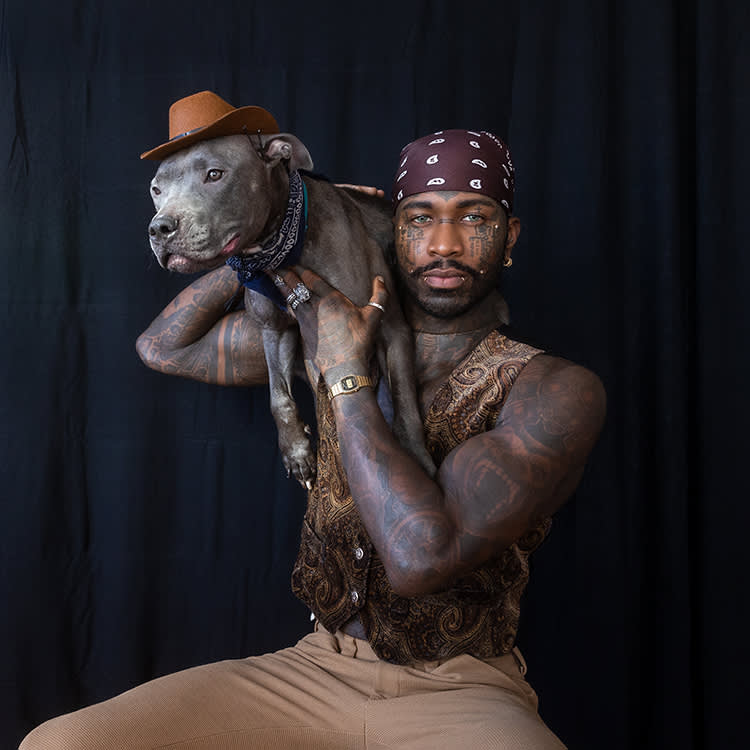 LivingHe's Fostered Almost 40 Pit Bulls. The Stigma Is the Only Thing He Can't Rehome.Leila Torres · 8 min