


Your Cat Is Limping. The First Question Isn't Why, It's How Fast to Move
A limp can be a bruised pad or a broken leg, and the useful first move is triage, not diagnosis. A vet lays out what to watch at home, what needs a same-day visit, and what is a true emergency, then the causes and recovery.

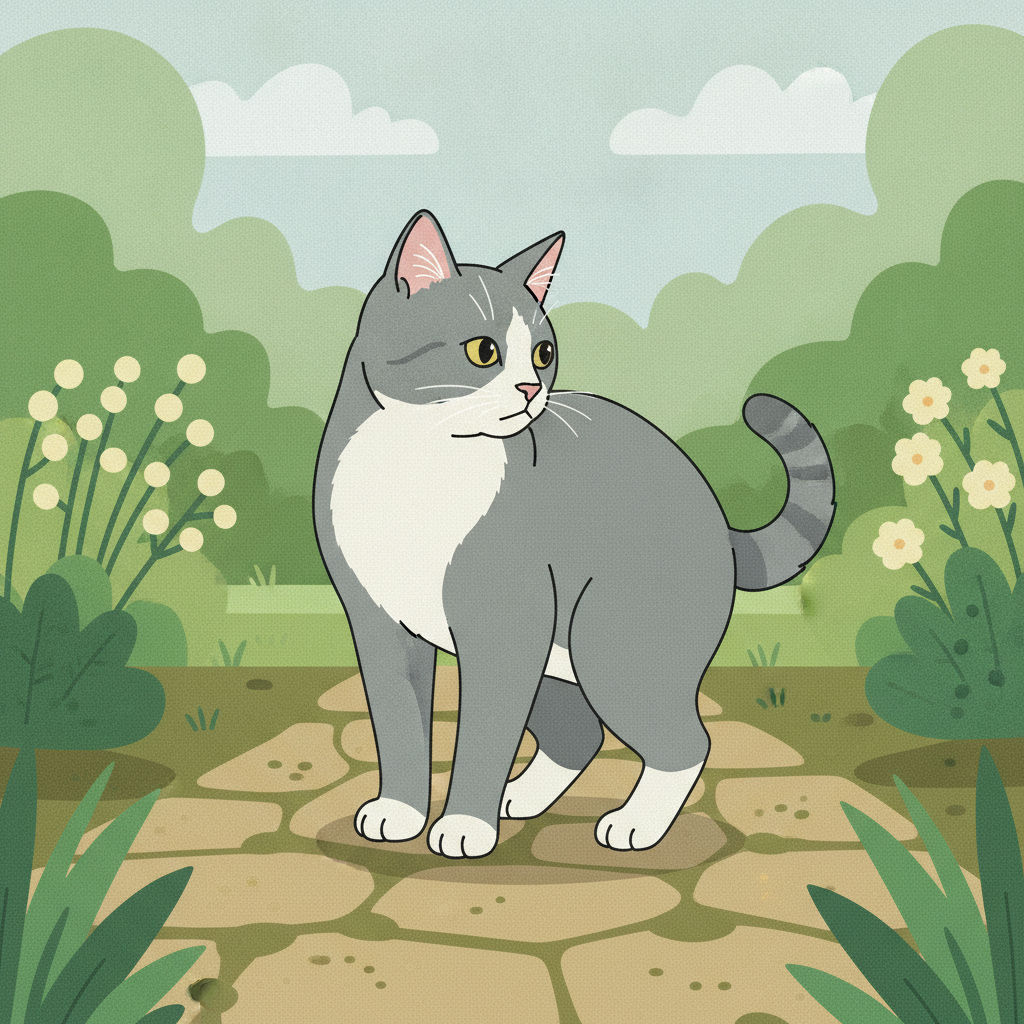
One minute your cat is their usual nimble self, swatting things off the counter and tearing around with the zoomies. The next, they are limping. Your instinct is to ask why, but that is not the question that helps you in the moment. The one that does is how fast do I need to act? A limp can be a stubbed toe that resolves by dinner or a fracture that is quietly bleeding internally, and the whole skill of handling it well is sorting which end of that spectrum you are on before you worry about the exact diagnosis. So here is a triage you can run at home.
Start here: the three-tier triage
Before you diagnose anything, place the limp in one of three buckets. This is the part worth remembering.
| Tier | What you see | What to do |
|---|---|---|
| Watch at home | Slight limp, still bearing some weight, no swelling or wound, eating and acting normal, known minor cause (a small hop gone wrong) | Rest and confine for 24 to 48 hours. If it is not clearly improving, book a vet visit. |
| Same-day vet | Persistent limp lasting more than a day, a wound or swelling you can see, an ingrown nail, limping plus reluctance to jump or reduced activity | Call for an appointment today. Wounds get infected and pain compounds. |
| Emergency, now | Refuses to touch the leg down at all, obvious swelling or a bone at a wrong angle, dragging a limb, a bite wound, pale or bluish gums, lethargy or collapse | Go to an ER. An untreated fracture can cause complications as serious as internal bleeding. |
A useful rule of thumb runs underneath all three: the more serious the injury, the more dramatic the physical signs. A mild injury usually looks mild. A cat that will not put a paw down at all, or has visible swelling, has told you which tier it belongs in.
Reading the leg: is it a break?
“When the damage is significant, a break or a fracture, the limp is usually dramatic and impossible to miss,” Dr. Park says. “A cat in that state won’t bear any weight on the leg, and you’ll often notice the area ballooning near the injury site.”
If you suspect a fracture, act quickly. An untreated broken leg can lead to complications as serious as internal bleeding, on top of leaving your cat in significant pain.
It is also worth knowing that not every limp comes from bone, muscle, or tendon.
“Owners tend to jump straight to a sprain or a fracture, but a bite or a hidden puncture can produce the same swelling and favoring of the leg,” Dr. Park says. “So before anything else, I have people run a finger over each pad and into the webbing of the toes, hunting for a break in the skin or a torn nail.”
Other common causes, and how they are treated
If a bad jump is not the culprit, a limp can stem from arthritis or joint problems, an ingrown or broken nail, a sore paw pad, a bite wound, or, less commonly, cancer. Here is how vets approach each.
Arthritis. This is the cause owners underestimate most. Feline arthritis is now understood to be far more common than anyone assumed; surveys of senior cats find the large majority have degenerative joint changes somewhere, yet it stays hidden because cats mask pain and a subtle limp or a new reluctance to jump gets waved off as “just getting old.”
“Older cats respond to the same toolkit we reach for with senior dogs, joint-support supplements, prescription pain relief, and a diet richer in omega-3s that helps quiet the underlying inflammation,” Dr. Park says. “What has genuinely changed the game recently is a monthly injectable antibody therapy specifically for feline arthritis pain. In the trials, about three out of four cats had a meaningful improvement, and it gives us a real option for cats who cannot tolerate traditional painkillers. If your older cat’s limp turns out to be arthritis, ask about the full menu now, because it is bigger than it used to be.”
Nail issues. An ingrown nail is easy to miss, especially in long-haired breeds, but it can be very painful. The fix is usually a vet visit to remove the nail, plus pain medication.
Sore paw pads. A walk across hot pavement can do real damage. Serious burns need a vet, while smaller ones can often be managed at home by keeping the area clean and dry, applying antibiotic ointment, and wrapping it in a light bandage.
Wounds. Bites and outdoor injuries are painful and prone to trouble.
“An untreated break in the skin gets infected, and once that sets in you’re looking at soreness, puffiness, and sometimes an oozing spot,” Dr. Park says. “The right move is having your vet flush and clean it in person, then get the cat onto antibiotics and something for the discomfort.”
Soft tissue injury. These are tricky to diagnose. Minor muscle injuries often heal on their own with rest, but musculoskeletal injuries can take longer, on the order of two to three weeks.
Fractures. Breaks are common in cats who love to jump. Casts or splints are usually needed, and healing can take eight to twelve weeks.
“A fracture serious enough may need surgical hardware to hold everything in place while the bone knits back together,” Dr. Park says. “In those first days we lean hard on pain control formulated for cats, and pairing that with a steadied leg gives them the best shot at a clean recovery.”
Cancer. Certain neurological diseases can affect how a cat walks. Your vet will run tests to determine what is going on and treat accordingly.
Aftercare: the hard part
Whatever caused the limp, your cat will need rest afterward, and different injuries need different recovery windows. That is easier said than done with an animal built to be in constant motion.
If you have ever wondered whether a cat can be crated, the answer is yes. Will they enjoy it? Probably not.
“Confining a cat to a crate limits how much they can move and shields the healing leg from another knock,” Dr. Park says. “It works well when there’s room inside for a litter box, food and water, and enough space to lie down, rise, and pivot without strain. It does backfire for some, though. The cats who fret or thrash against the walls end up moving more rather than less, which sets the recovery back.”
If crating is not an option, you can still build a safe, controlled space.
“If a crate is a non-starter, a quiet spare bedroom does the job,” Dr. Park says. “Take the height out of the equation, lay cushions or a low ramp beside any sofa or bed they gravitate to, so that if they do try a leap and come up short, they land soft instead of hard.”
The bottom line: a limping cat is a cat in pain. It may be hard at first to figure out exactly what caused it, but if the limp does not resolve within a few hours, a trip to the vet is the safest call.
Why the arthritis point is worth a second look
It is worth restating the single biggest shift in how vets think about limping cats, because it reframes the whole “is my cat just being dramatic?” question. The monoclonal antibody therapy Dr. Park mentioned, frunevetmab, was the first drug of its kind approved by the FDA for any animal species, and it works by intercepting a pain signal (nerve growth factor) before it reaches the brain. In the pivotal field study, roughly 76 percent of treated cats reached the study’s measure of treatment success, versus about 65 percent on placebo. Paired with the growing recognition that most senior cats carry undiagnosed joint disease, the takeaway for owners is concrete: a recurring, low-grade limp in an older cat is not something to wait out. It is a reason to ask specifically about arthritis, and about the fuller set of treatments that now exists.
References
- Cornell Feline Health Center. “Degenerative Joint Disease and Osteoarthritis in Cats.”
- U.S. Food and Drug Administration. “FDA Approves First Monoclonal Antibody Drug to Control Osteoarthritis Pain in Cats.”
- Gruen, M. E., et al. “Efficacy and Safety of an Anti-Nerve Growth Factor Antibody (Frunevetmab) for the Treatment of Degenerative Joint Disease-Associated Chronic Pain in Cats.” Journal of Veterinary Internal Medicine, 2021.
Not a substitute for your vet. Our guidance is educational. For urgent symptoms, contact a vet or emergency clinic right away. Editorial standards
Dr. Park is a board-certified emergency and critical care specialist. She reviews our health and safety content for clinical accuracy and contributes guides on recognising urgent conditions. Her focus is helping owners act quickly and correctly when it matters most.
Meet our experts ↗Keep reading
 First DaysBlanket Sucking Is Adorable. The Day They Swallow It Isn't.Dr. Lena Park · 8 min
 Health & WellnessThe Benadryl Trap: Why the Go-To Cat Remedy Usually Fails, and What WorksDr. Mara Chen · 9 min
 Health & WellnessDepo-Medrol Works Fast for Cats. The Catch Is What 'Long-Lasting' Really Means.Dr. Lena Park · 6 min
 Health & WellnessYour Cat Just Burped. That Tiny 'Urp' Is Worth Paying Attention ToDr. Ravi Mehta · 6 min
 Health & WellnessYour Cat Doesn't Have to Eat the Lily. The Vase Water Will Do.Dr. Amara Solis · 9 min
 Health & WellnessYour Kitten Has Fleas. The Wrong Fix Can Be Deadlier Than the Bugs.Dr. Priya Nair · 8 min