


Your Dog Eating Socks and Rocks Isn't a Quirk. It's a Symptom.
Pica, the compulsion to eat non-food objects, is easy to laugh off until it lands a dog in emergency surgery. Here's what actually drives it and when to treat it as an emergency.

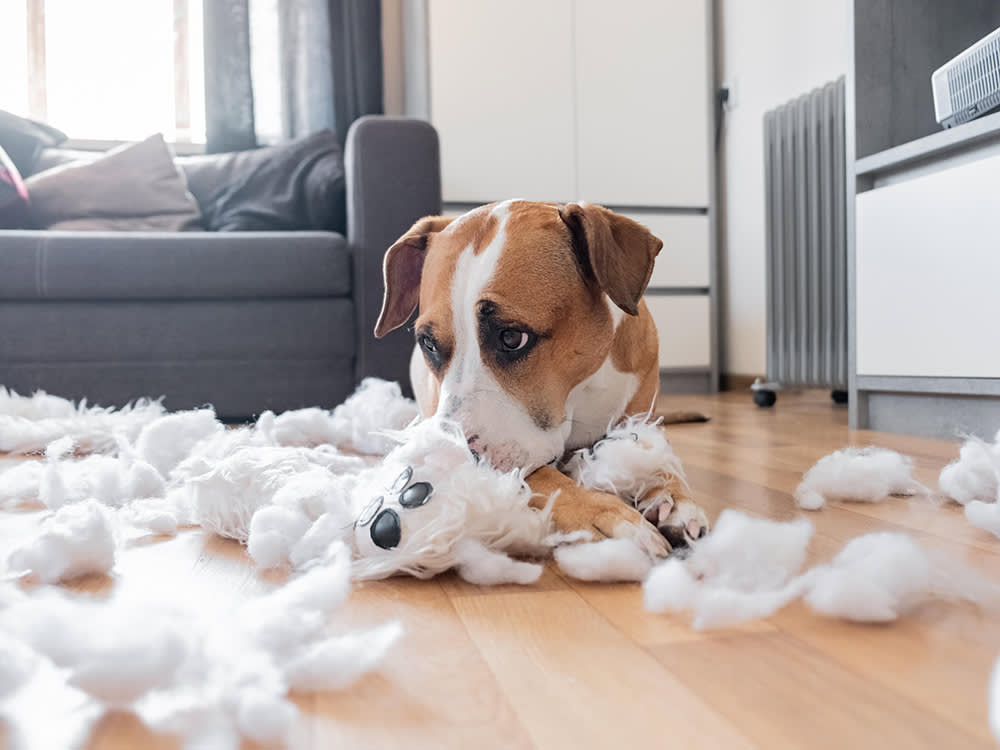
There is a genre of dog-owner humor built around the ridiculous things dogs eat: the missing socks, the mystery of the squeaker that vanished from a toy, the drywall with a suspicious bite out of it. It is funny right up until the moment it isn’t, which is usually a 2 a.m. emergency-room visit and a surgeon’s estimate. If your dog compulsively eats things that are not food, the behavior deserves to be taken seriously long before it becomes a crisis, because the compulsion has a name, and it has a cause.
That name is pica, a disorder in which a dog repeatedly eats non-food items that do nothing good for their body: rocks, fabric, dirt, drywall, whatever they can reach. Plenty of dogs, especially puppies, mouth and swallow the odd object. Pica is different. It is persistent, it resists redirection, and it is a symptom pointing at something underneath, not a bad habit to be scolded away.
Why this is a medical story, not a manners story
Start with the stakes, because they are the reason to act. When a dog swallows the wrong object, it can lodge in the digestive tract and cause an intestinal obstruction, a genuine emergency. The warning signs are not subtle once it happens: repeated vomiting, often right after eating or drinking, a lost appetite, a painful or tender belly, straining with little or no stool, and growing lethargy or weakness.
An obstruction almost always means surgery, and surgery is neither cheap nor minor. In the current U.S. market, removing a foreign body typically runs somewhere between about $2,000 and $10,000 or more, depending on how sick the dog is and whether damaged bowel has to be removed. The reassuring counterweight is that outcomes are good when owners move fast: prompt treatment tends to produce a full recovery in roughly 80 to 95 percent of cases. The whole point of understanding pica is to never reach that room in the first place.
If your dog is showing any of those obstruction signs, or you know they swallowed something they shouldn’t have, treat it as an emergency and call a vet now rather than waiting to see how the night goes.
Pica is a warning light, not a bad habit, and when owners treat it like disobedience they end up scolding a symptom while the real problem keeps going. The dogs I worry about most are the ones whose families laughed it off for months. By the time I see them, we’re often talking about surgery instead of a workup.
What’s actually driving it
Pica splits into two broad camps, medical and behavioral, and telling them apart is a job for your vet, not a guess at home.
On the medical side, the common thread is a gut that isn’t working right. When the digestive tract is inflamed, whether by intestinal parasites, a food allergy, exocrine pancreatic insufficiency, or protein-losing enteropathy, a dog can struggle to absorb nutrients properly. A body that isn’t getting what it needs may start seeking it in strange places. Deficiencies in key vitamins and minerals, low B12 in particular, along with conditions such as anemia, can feed the same drive.
On the behavioral side, pica can grow out of anxiety, compulsive disorder, or boredom. Crucially, a behavioral cause should only be confirmed after the medical possibilities have been ruled out through a real diagnostic workup. Assuming “it’s just anxiety” and skipping the medical exam can leave a treatable illness festering.
The one clear symptom, and the clues around it
The defining symptom of pica is simple: a dog who continuously eats non-food items. Vomiting frequently rides along, though it is often impossible to tell whether the vomiting is a result of swallowing foreign material or a sign of the underlying condition causing the pica in the first place.
That ambiguity is exactly why it helps to be a careful observer. Jot down any other changes you notice, in appetite, energy, bathroom habits, or mood, because those details help your vet assemble the full picture and zero in on the most likely cause instead of guessing.
How vets get to the bottom of it
Diagnosing pica takes patience, because the list of possible causes is long. Your vet will usually begin with a thorough history and a complete physical exam, then move to blood work and imaging that shows how the gut and the organs are functioning. Trickier cases may warrant a tissue sample from the intestinal wall for a closer look.
If every test comes back normal, the cause is likely behavioral. From there, a veterinarian or a veterinary behaviorist can help identify which behaviors are driving the pica, based on observation and a structured behavioral evaluation.
Treatment follows the cause
Because pica is a symptom, effective treatment depends entirely on what’s underneath, which is why all those vet visits and tests are worth the trouble.
If the culprit is a medical condition, it will usually be managed with medication, a special diet, or both, to resolve the drive to eat foreign objects. If the cause is behavioral, treatment tends to combine behavior modification, mental enrichment, and, in some cases, medication. A thorough behavioral analysis is what tells you whether you are dealing with anxiety, compulsion, or boredom, and each of those calls for a slightly different plan.
Living with a dog who has pica
Whatever the cause, home management is the safety net that keeps a dog alive while treatment does its work. These are complements to veterinary care, not replacements for it, since pica stems from a real underlying condition that home remedies alone cannot fix.
Dog-proof aggressively. Every home needs some dog-proofing, but a dog with pica raises the bar. Be especially vigilant about removing anything toxic if swallowed, such as cleaning supplies, poisonous plants, human medications, and dangerous foods. Crate training or blocking off rooms can give your dog space to be safely unsupervised.
Consider a basket muzzle. A properly fitted basket muzzle lets a dog pant, drink, and take treats while preventing them from eating objects. Introduce it with treats and praise so it becomes associated with good things rather than punishment; used that way, it can be a lifesaver on walks or during short stretches alone.
Support the gut where appropriate. Because some pica traces back to digestive trouble, certain dogs benefit from probiotics, which supply beneficial gut microbes. Probiotics can’t cure the underlying condition on their own, so use them as part of a vet-guided plan, not instead of one.
Burn the energy. Every dog needs enough daily exercise, and for dogs whose pica is behavioral, it’s especially important. Some need an hour or more of real activity a day, whether that’s a morning run, a midday walk, daycare, or an after-work play session. Under-exercised dogs get restless, and restless dogs get creative.
Feed the brain. Mental enrichment matters as much as physical exercise here. Training games, interactive toys, puzzle feeders, and homemade obstacle courses give a busy mind something legal to do. A trainer or behaviorist familiar with pica can tailor the challenge to your dog.
Adjust the diet thoughtfully. Some dogs need a prescription diet to address a medical cause, so never change food without checking with your vet first. For others, small, frequent meals help, and a slow feeder or puzzle feeder can stretch mealtime while adding enrichment at the same time.
Can dogs recover?
The honest answer is: it depends on the cause. When a clear medical driver is found and successfully treated, the pica should resolve completely along with it. When the cause is behavioral, long-term management is usually a more realistic goal than an outright cure, though it varies from dog to dog. Either way, the best odds come from an accurate diagnosis paired with consistent, aggressive treatment.
Alongside treatment, the preventive habits above, keeping tempting and dangerous objects out of reach, do double duty: they lower the chance of a toxic exposure or an obstruction while the underlying issue is being addressed. The more proactive you are, the better the outlook for a long, happy life together, minus the emergency-room detours.
References
- PetMD. “Dog Intestinal Blockage: Signs and What to Do.” petmd.com
- Merck Veterinary Manual. “Exocrine Pancreatic Insufficiency in Dogs and Cats.” merckvetmanual.com
- UC Davis School of Veterinary Medicine. “Unusual Eating Habits in Dogs and Cats.” vetmed.ucdavis.edu
Common questions
How do vets test for a dog eating non-food items?
They start by ruling out medical causes with a physical exam, blood work, and imaging such as an ultrasound. If nothing physical turns up, a vet or veterinary behaviorist evaluates for a behavioral cause like anxiety, compulsion, or boredom.
Can stress or anxiety cause a dog to eat non-food items?
Yes. Once medical causes are excluded, behavioral conditions are a common driver, most often anxiety, compulsive disorder, or plain boredom.
Are certain breeds more prone to pica?
Any dog can develop it, but breeds prone to the underlying medical or behavioral issues, including high-energy or anxiety-prone dogs like Labradors and Dachshunds, may be more susceptible.
Not a substitute for your vet. Our guidance is educational. For urgent symptoms, contact a vet or emergency clinic right away. Editorial standards
Dr. Chen is a small-animal veterinarian who leads health and safety coverage at The Pet Times. She writes and reviews the bulk of our illness, condition, and safety content, translating clinical guidance into clear, practical advice owners can act on at home.
Meet our experts ↗Keep reading
 Health & WellnessThere's an Actual Number for 'My Dog Drinks Too Much Water'Dr. Lena Park · 7 min
 Health & WellnessCooked Salmon Is a Gift. Raw Fish From a Lake Can Kill Your Dog.Dr. Priya Nair · 5 min
 Health & Wellness7 Tick Myths That Put Your Dog at RiskDr. Ravi Mehta · 6 min
 Health & WellnessForget the Rusty Nail. Here's How Dogs Actually Get Tetanus.Dr. Mara Chen · 6 min
 Health & WellnessTylenol Is the 'Gentle' Painkiller That Quietly Wrecks a Dog's LiverDr. Amara Solis · 8 min
 Health & WellnessWhat's Actually in Your Vet's Pain Toolbox (and Why It Isn't in Your Cabinet)Dr. Ravi Mehta · 10 min