


What's Actually in Your Vet's Pain Toolbox (and Why It Isn't in Your Cabinet)
The honest answer to what you can give a hurting dog is nothing from your bathroom shelf. The more useful answer is how much bigger and safer the prescription toolbox has gotten, including a once-a-month shot that didn't exist a few years ago.

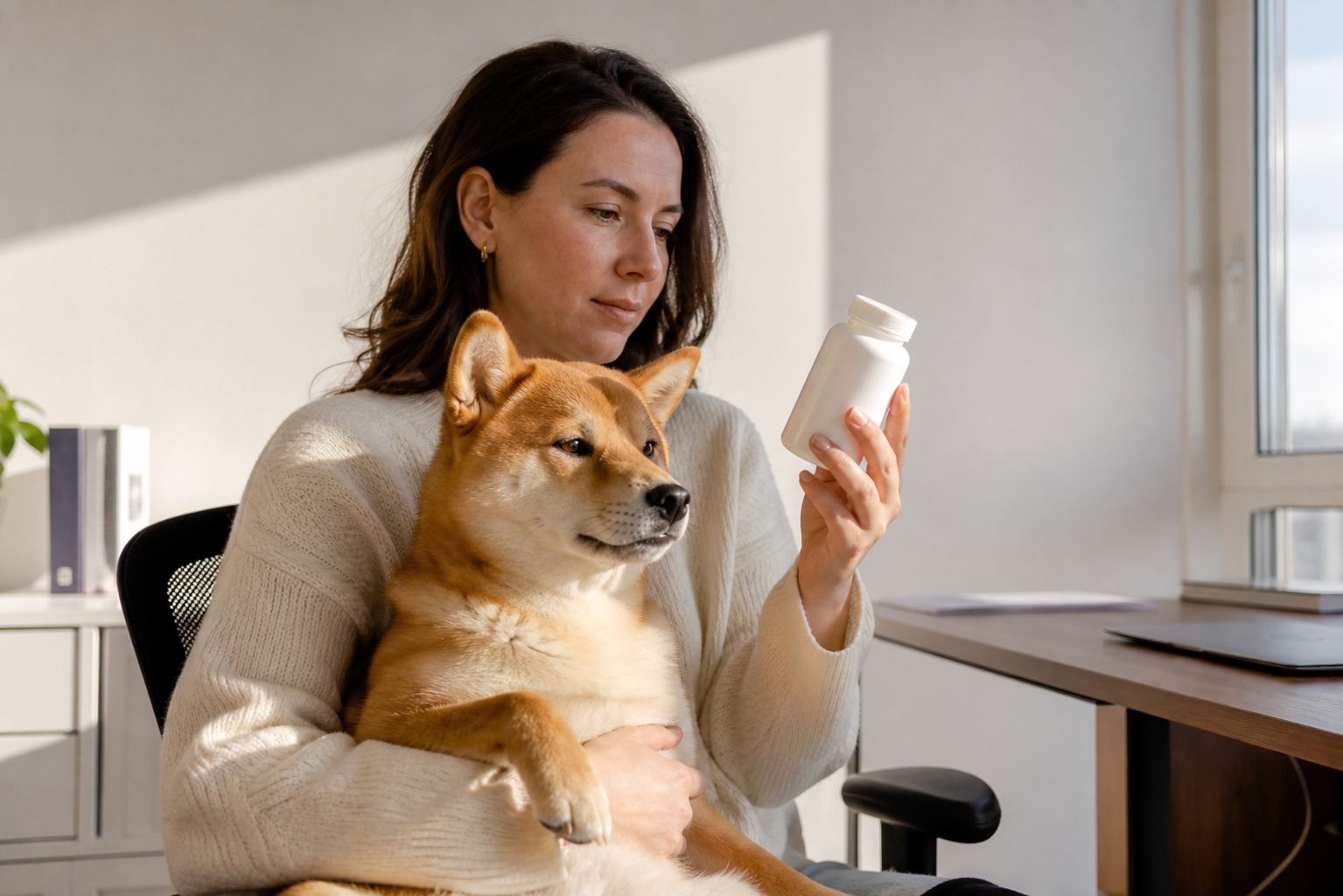
Your dog comes up limping after a hard afternoon at the park, or an older dog is slow and stiff getting off the bed, and your hand drifts toward the bathroom cabinet. It is one of the most human instincts there is. It is also the wrong move, and the reason why is worth understanding, because once you do, the actual options open up in a way that is genuinely reassuring.
Here is the short version: there is nothing in your medicine cabinet that safely treats a dog’s pain. But the toolbox your veterinarian can reach for is bigger, safer, and more precise than it was even three years ago, and that is the story most owners never hear.
Why the Math on Human Painkillers Doesn’t Work for Dogs
The problem with reaching for an over-the-counter pill is not just that “human medicine is different.” It is that the safety margin for a dog is razor-thin, and the numbers make that concrete.
Ibuprofen is the clearest example. In dogs, gastrointestinal injury, including ulcers, starts appearing around 50 mg/kg of body weight. Kidney damage sets in around 175 mg/kg. At 400 mg/kg and above you are into seizures, coma, and death. To put that in everyday terms, a single 200 mg tablet is enough to push a small dog into the GI-damage range, and a dropped pill bottle can be lethal. There is no published “safe” dose of ibuprofen or naproxen for dogs at all, precisely because the gap between “might help” and “causes harm” is so small.
Acetaminophen (Tylenol) is occasionally used in dogs under direct veterinary supervision, but its window is just as unforgiving: signs of toxicity appear above roughly 100 mg/kg, and at 200 mg/kg and up it begins damaging the blood’s ability to carry oxygen. This is not a drug to estimate by eye.
Aspirin deserves its own warning because the “dog aspirin” label makes it feel sanctioned. It is not. Aspirin has been shown to cause stomach ulcers in dogs after a single dose at the levels that used to be recommended. Worse, it lingers: the side effects of most NSAIDs overlap and last five to seven days, so an aspirin you give on Monday can prevent your vet from safely starting a better drug until the following week. You can actually delay your dog’s relief by trying to provide it.
The instinct to do something immediately is the dangerous part. With a hurting dog, the fastest path to real relief is almost always the phone, not the cabinet.
The One Piece of Chemistry Worth Knowing
You do not need a pharmacology degree, but one idea explains the entire safety gap between drugstore pills and vet-prescribed ones.
When tissue is injured, cells ramp up an enzyme called cyclooxygenase, or COX, which produces prostaglandins, the chemical messengers behind swelling and pain. There are two that matter. COX-2 shows up at the site of an injury and drives the pain you want to stop. COX-1 is the quiet housekeeper: it protects the stomach lining, keeps the intestines coated in mucus, and maintains blood flow to the kidneys every single day.
Old drugs like aspirin and ibuprofen block both. Shutting down COX-2 eases the pain, but shutting down COX-1 at the same time strips the stomach’s protection and starves the kidneys, which is exactly how ulcers and kidney injury happen. The breakthrough in veterinary medicine was designing drugs that lean hard on COX-2 while mostly sparing COX-1. That single distinction is why a prescription NSAID can work where a drugstore one wounds.
What’s Actually in the Modern Toolbox
This is the part the old advice columns skip, and it is the most useful part. Treating canine pain in 2026 is not a single pill; it is a set of tools your vet matches to the cause, your dog’s age, and their bloodwork.
COX-2-selective NSAIDs (the workhorses). These are the FDA-approved, dog-specific anti-inflammatories that do the heavy lifting for both injuries and arthritis: carprofen (Rimadyl, Novox), meloxicam (Metacam), firocoxib (Previcox), deracoxib (Deramaxx), and robenacoxib (Onsior). All require a prescription; none are sold over the counter for dogs. One detail worth knowing because it surprises owners: robenacoxib is approved only for short-term use after soft-tissue surgery, a maximum of three days, so it is not a long-term arthritis drug.
Grapiprant (Galliprant), a different mechanism entirely. Rather than blocking COX, grapiprant blocks the specific prostaglandin receptor (EP4) that transmits osteoarthritis pain. Because it leaves the COX housekeeping system largely alone, it tends to be gentler on the gut, which makes it a useful option for older dogs that don’t tolerate traditional NSAIDs. It is approved specifically for osteoarthritis pain.
Bedinvetmab (Librela), the genuinely new tool. Approved by the FDA in May 2023, this is the first monoclonal antibody for canine osteoarthritis pain, and it works in a way no pill does. It is a once-monthly injection given at the clinic that binds and neutralizes nerve growth factor (NGF), a protein elevated in arthritic dogs that helps carry the pain signal to the brain. For a dog that can’t reliably swallow a daily pill, or whose stomach or kidneys make daily NSAIDs risky, a monthly shot is a real change in quality of life. It is not free of tradeoffs: reported effects include elevated kidney values, injection-site reactions, vomiting, and, in post-marketing surveillance, occasional neurological and worsening-joint signs, which is why it belongs in a conversation with your vet rather than on a wish list. But its existence is exactly why the honest headline is not “you can’t do anything” but “your vet can now do more than ever.”
Non-NSAID prescription options. When NSAIDs are off the table because of risk factors, recent GI surgery or symptoms, drug interactions, or a previous bad reaction, vets reach for gabapentin, tramadol, muscle relaxers, or short-course narcotics, often layered with another drug for moderate to severe pain. Clinics also keep fast-acting injectable pain control on hand for the acute, “my dog is really hurting right now” situations that an at-home pill could never safely touch.
Joint supplements and the non-drug layer. Glucosamine, chondroitin, and omega-3 supplements won’t do anything for an acute injury, but for chronic arthritis they can take some load off the medication. And the most underrated tool of all costs nothing: weight. Trimming an arthritic dog to a lean body condition reduces the force across every sore joint and is consistently one of the highest-impact things an owner can do. Controlled, regular exercise and warm, supportive bedding round out the foundation that the drugs sit on top of.
How to Read a Dog That Can’t Tell You It Hurts
Because dogs instinctively mask weakness, pain often shows up as behavior before it shows up as a limp. Watch for a dog that is suddenly reluctant to jump on the couch or take the stairs, slow to rise, off their food, panting at rest, unusually clingy or unusually withdrawn, licking or guarding one spot, or snapping when touched somewhere they normally don’t mind. A normally bouncy dog going quiet is a symptom, not “just getting old.”
When to Call, and When to Rush
Call your vet for any pain that is new, severe, or doesn’t ease within a day, and for any older dog whose stiffness is changing how they live. Treat it as an emergency, same as a poisoning, if your dog has swallowed a human painkiller, is crying out, can’t bear weight on a limb, has a visibly broken or deformed leg, or shows pale gums, repeated vomiting, blood in the stool (bright red or tar-black), or sudden collapse.
Keep one number where you can find it fast: the ASPCA Animal Poison Control Center, (888) 426-4435. If your dog gets into the medicine cabinet, that call, with your dog’s weight and the pill count and strength in hand, can be the difference between a treatable scare and an emergency.
This article is for general information and is not a substitute for veterinary advice. Always talk to your veterinarian before giving your dog any medication, and call your vet or a poison-control line immediately if your dog has ingested a human drug.
References
- U.S. Food and Drug Administration. “Get the Facts about Pain Relievers for Pets.” fda.gov.
- U.S. Food and Drug Administration. “FDA Approves First Monoclonal Antibody for Dogs with Osteoarthritis Pain” (bedinvetmab/Librela), May 2023.
- Merck Veterinary Manual. “Toxicoses From Human Analgesics in Animals.”
- MSD/Merck Veterinary Manual. “NSAIDs Used for Pain Management in Dogs and Cats.”
- KuKanich B, et al. “Grapiprant: A snapshot of the current knowledge.” Journal of Veterinary Pharmacology and Therapeutics.
- ASPCA Animal Poison Control Center, (888) 426-4435.
Common questions
Is dog aspirin safe?
No. Buffered or 'dog' aspirin has been shown to cause stomach ulcers in dogs after a single dose at older recommended levels, and it can block your dog from getting a safer prescription NSAID for up to a week. Modern vet-specific drugs do the same job with far less risk.
My dog already swallowed an ibuprofen. What do I do?
Treat it as an emergency and call your vet or the ASPCA Animal Poison Control Center at (888) 426-4435 right away. Have the dog's weight and the number of pills and their strength ready. Do not wait for symptoms; gastrointestinal damage can begin well before you see vomiting or blood.
What can help my dog's arthritis besides daily pills?
A lot, and it stacks. Weight control is the single biggest lever, followed by joint supplements, controlled exercise, and increasingly a monthly anti-NGF injection (bedinvetmab) that controls osteoarthritis pain without a daily oral dose. Your vet builds the mix around your individual dog.
Not a substitute for your vet. Our guidance is educational. For urgent symptoms, contact a vet or emergency clinic right away. Editorial standards
Dr. Mehta is a board-certified veterinary nutritionist who evaluates pet food formulations, ingredient quality, and the science behind dietary trends. He writes and reviews all nutrition content at The Pet Times, including our food rankings and feeding guides.
Meet our experts ↗Keep reading
 Health & WellnessOne Raw Fish Can Kill a Dog in Two Weeks. Most Owners Have Never Heard of It.Dr. Ravi Mehta · 6 min
 Health & WellnessThe 'Mystery Dog Illness' Wasn't a Mystery. Here Are 8 Ways to Keep Your Dog Out of It.Dr. Mara Chen · 7 min
 Health & WellnessCooked Salmon Is a Gift. Raw Fish From a Lake Can Kill Your Dog.Dr. Priya Nair · 5 min
 Health & WellnessYour Dog Eating Dirt Is Two Problems, Not OneDr. Priya Nair · 7 min
 Health & WellnessSmoking Outside Doesn't Save Your DogDr. Ravi Mehta · 8 min
 Health & WellnessYour Dog's Tail Went Limp After a Big Day Out. It's Probably Not BrokenDr. Mara Chen · 7 min