


Your Dog Isn't Being Naughty. It's Caching.
The sock behind the pillow, the chew in the flower bed, the remote that vanished for a month: burying looks like mischief and it's actually ancient bookkeeping. Here's when it's normal, when it's a red flag, and the one rule that keeps it harmless.

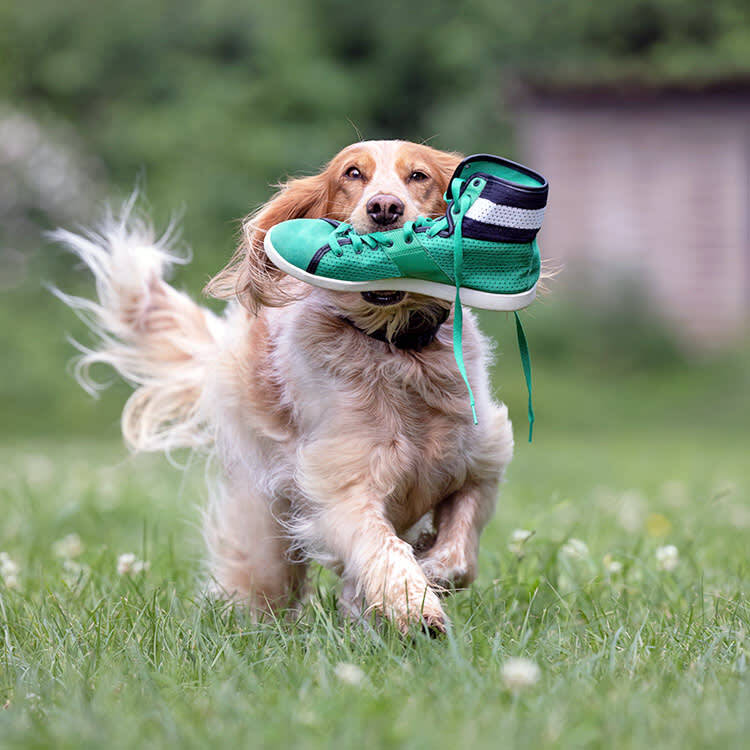
You know the routine. A slipper disappears. Weeks later it turns up behind a couch cushion, or half-planted in the yard like a strange crop. It feels like mischief, or boredom, or your dog quietly editing your belongings. It is none of those things. It is caching, and it is one of the oldest habits your dog owns.
Once you see burying for what it is, the whole thing gets less mysterious and a lot easier to live with. There is a normal version, a stress-driven version, and a medical version, and telling them apart is the entire game.
The instinct under the slipper
Burying is inherited housekeeping. Wild canids stashed extra food away from scavengers so they could come back to it later, and modern dogs still carry that drive. The wrinkle is that the instinct does not check whether the item is edible or whether your dog is actually hungry.
A dog with a full bowl and a warm bed will still hide a brand-new chew, and owners take it personally, like the dog doesn’t trust them. It has nothing to do with trust. A high-value or novel object trips an old ‘save this for later’ circuit, and the dog is just doing what that circuit tells it to do.
That is why the trigger is so often a surplus, a bone your dog isn’t in the mood for right now, or something new and exciting rather than genuine need. In homes with more than one pet, the same instinct does double duty: hiding a prized item is also a quiet way to keep it away from the others.
Breed and age turn the dial
If you have two dogs and only one is a committed burier, the difference may be written into them. A dog bred to hunt, to go to ground after something, or to make its own decisions all day, terriers and hounds and the northern breeds, will generally cache harder, because the jobs they were bred for rewarded digging and resource-protecting behavior. The instinct simply runs hotter in those lines.
Age moves it too. Puppies often try burying out as play. Adolescents may ramp it up as they experiment with independence and start deciding what counts as valuable. Most senior dogs bury less, but cognitive changes late in life can reactivate or intensify it. Dogs who came from deprived or unstable early environments may also cache more, carrying forward a real memory of scarcity.
The line between quirk and red flag
Occasional burying is completely normal. A sudden spike, or an obsessive pattern that takes over your dog’s day, is the thing to watch, the same way you would watch any repetitive behavior that seems to be scratching an itch that never goes away. In rarer cases, compulsive disorders or, in older dogs, cognitive dysfunction can show up as repetitive hiding or hoarding.
The single most important thing to notice is guarding. Burying by itself is harmless. Burying plus defending the spot is not.
“The behavior I actually worry about isn’t the hiding, it’s the hovering,” says Dr. Kohl. “If a dog stashes something and then goes tense over it, stiff body, hard stare, freezing when you come near, that dog is telling you it feels it has something to lose. That is the version that needs a plan, not a scolding.”
Stress-driven hiding usually travels with stressed body language: slinking around with the item, eyeing everyone nearby, panting. Those signals frequently point back to unmet needs, and the most common culprit is too little real exercise and mental stimulation.
One caveat that matters here: not all exercise calms a dog. A neighborhood walk is full of variables, passing cars, barking dogs, other dogs’ territory, that can leave some dogs more wound up than when they left. For an anxious dog, quieter off-leash or long-line time in nature, a wooded trail, a calm park, an empty field, often does more for the nervous system than a busy sidewalk lap.
The rule that keeps it harmless: trade, don’t take
The instinct to grab back whatever your dog hid is exactly the instinct to fight. Many dogs learn to hide and guard precisely because the people around them kept confiscating things when they were puppies. Every snatch teaches the dog that objects vanish, so the smart move is to hide them.
Flip the lesson. Make delivery the profitable move: a treat lands, and then the thing they surrendered is handed straight back to them. Rehearse it constantly with items your dog is allowed to have, so the pattern becomes “bring it to me, good things happen, I still keep my stuff.” Do that enough and the whole economy changes. Hiding stops being necessary because holding onto things stops feeling risky.
The one exception is safety. If your dog has buried something genuinely dangerous, trade with your very best treat to get it, calmly, and don’t turn it into a chase. And resist the urge to dig up and repossess a harmless stash in front of your dog. To them, the item was put away for keeping. Having it disappear can raise stress and feed the very guarding you want to avoid.
When to loop in your vet
Head to the vet if the hiding appears suddenly, becomes compulsive or disruptive, or comes bundled with anxiety signs like panting, pacing, or growling over resources. Do the same if it shows up alongside appetite loss, disorientation, or reduced mobility, because pain, mobility problems, and neurological conditions can all change how a dog interacts with its environment and occasionally spark new repetitive behaviors. Any time burying feels genuinely out of character, or starts affecting household safety, it is worth ruling out both medical and behavioral causes rather than guessing.
What newer research adds
Behavior specialists increasingly file burying, hoarding, and stashing under the broader umbrella of normal “appetitive” and food-caching behavior, and the current guidance leans hard on management over punishment. The consensus that has firmed up in recent years is that enrichment, letting dogs use their noses, chew, forage, and problem-solve, reduces a lot of the surplus energy and low-grade stress that push caching into overdrive. Trade-based training has become the mainstream recommendation for anything resource-related, precisely because forced confiscation is now understood to be one of the fastest ways to create resource guarding rather than resolve it. If your dog buries and shows no tension about it, the modern advice is refreshingly simple: let them. It is enrichment, not a problem to fix.
References
Common questions
Is it bad to dig up what my dog buried?
Usually yes, if you do it in front of them. Disturbing a stash can stress a dog who hid the item for safekeeping, and it can make guarding worse. Trade for it calmly instead of confiscating it.
When should burying prompt a vet visit?
When it starts suddenly, becomes compulsive or disruptive, comes with anxiety signs like panting, pacing, or growling over resources, or shows up alongside appetite loss, disorientation, or reduced mobility. A sudden change in an older dog is worth ruling out medically.
Dr. Kohl is a board-certified veterinary dentist with a particular interest in preventive oral care. She reviews all dental health content at The Pet Times and contributes practical guides on home dental routines, professional cleaning, and oral disease prevention.
Meet our experts ↗Keep reading
 Health & WellnessYour Dog's Breed Is a Remix. The Family Tree Explains the Quirks and the Risks.Dr. Ravi Mehta · 7 min
 Health & WellnessYour Dog Isn't Being Dramatic About Their PawsDr. Amara Solis · 6 min
 TrainingYour Dog's Sad Face Is a Muscle Wolves Don't Have. It Evolved to Work on You.Dr. Ravi Mehta · 8 min
 Training8 Disgusting Things Your Dog Does. Only 3 Are Worth Worrying About.Dr. Ravi Mehta · 9 min
 Health & WellnessYour Dog Owns the Dark. Here's the Price They Paid for It.Dr. Ravi Mehta · 8 min
 Health & WellnessYour Dog Licking Your Feet Is Harmless. The Cream on Your Skin Isn't.Dr. Ravi Mehta · 6 min