


Your Cat Flunks the One Test Almost Every Other Animal Passes
Rats, birds, chimps, and even dogs will work for food when a free bowl sits right there. Cats mostly won't. That refusal isn't laziness, and it changes how you should feed them.

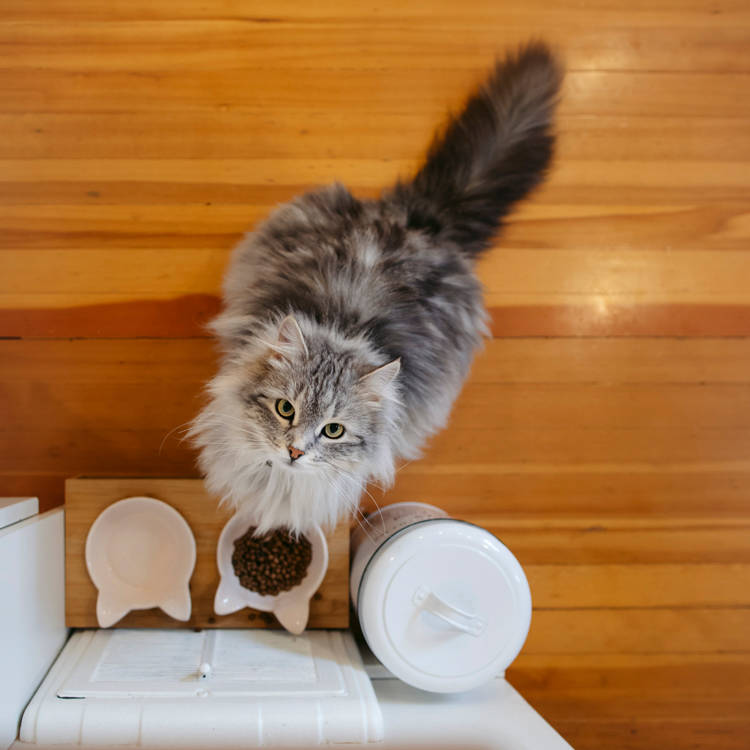
Give almost any animal a choice between a bowl of free food and a small task that earns the same food, and it will do at least some of the work. Rats do it. Pigeons do it. Chimpanzees, gerbils, and even dogs do it. Scientists have a clunky name for this: contrafreeloading, the willingness to work for a reward that is also available for free. It has been documented across the animal kingdom since the 1960s.
Then there are cats, who look at the arrangement, walk past the puzzle, and eat from the free bowl. They are one of the few animals ever tested that reliably refuse the deal.
It is tempting to read that as proof of everything people already believe about cats: entitled, lazy, too grand to work. The real story is more interesting, and it should change how you feed a house cat.
The study that caught cats freeloading
Researchers at the University of California, Davis ran the first proper test of contrafreeloading in pet cats living in ordinary homes. They gave 17 indoor cats a simple choice across a series of trials: a food puzzle they knew how to operate on one side, and a tray of the identical food, free for the taking, on the other. The puzzle was not hard. Every cat had already learned to use it.
The cats ate more from the free tray, spent more time at it, and usually went to it first. They did not ignore the puzzle completely, they just treated it as the second-string option. Given an easier path to the exact same meal, they took it.
One detail is easy to skip past and worth sitting with. The handful of cats who did work the puzzle more were the ones eating the most food overall. In other words, the cats who put in effort were simply the hungriest, driving toward more calories rather than choosing work for its own sake. That is a hunger effect, not a taste for labor.
People read this study as ‘cats are lazy,’ and that is the wrong lesson. What it actually shows is that a bowl on the floor is a solved problem for a cat, and cats are ruthless about not re-solving problems. The trick isn’t to guilt them into the puzzle. It’s to stop leaving the easy bowl out as competition.
Why this one species opts out
Here is the part that reframes the whole thing. Contrafreeloading is thought to be tied to how an animal is built to forage. Species that evolved to search, scan, and sample across a big territory seem to get something out of the searching itself. The hunt is not just a cost, it is part of the reward.
Cats are ambush predators. Their whole design is about efficiency at the moment of the strike, not roaming effort. A cat’s ideal is to spend almost nothing, wait, and win in one explosive move. From that angle, walking past a puzzle to eat free food is not laziness at all. It is a predator behaving exactly as a predator should: never spend energy you do not have to.
That also explains why the finding is not an insult. A cat picking the free bowl is running the same cost-benefit math that keeps a wild hunter alive.
What newer research adds
The cat result did not stay an isolated oddity. In 2024, researchers put the same question to pet dogs, long assumed to be eager contrafreeloaders, using a snuffle mat and a free tray side by side. The dogs did not show a strong pull toward working either. Most ate from the free option first, though many were willing to nose through the mat too. The neat old line that “dogs work and cats don’t” turned out to be softer than the memes suggest. When free food is genuinely right there, the willingness to work for it is weaker across the board than the older lab studies implied.
The takeaway for a cat owner is not that puzzles are pointless. It is that a puzzle competes badly against an open bowl, for almost any animal. The behavior only shows up cleanly when the work is the way to the food, not a detour around a shortcut.
How to actually feed a hunter
None of this means you should skip enrichment. An indoor cat with nothing to stalk is the one that overeats, gets pushy, or redirects that unspent drive into your ankles at 3 a.m. Food puzzles remain one of the best tools for that. You just have to set them up so your cat is not being asked to choose work over a free lunch.
A few practical moves that respect how cats are wired:
First, make the puzzle the meal, not a bonus. Portion the actual food into the puzzle and skip the parallel bowl for that feeding. When the puzzle is the only route to dinner, cats work it without complaint.
Second, start absurdly easy. A puzzle with big openings and an obvious payoff teaches your cat that effort pays. If the first puzzle is too hard, the cat quits and learns the opposite lesson.
Third, scatter and hide. You do not need a fancy gadget. A few kibble stations tucked around a room turn one meal into several small hunts and lean directly into the search-and-pounce instinct.
Fourth, watch the hungriest cat in a multi-cat home. The study’s biggest workers were its biggest eaters. If one cat is inhaling puzzle food, that can be a flag to check portions and weight rather than a sign of admirable work ethic.
Your cat refusing the food puzzle next to a full bowl is not a character defect and not a training failure. It is a small, precise piece of evidence about what a cat is: a specialist built to win with the least effort possible. Feed that animal on its own terms, and the puzzle stops being a chore it snubs and becomes the hunt it was always looking for.
References
- Delgado, M. M., et al. “Domestic cats (Felis catus) prefer freely available food over food that requires effort.” Animal Cognition, 2021. link.springer.com
- “Cats Prefer to Get Free Meals Rather Than Work for Them.” University of California, Davis. ucdavis.edu
- “Domestic pet dogs (Canis lupus familiaris) do not show a preference to contrafreeload, but are willing to work for food.” Scientific Reports, 2024. nature.com
Common questions
Is it bad that my cat prefers the easy bowl?
No. Preferring free food is normal feline behavior. The concern is not the preference, it is a bored, under-stimulated indoor cat with nothing to chase or hunt. Puzzles solve the boredom, they just work better when you set them up as the meal rather than an add-on.
Do food puzzles still help cats?
Yes. The research is about what cats choose when free food is also available, not about whether puzzles are good for them. Used as the actual feeding method, puzzles slow fast eaters, add mental work, and give indoor hunters an outlet.
Dr. Kohl is a board-certified veterinary dentist with a particular interest in preventive oral care. She reviews all dental health content at The Pet Times and contributes practical guides on home dental routines, professional cleaning, and oral disease prevention.
Meet our experts ↗Keep reading
 FoodYour Cat Doesn't Need to Eat Catnip to Get High. Eating It Is the Risky PartDr. Mara Chen · 6 min
 FoodYour Cat Won't Eat Without You. That's Sweet Until It Isn't.Dr. Nina Kohl · 7 min
 TrainingYour Cat Might Be Catching Your Stress. A 3,000-Person Study Says So.Dr. Mara Chen · 5 min
 TrainingYour Cat Holds a Picture of You in Their Head, Even When You Leave the RoomDr. Mara Chen · 4 min
 TrainingThat Old Sweater Isn't Comforting Your Cat. It's Just Soft.Dr. Mara Chen · 8 min
 Health & WellnessThe Cat Loaf Has a Dark Version. It's in the Face, Not the Paws.Dr. Mara Chen · 8 min