


Your Sleeping Cat Purrs for a Reason. Usually a Good One.
A cat purring mid-nap is mostly saying 'all is well.' But the purr does double duty, soothing and even healing, and once in a while it's worth a second look. Here's how to read it.

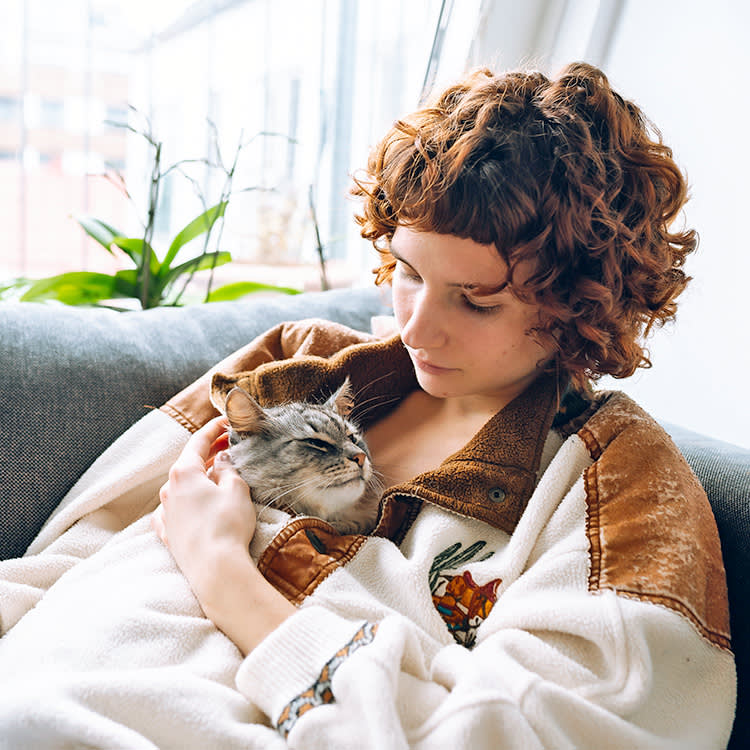
You glance over at your cat, curled into a comma on the couch, eyes shut, and there it is: that soft, steady rumble coming from a body that is otherwise completely asleep. It’s one of the most reassuring sounds in a pet owner’s day. And the reassurance is mostly earned. A cat who purrs while they doze is usually telling you the simplest, best thing a cat can say: I feel safe here.
But the purr is a more interesting instrument than “happy cat noise.” It’s also a self-soothing tool, a possible healing mechanism, and, on rare occasions, a quiet flag that something’s off. The trick to reading a sleep-purr isn’t decoding the sound in isolation. It’s reading the whole cat around it.
First, what a purr even is
A purr is a rhythmic, low-frequency vibration a cat produces by rapidly twitching the muscles of the voice box as they breathe in and out. That mechanism runs almost on autopilot, which is part of why it can keep going even when a cat is barely conscious.
Cats purr for a whole range of reasons, and contentment is the most common one by far. But purring is easy to over-read. It can also mean a cat wants something from you, or that they’re uneasy and trying to talk themselves down.
People treat the purr like a mood ring, and it just isn’t that simple. Most of the time a purring cat is a comfortable cat. But cats also purr when they’re anxious, or hurting, or trying to steady themselves. The sound alone doesn’t tell you which one you’ve got, the rest of the cat does.
Yes, cats really do purr in their sleep
They do, and it’s common. Plenty of cats purr softly as they rest, and some snore on top of it, especially when they’ve dropped into a heavier sleep. If you’ve ever been serenaded by a rumbling, faintly snoring cat at the foot of the bed, you’re in good company.
So why do they do it?
Because cats don’t narrate their inner lives, no one can say with certainty what a sleeping cat’s purr means. But the strong default is the happy one: a relaxed, contented cat purring their way through a nap. Less often, that same purr is a self-soothing behavior that can signal discomfort or pain. The way to tell the difference is to watch for the other signals, hiding, restlessness, a tense body, labored or open-mouthed breathing, which is where a purr shifts from charming to worth checking.
They’re not actually in a deep sleep
Here’s a detail that surprises people. Cats spend a huge share of the day asleep, but most of that is not deep sleep. It’s a lighter, energy-conserving doze, a kind of standby mode they can snap out of instantly. That light phase is exactly where sleep-purring lives. As a cat cycles down into genuine deep sleep, the purr usually goes soft and intermittent and then fades out entirely. So a purring “sleeper” is often a cat resting on the surface of sleep, not one who’s fully under.
They might be soothing, or even healing, themselves
This is the part that turns a cute habit into something genuinely fascinating. There’s a long-standing idea in feline research that purring works as an internal repair tool. The vibration typically falls between about 25 and 150 hertz, a range that lab work has associated with tissue repair, improved bone density, and even the mending of fractures. Those same frequencies may help soothe muscles and tendons.
Purring also seems to act as a natural painkiller and stress reliever, which helps explain a counterintuitive fact: cats often purr when they’re hurt, frightened, or recovering. A cat in pain may even shift the frequency of their purr toward the range thought to encourage healing. It’s why you can’t assume a purring cat is a happy one, and why a cat purring through a nap might, occasionally, be managing something rather than simply enjoying the sun.
It can be about anxiety
A loud or insistent purr can be a cat’s way of talking themselves off a ledge. Vets see this constantly in exam rooms, an anxious cat purring hard as a self-comfort mechanism, sometimes so vigorously it complicates the physical exam. If your cat purrs in situations that clearly aren’t relaxing, take the cue seriously rather than reading it as delight.
And often, it’s about you
Purring is also social glue. A cat who purrs while sleeping on your lap, against another pet, or pressed into your side is broadcasting connection and security. In effect, they’re telling you they feel safe enough to be unconscious next to you, which, from a small predator, is a genuine compliment. If your cat times their purr to the exact moment you shift like you might get up, well, that’s not subtle either.
When a sleep-purr is worth a closer look
Most of the time, purring alone is nothing to worry about. The concern is purring plus something else. Book a vet visit if the purring is unusually loud or constant, or comes paired with any of these:
- Restless, disturbed sleep
- Changes in breathing, panting, or open-mouthed breathing
- A tense, guarded body, or signs of pain when getting up
- Avoiding certain movements
- Hiding more than usual
- Reduced grooming
- Changes in appetite
The rule of thumb is to zoom out. Is your cat loose and relaxed, or braced and tense? Breathing easily, or working at it? Eating, grooming, and moving like their normal self? A purr sitting on top of a relaxed, normal cat is just a cat being content. A purr sitting on top of hiding, appetite changes, or labored breathing is the one that earns a call.
The bottom line
If you catch your cat purring in their sleep, the honest answer is: enjoy it. Nine times out of ten it’s a light-sleep, safe-and-cozy signal, their version of “all is well,” and it’s especially likely when they’re tucked against you or another pet. Just remember the purr wears more than one hat. It soothes, it may even help a body heal, and rarely it masks discomfort. Don’t panic over the sound. Read the cat.
References
- von Muggenthaler, E. “The felid purr: A healing mechanism?” The Journal of the Acoustical Society of America, November 1, 2001. pubs.aip.org
Dr. Nair is a veterinarian focused on diet and feeding. She covers everyday nutrition, treats, and the many "can they eat this?" questions owners ask, grounding each answer in what is actually safe and sensible for dogs and cats.
Meet our experts ↗Keep reading
 Health & WellnessYes, Female Cats Spray. Spaying Doesn't Always Stop It.Dr. Lena Park · 7 min
 TrainingYour Cat Knows Its Name. It's Deciding Whether You're Worth AnsweringDr. Amara Solis · 8 min
 TrainingThat Adorable Chirping Is the Sound of a Cat FailingDr. Nina Kohl · 7 min
 TrainingDo Cats Understand What You Say? The Science of Talking to Your CatNina Vasquez · 7 min
 TrainingYour Cat Isn't Aloof, Waterproof, or Low-Maintenance: 8 Myths to RetireDr. Nina Kohl · 8 min
 LivingThe Shoulder-Cat Photo Everyone Tried to Copy. Here's Why Yours Won't Work.Sara Lim · 6 min