


Your Cat Isn't Aloof, Waterproof, or Low-Maintenance: 8 Myths to Retire
Some cat myths are just silly. Others get cats surrendered, injured, or ignored. A behavior-informed look at eight things people get wrong about cats, and what's actually true.

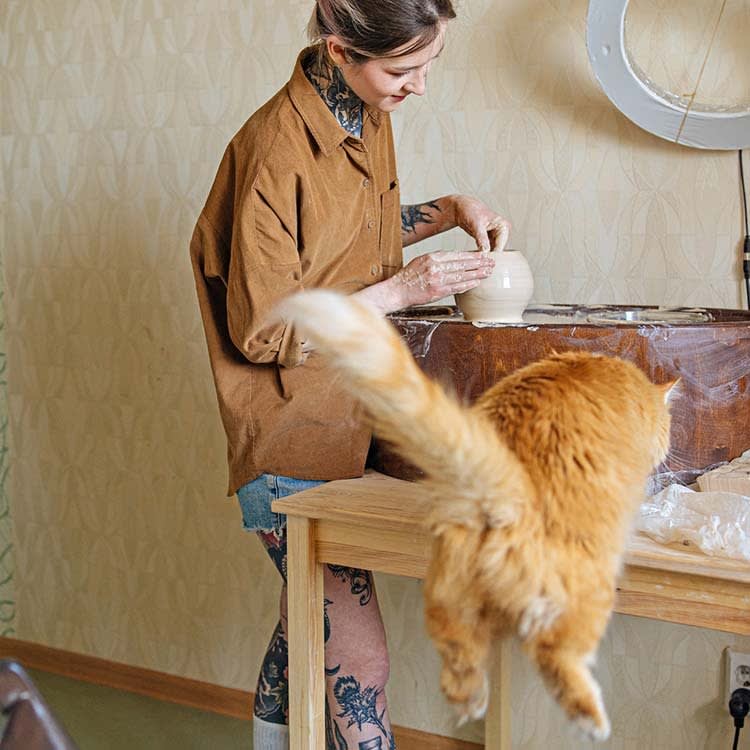
Cats have been mythologized for thousands of years, which is flattering and also part of the problem. For every charming bit of cat lore there is a stubborn misconception that makes cats harder to understand, and a few of them do real damage — the kind that ends with a cat injured, ignored, or dropped at a shelter over a misunderstanding. Clearing the myths out is not pedantry. The clearer your picture of what a cat actually is, the better you can care for the one in your home. Here are eight worth retiring, roughly in order of how much trouble they cause.
Myth 1: Cats are low-maintenance
Start here, because no myth has cost cats more. The idea that a cat is a self-cleaning, self-entertaining appliance you can leave alone has convinced generations of owners to under-invest in animals that need real daily engagement.
Cats do not need a walk, so the assumption is they need almost nothing. In reality, a well-cared-for cat requires time every day: play that lets them stalk and pounce, grooming help, training and enrichment, plus the unglamorous basics of a scrupulously clean litter box, fresh water, and proper feeding. The catch is that cats often suffer this neglect quietly. A dog will pester you when it is bored; a cat may simply withdraw. A cat who “asks for nothing” is not proof the myth is true. It may be proof of the harm it does.
Myth 2: Cats can’t be trained
People happily train goldfish, parrots, rats, and hermit crabs, then insist cats are untrainable. It says more about our assumptions than about cats.
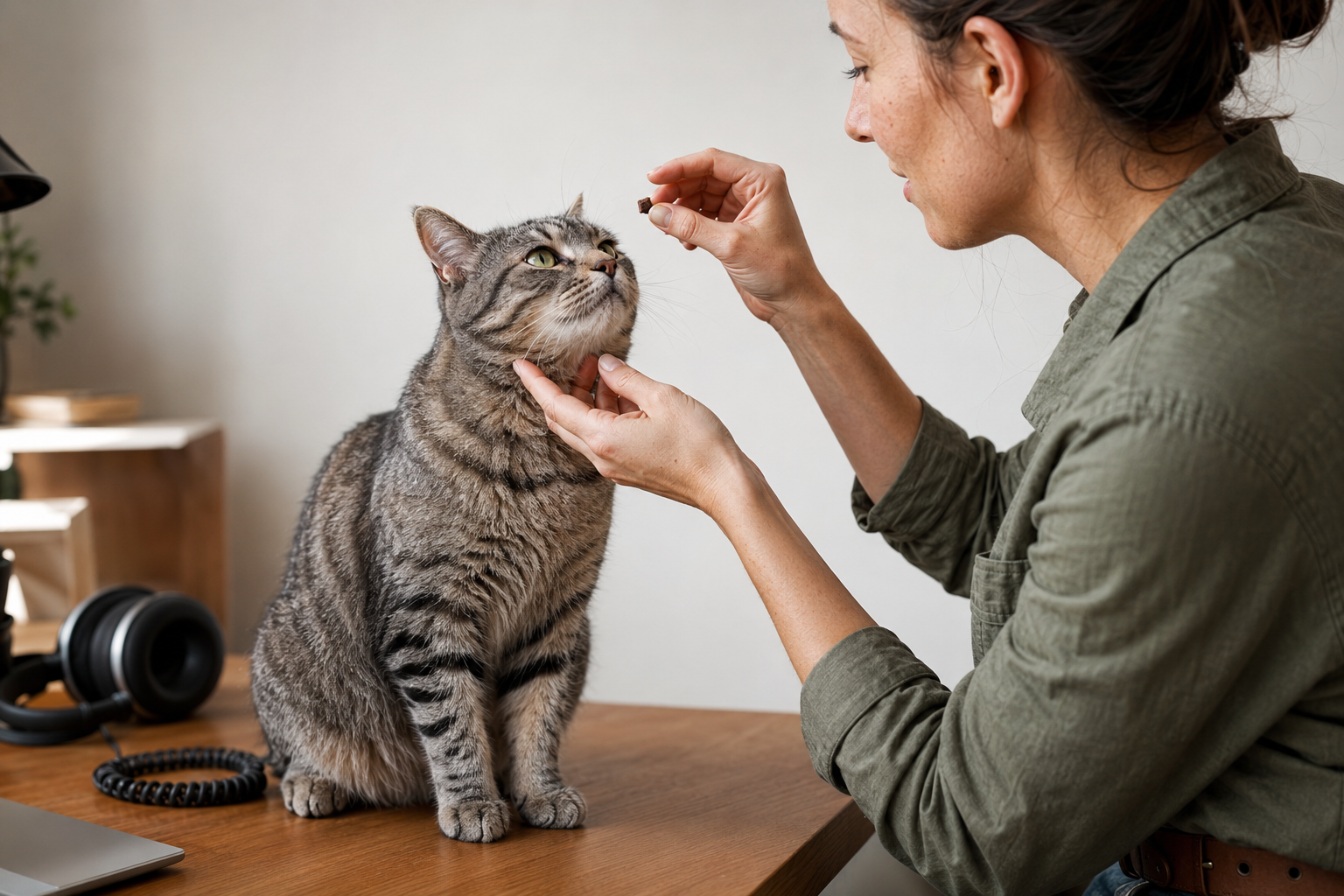
With a clicker, treats, patience, and the same positive-reinforcement methods that work on any animal, cats learn a startling amount. High-fives, coming when called, fetch, offering a paw for a nail trim, walking calmly into a carrier, hopping onto a designated perch on cue — all of it is teachable. Training is not just a party trick, either. A cat who has been taught to load into a carrier turns the yearly vet trip from a bloody wrestling match into a non-event.
Owners tell me their cat ‘won’t let’ them trim its nails or get it in the carrier, and I always say the same thing: your cat isn’t refusing to be trained, they’ve just never been taught. Ten minutes a week with a pouch of treats changes the whole relationship. Cats work hard for you once they understand there’s something in it for them.
Myth 3: Cats always land on their feet
These animals are astonishing acrobats, capable of twisting mid-air into a landing an Olympic gymnast would envy. But “always land on their feet” is dangerous shorthand, because it implies falling is safe. It is not.
A cat needs enough height to complete that righting twist; from a low drop they can hit their side or back before they finish rotating, and get hurt. And from a great height, even a perfect four-paw landing does not spare them — the impact can injure legs, spine, and more. The reassuring myth is exactly what makes people careless about high balconies and open windows, which is how “cats always land on their feet” becomes a vet emergency.
Myth 4: Cats are night creatures that see in the pitch dark
This is two myths bundled into one, and both are off. Cats are not creatures of the night; they are crepuscular, most active at dawn and dusk. The 3 a.m. zoomies across your bed are not evidence of a nocturnal animal — just an inconveniently timed one.
As for the dark, cats see remarkably well in very low light because their eyes pack in light-sensitive receptors and their pupils open extraordinarily wide to gather every available photon. But “very low light” is not “no light.” In genuine, total darkness, a cat is as blind as you are. The glowing-eyed creature that navigates your house at night is working with a little ambient light, not magic.
Myth 5: Cats hate water
Plenty of cats do object to being dunked, and that is real. But a blanket “cats hate water” ignores the many who don’t. Aversion, where it exists, often traces to bad early experiences, simple inexperience, or a desert-ancestor inheritance — not some universal feline law.
Some cats actively seek water out. Turkish Vans are nicknamed “swimming cats” for a reason, and Bengals are famous for splashing in sinks and tubs given the chance. If your cat flees the faucet, respect it. But do not assume every cat shares the phobia.
Myth 6: Cats are dangerous to pregnant women
This one has broken up more cat-and-human households than almost any other, and it is mostly a misunderstanding. Countless cats have been rehomed the moment a pregnancy is announced, over a risk that is far narrower than the myth suggests.
The real concern is toxoplasmosis, a parasite that can be present in cat feces and poses a genuine danger to a developing fetus. But the cats most likely to carry it are outdoor hunters eating birds and rodents. An indoor cat eating commercial food is unlikely to be a source. The sensible precautions are simple: have someone other than the pregnant person scoop the litter box, or if that is not possible, wear gloves and wash hands thoroughly afterward. Worth knowing, too — the same parasite lurks in raw and undercooked meat, so kitchen hygiene matters as much as litter duty. The takeaway is to avoid cat feces during pregnancy, not to avoid cats.
Myth 7: Cats don’t like dogs, or people
The aloof, misanthropic cat is a stereotype, not a species trait. Whether a cat treats dogs and humans as friends or threats is set largely by two things: early socialization and genetics.
Kittens have a sensitive window, roughly three to seven weeks of age, when positive exposure to people and other animals shapes how they will relate to them for life. A cat who met friendly humans and easygoing dogs during that period — and who is genetically inclined toward being social rather than fearful — often grows into an animal who seeks out laps, plays with the family dog, and sleeps curled against whoever is warmest. The “standoffish cat” is frequently just a cat who missed those early good experiences, not one who is incapable of them.
Myth 8: A purring cat is a happy cat
Purring reads as pure contentment, and often it is. But purring is not a mood ring. Cats also purr when they are frightened, in pain, or seriously unwell, and it appears to function partly as self-soothing — a way to calm and comfort themselves under stress.
Cats have even been observed purring while injured or dying, which makes “my cat is purring, so all is well” an unreliable read. Purring is best understood as a request or a coping mechanism as much as a happiness signal: sometimes “I’m content,” sometimes “please stay,” sometimes “I’m trying to feel okay.” Look at the whole cat — posture, ears, appetite, hiding — not just the rumble.
What newer research adds
The old caricature of the cold, indifferent cat is losing ground fast in the lab. Research on feline social cognition in recent years has shown that cats recognize and respond to their own names, and that they form attachments to their humans that look a lot like the secure and insecure bonds seen in dogs and human infants. In one widely cited attachment study, the majority of cats showed a “secure” bond with their caregiver — greeting them, then relaxing enough to explore.
None of this means cats are just small dogs. It means the science increasingly backs what attentive cat owners already suspected: cats are deeply social, communicative, trainable animals whose signals we have spent centuries misreading. The myths persist. The evidence, more and more, does not.
References
- Vitale, K. R., Behnke, A. C., & Udell, M. A. R. (2019). Attachment bonds between domestic cats and humans. Current Biology, 29(18), R864–R865. https://doi.org/10.1016/j.cub.2019.07.036
- Saito, A., et al. (2019). Domestic cats discriminate their names from other words. Scientific Reports, 9, 5394. https://doi.org/10.1038/s41598-019-40616-4
- Centers for Disease Control and Prevention. Toxoplasmosis — pregnancy and cats. https://www.cdc.gov/toxoplasmosis/
Dr. Kohl is a board-certified veterinary dentist with a particular interest in preventive oral care. She reviews all dental health content at The Pet Times and contributes practical guides on home dental routines, professional cleaning, and oral disease prevention.
Meet our experts ↗Keep reading
 Health & WellnessYour Cat Isn't Being Spiteful. Almost Every 'Bad Cat' Behavior Is Anxiety.Dr. Priya Nair · 9 min
 TrainingYour Cat Isn't Broken. But 3 of These 7 Habits Deserve a Vet Call.Dr. Nina Kohl · 8 min
 LivingYour Cat Has Been Asking for the Same 7 Things. You Keep Hearing 'More Cuddles.'Dr. Priya Nair · 8 min
 Health & WellnessThe Glow in Your Cat's Eyes Is a Free Eye Exam. Learn to Read It.Dr. Ravi Mehta · 8 min
 TrainingToilet-Training Your Cat Means Throwing Away Their Health ChartDr. Ravi Mehta · 8 min
 Health & WellnessStop Wrestling Your Cat for Pills. Train Them Instead.Dr. Lena Park · 9 min