


I Gave Cropped-Eared Dogs Their Ears Back With AI. The Ears Were the Easy Part
Restoring a shelter dog's ears in an image takes seconds. What the crop actually removed, a dog's quietest way of saying 'I come in peace,' can't be redrawn. Here's what cropping costs, and where the law now stands.

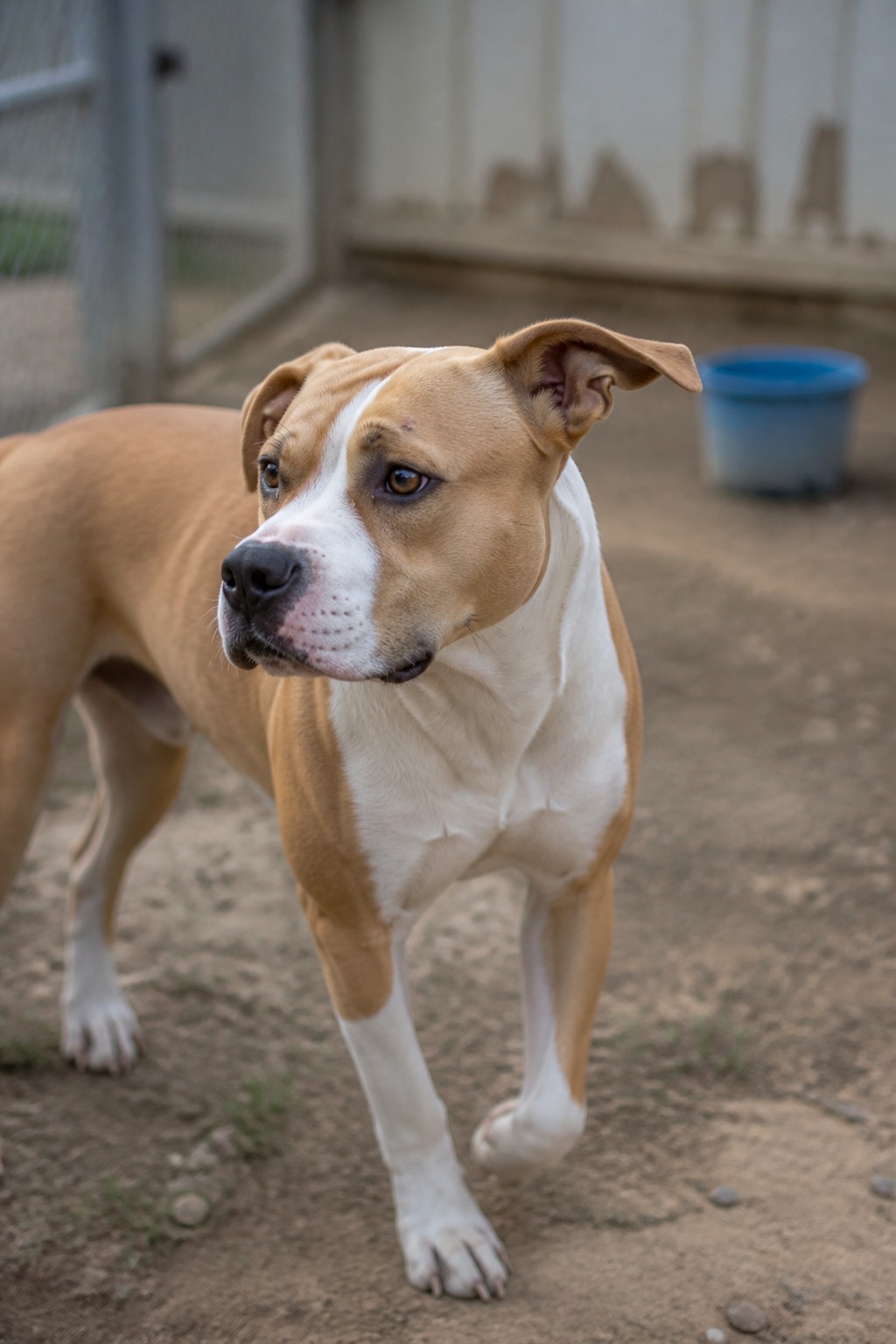
I gave the AI a simple instruction: take this shelter dog, and put back the ears someone cut off. Seconds later, the image had soft, intact ear flaps where there had been two surgical stubs. Every dog in this project is a real rescue who arrived cropped, and in pixels, the restoration is almost trivially easy.
That is exactly the problem I want to sit with. The ears were the easy part to give back. What cropping actually takes from a dog, an entire channel of communication and a lifetime of weather protection, is not something software, or a second surgery, can return. The before-and-after images are arresting. The thing they can’t show you is the part that matters most.
What the surgery removes, beyond the flap
Ear cropping is the surgical amputation of the outer ear flaps, almost always done between eight and 12 weeks of age while the cartilage is still soft. Done properly, it happens under general anesthesia by a licensed veterinarian. Done at home, which still happens, it can mean a puppy held down with no anesthesia at all. As recently as 2020, Amazon was selling at-home cropping kits aimed at bully-breed owners until a public petition pushed the listings off the site.
Here is the distinction the cropping debate usually skips, and the one this whole project is built around. People talk about the look. The real loss is functional, and it comes in two parts.
The first is communication. A dog’s ear is not decoration; it is a moving, expressive instrument backed by a dense set of muscles, more than a dozen of them, that let the ear swivel toward sound and signal mood to other dogs and to us. Pinning the ears flat and back is how a dog says, quietly and before any growl, “I’m no threat, let’s not escalate.” A cropped ear, healed stiff and erect, cannot make that gesture. Worse, a permanently upright ear can broadcast the opposite of what the dog intends: alert, forward, confrontational. When a dog’s calmest signals go unsent and unread, the misunderstandings that follow, between dogs at the park, between a dog and a nervous stranger, are not the dog’s fault. They were designed in with a scalpel.
The second loss is physical protection. A dog born with naturally erect ears, a husky, say, tends to come with thick hair and a built-in shield around the ear canal. A floppy-eared dog whose flaps are amputated is left with the canal exposed to rain, wind, and debris, and the “battle crop,” the most extreme style, in which the ear is cut nearly to the skull, leaves rescue dogs especially prone to painful, recurring infections. Slow evolution toward upright ears and a hasty puppyhood surgery are not the same thing, no matter how often breeders argue they are.
Why people still do it
Cropping is overwhelmingly cosmetic, concentrated on so-called guarding breeds, and rooted in the aesthetics of old blood sports like bull- and bear-baiting. The goal is a sharper, more menacing silhouette. Owners cite a few justifications, and none of them hold up well:
Tradition. “This breed has always had cropped ears.” But the overwhelming majority of these dogs are not working guardians; they are pets asleep on someone’s couch. The same appeal-to-heritage logic props up tail docking.
Breed standards. This one is shakier than people assume. The American Staffordshire Terrier and Cane Corso standards do not require cropped ears and leave it to the breeder’s discretion. The Doberman standard is the notable exception that still calls for them. So for many cropped dogs, even the rulebook didn’t demand it.
“It’s more natural.” The claim that ancestral dogs had erect ears, so cropping is a return to form, ignores the protection difference above. An evolved upright ear and a surgically created one are biologically different objects.
What veterinarians and accreditors now say
Outside rare medical need, the professional consensus is not subtle. The American Veterinary Medical Association opposes cosmetic cropping, and its updated 2024 literature review catalogs the risks plainly: the anesthesia itself carries danger; recovery means weeks to months of taping, re-bandaging, and stretching, sometimes with the dog isolated from other dogs; and complications include infection, ears that never stand, distorted shape or position, and follow-up surgeries to fix the result. The American Animal Hospital Association went a step further: its revised accreditation standards now actively discourage member hospitals from performing cropping at all.
The legal map is where this article can do something the original could not, which is tell you where things actually stand. Contrary to a common assumption, there is no U.S. federal ban and no state with an outright ban on the books. What exists is a patchwork: roughly nine states, including Connecticut, Illinois, Maine, Maryland, Massachusetts, New Hampshire, New York, Pennsylvania, and Washington, regulate the procedure, typically by restricting it to licensed veterinarians or by age. Washington, for instance, bars cropping of dogs older than seven days unless a vet performs it. Compare that to most of Europe, the U.K., Scandinavia, Australia, and New Zealand, where cosmetic cropping is treated as cruelty and banned outright, and the U.S. position looks less like a considered policy and more like an absence of one.
“When I see a cropped rescue dog, I’m not looking at a style choice, I’m looking at a dog who lost part of how it talks to the world,” says Dr. Amara Solis, a veterinarian who works with shelter intakes. “We can manage the infections. We can’t give back the ear language. That’s the part owners never see on the consent form.”
What the images can, and can’t, do
So I let the AI redraw the ears, and the dogs in these photos look, for a moment, like the dogs they were born as. It is a small act of repair, and I won’t pretend it isn’t satisfying. But the honest version of this project ends with a caveat the technology can’t override: a restored ear in an image is a picture of a function, not the function itself. The dog in front of you still can’t flatten ears it no longer has. It still can’t soften a tense encounter the way evolution equipped it to.
If there is a useful takeaway, it is this. The reason not to crop has very little to do with how a dog looks and almost everything to do with what a dog can no longer do. Adopt the cropped dogs already here; they need homes and a little extra patience reading their body language. But don’t ask for the surgery on a puppy. The flap you’d remove is doing more work than you think, and no amount of clever software downstream can put it back.
References
Leila Torres leads our Living coverage, from home life and travel to the products and rescue stories that come with sharing a life with animals. She edits and writes across the section, with a soft spot for pieces about the bond between people and their pets.
Meet our experts ↗Keep reading
 LivingThe $3,000 Frenchie Is Now at the Shelter. So Is the Doodle.Nina Vasquez · 5 min
 Living111 Doodles Got Rescued. The Reason Why Should Bother YouLeila Torres · 9 min
 LivingA Former Ringling Clown Is Rewriting the Pit Bull's Reputation, One Hoop at a TimeMarcus Webb · 5 min
 LivingThe NHL Built a Puppy Bowl, and Every Dog on the Ice Needed a HomeSasha Ford · 4 min
 LivingThis Pit Bull Documentary Isn't Really About DogsJames Okafor · 6 min
 LivingMost 'Wolfdogs' Have No Wolf in Them. The Lie Is What Fills the Sanctuaries.James Okafor · 7 min