


Most 'Wolfdogs' Have No Wolf in Them. The Lie Is What Fills the Sanctuaries.
Sanctuaries estimate the majority of animals sold as wolfdogs in the US carry no wolf ancestry at all. Buyers pay for a fantasy, the animal pays for the fallout, and a handful of nonprofits pay for the rest.

Start with the number that reframes everything else.
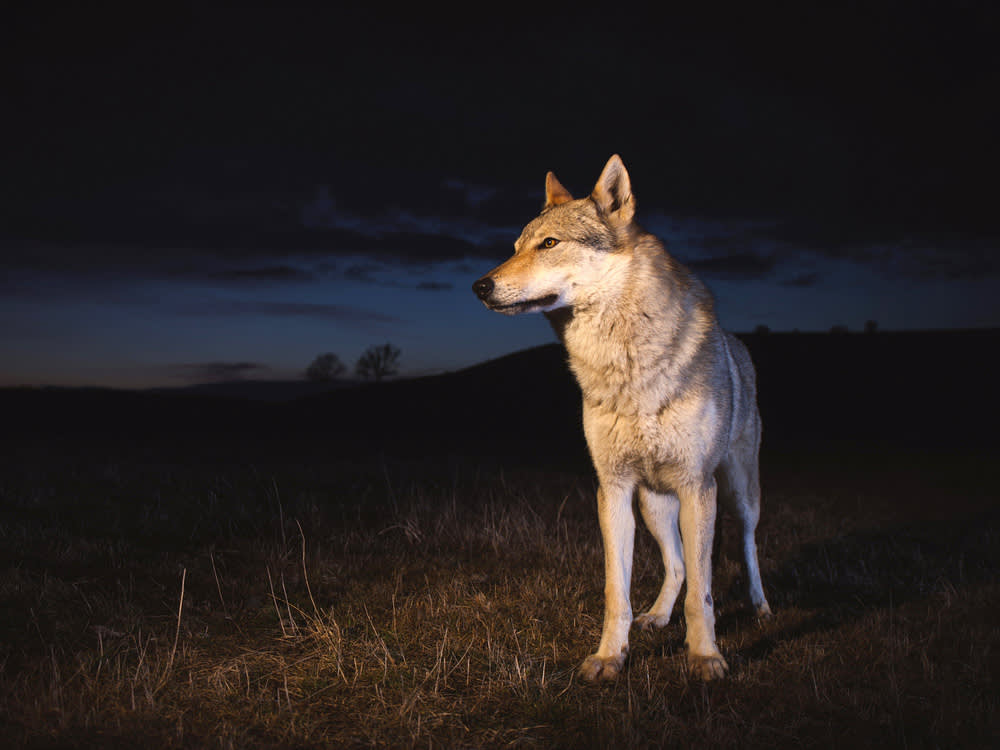
Wolfdog sanctuaries and rescue organizations in the United States have been saying the same thing for years, and it does not get repeated nearly often enough: a large majority of the animals sold to Americans as “wolfdogs,” by some sanctuary estimates around three quarters of them, have no wolf ancestry whatsoever. They are dogs. Husky mixes, shepherd mixes, big handsome northern-breed dogs with the right silhouette and a story attached.
Some of that is honest confusion. Much of it is not. Mislabeling a litter of dog puppies as wolf hybrids multiplies what a breeder can charge, and there is no licensing body checking. Which means the wolfdog crisis is not primarily a story about wolves at all. It is a story about a product being sold on a claim nobody verifies, to people who wanted to own something wild, and about the small, donation-funded organizations left holding the animals when the fantasy collapses.
The fantasy has a release date
You can more or less date the modern surge. In early 2015, with Game of Thrones and the Stark direwolves at peak cultural saturation, wolfdog ownership got a visible bump, and rescues have been dealing with the consequences ever since. People wanted a piece of a fictional experience, and someone was happy to sell it to them.
What they got, in the cases where the animal genuinely was part wolf, was nothing like a domestic dog.
Genetically, a wolfdog is the offspring of a dog and a wolf, and four wolf subspecies are in play: Gray, Eastern Timber, Red, and Ethiopian. In practice, almost everything you will meet traces to the Gray. The legal status is a patchwork, which tells you something in itself: California bans ownership of first-generation wolfdogs outright, while states like Maine permit it provided the owner holds the appropriate wildlife permits. Legality, though, turns out to be the least of the practical problems.
What owning one actually requires
The people who live with them are the least romantic about it.
Containment is not a fence, it is an installation. Wolfdogs require eight-foot-high enclosures with dig guards buried along the base, because a bored, athletic, escape-motivated animal will go over or under anything less. Owners who have raised them for a decade describe the same reality: these are not indoor dogs, and the constant work of managing one is the reason their own children have sworn off ever owning one.
Then there is the part that quietly ends people’s ability to keep them: you cannot leave.
Few kennels have the capacity or the willingness to contain a wolfdog. Because they are naturally wary of strangers, the friend or neighbor who happily watches a Labrador for a week is not an option. So vacations end. Work trips become a crisis. And a life that was supposed to be about owning something magnificent turns into a life organized entirely around an animal that cannot be handed to anyone else.
What happens when owners give up
They surrender them, and the system underneath is far more fragile than most people realize.
Breeding facilities profit from producing and selling these animals. Sanctuaries, which are overwhelmingly nonprofits funded almost entirely by private donations, absorb the results. That asymmetry is the entire problem in one sentence.
The scale, from the organizations doing the work:
- Saint Francis Wolf Sanctuary in Montgomery, Texas, fields roughly three requests a week to take in wolves and wolf dogs out of pet situations. The requests dip in spring, when wolves are born, and surge as the previous year’s cuddly pups reach adulthood and become unmanageable.
- Howling Woods Farm in Jackson, New Jersey has rehomed around 150 animals over a ten-year span, with an adoption process rigorous enough that placing a single animal can take more than a year. Its president has had to fund a significant share of the operation out of his own full-time job, because donations do not cover it.
- Rescue centers describe themselves as perpetually full. An unwanted wolfdog’s options are, in the words of people who spend their lives finding those options, extremely limited.
And when the sanctuaries are full, the alternative is not a shelter placement. Shelters generally will not put a wolfdog up for adoption because of the liability exposure, which means countless animals labeled as wolfdogs are euthanized in shelters. Some of them, given the mislabeling rate, are ordinary dogs who were killed for a pedigree they never had.
The animal pays for the marketing. Somebody wanted the mystique of owning a wolf, somebody else was happy to sell that story, and eight-foot fencing and a decade of specialized care are what the story actually costs. That bill lands on a nonprofit with a donate button.
Why the “percentage” you were sold is meaningless anyway
Here is the technical reality that undercuts the entire market.
You can test for wolf ancestry. UC Davis’s Veterinary Genetics Laboratory offers a wolf-hybrid test, and it can tell you whether there is likely wolf ancestry within roughly the last three generations. What it cannot do, and what no laboratory can reliably do, is hand you a clean percentage. Distinguishing a pure wolf from a pure dog is already genetically subtle. Distinguishing a 98 percent wolf from a 100 percent wolf, or grading an animal as “mid-content,” is not a thing the science supports, no matter how confidently a breeder writes it on a receipt.
Recent genomic work has made this fuzzier still, finding that ancient wolf ancestry is woven through modern dog genomes generally. Which means “has some wolf in there” is, at a certain level of abstraction, true of the Beagle asleep on your couch.
So when someone quotes you a percentage, understand what you are being sold. Not a measurement. A number chosen to justify a price.
What actually helps
The organizations at the sharp end of this are unanimous, and their message is not about wolves being dangerous. It is about the trade being pointless.
They see no benefit to owning a wolfdog over a conventional dog breed, and they spend a large share of their energy on education for exactly that reason: facility tours, school visits, off-site talks, all aimed at getting ahead of the next impulse purchase. The most rewarding part of the work, the people doing it will tell you, is not the rescue. It is convincing someone not to create the next one.
Our position, for the record: breeding or buying wolfdogs as companion animals does wolves no favors, whatever the animal’s actual ancestry turns out to be. If you love wolves, the useful expressions of that love are habitat protection and keeping federal protections on the animal in the wild. The Humane Society of the United States and Defenders of Wildlife are two of many organizations doing that work, and either would rather have your donation than your impulse purchase.
And if you want a big, wolfish, striking dog to share your house with, go to a shelter. Statistically speaking, several of the animals being marketed to you as wolves are already there.
References
- W.O.L.F. Sanctuary. “About Wolfdogs: content, misidentification, and rescue.” wolfsanctuary.co, accessed 2026.
- University of California, Davis Veterinary Genetics Laboratory. “Wolf-Dog Hybrid Test.” vgl.ucdavis.edu, accessed 2026.
- Bergström, A., et al. “A legacy of genetic entanglement with wolves shapes modern dogs.” Proceedings of the National Academy of Sciences, 2025.
- Mission: Wolf. “Wolf-Dog Introduction.” missionwolf.org, accessed 2026.
- Defenders of Wildlife. “Gray Wolf.” defenders.org, accessed 2026.
James Okafor covers rescue, adoption, and the causes shaping animal welfare. His work follows the people and organisations working to give more pets a home, and the issues owners and advocates care about most.
Meet our experts ↗Keep reading
 LivingWhat It Actually Takes to Fly 29 Street Dogs to a New LifeLeila Torres · 5 min
 LivingItaly's Most Beloved Rescue Dog Was Poisoned. A New Law Now Carries His Name.Nina Vasquez · 4 min
 LivingHe Left Jail After Five Days. One of His Dogs Was Already Dead.Sasha Ford · 4 min
 LivingL.A. Just Slammed the Brakes on New Dog Breeding. Here's the Fight Behind It.James Okafor · 4 min
 LivingShelters Are Overflowing. So Where Did All the Fosters Go?James Okafor · 9 min
 LivingA Cairo Puppy Lost All Four Paws. Then Women Across the World Went to Work.Nina Vasquez · 6 min