


A Dog Left in a Hurricane's Floodwaters Changed Florida Law. The Court Case Went Sideways.
The bull terrier troopers pulled from rising water before Hurricane Milton became a national symbol, then a new state law, then a courtroom twist almost no one saw coming. Here's the full arc of Trooper's story.

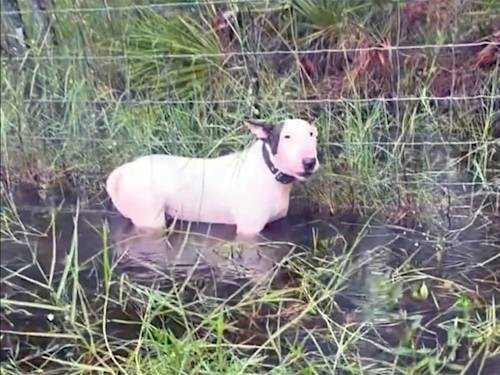
On October 9, 2024, as Hurricane Milton bore down on Florida, the Florida Highway Patrol posted a video that stopped people cold. A white bull terrier stood chest-deep in floodwater along Interstate 75 near Tampa, tied near a fence, rain still coming down, with nowhere to go. In the footage the frightened dog growls and barks as the troopers wade toward him, and one of them keeps talking low and steady, telling the dog he doesn’t blame him for being scared and that it’s okay, buddy.
They got him out of the water and into their patrol car. The dog, later named Trooper, was taken to a veterinarian and given a clean bill of health. That much was simple. Almost everything that followed was not.
The outcry, and a new law
The image did what images do. It spread fast, and it made people furious. Animal advocates demanded accountability. Even Florida Governor Ron DeSantis weighed in, thanking the Highway Patrol and writing that it is cruel to leave a dog tied up in the path of an oncoming storm. State officials used the moment to hammer a practical message to pet owners: when you evacuate, your animals come with you. The Florida Highway Patrol’s plea was blunt. Do not do this to your pets.
That pressure turned into policy. In May 2025, DeSantis signed “Trooper’s Law,” which makes it a felony in Florida to abandon a restrained dog outdoors during a natural disaster or evacuation order. Violators face up to five years in prison and a fine of up to $10,000. A single dog in a fence line had become the name on a statute.
The courtroom twist
The criminal case against Trooper’s former owner is where the story turns. Giovanny Garcia, 23, was initially charged with aggravated animal cruelty and faced up to five years in prison. For months it looked like a straightforward prosecution of the man behind a viral act of neglect.
Then, in October 2025, the state dropped the charges. Prosecutors explained that the case hinged on whether the dog had been deliberately tied to the fence, and the trooper who performed the rescue testified that Trooper’s collar had actually snagged on the fence rather than being tied to it, with no rope or chain involved. That detail was the load-bearing element of an aggravated cruelty charge, and without it the state said it could not ethically move forward. There was also no evidence to support a lesser abandonment charge that could stick. So the case collapsed, to the frustration of the family that had since taken Trooper in.
It’s an uncomfortable ending for anyone who watched that first video and wanted a clean resolution. But it’s also a reminder of how a wrenching image and a provable crime are not always the same thing.
Where Trooper is now
The best part of the story is the quietest. Trooper recovered, was adopted, and is now living in a safe and loving home, far from any fence line in rising water. The dog who spent a terrifying night in the floodwaters of a hurricane spends his days as somebody’s pet.
What this means for your own evacuation plan
Strip away the courtroom drama and Trooper’s story leaves pet owners with one durable lesson, the one Florida officials pushed from day one. A disaster plan that doesn’t include your animals isn’t a plan. Before storm season, know where you’ll go, and confirm it takes pets. Florida even directs evacuees to lodging resources with pet policies for exactly this reason. Keep a carrier, a leash, water, and a few days of food staged and ready. Make sure your dog’s microchip information is current, because a chip is only useful if the registry can reach you. Trooper survived because strangers happened to find him in time. The goal is for your dog to never need that kind of luck.
Nina Vasquez writes about life at home with pets and the relationships at the heart of it. Her work covers day-to-day living, people-and-pet stories, and the products that fit into a real household, with a warm, grounded take on everyday pet ownership.
Meet our experts ↗Keep reading
 LivingThe Vick Jersey Wasn't Really About Kyler MurraySasha Ford · 5 min
 LivingThe Blue Dogs of Chernobyl Aren't Radioactive. The Truth Is Grosser.James Okafor · 5 min
 LivingShelters Are Overflowing. So Where Did All the Fosters Go?James Okafor · 9 min
 LivingTexas Banned Dog Chains. The Real Fix Was a Deleted SentenceMarcus Webb · 7 min
 LivingGuns, Cocaine, Fentanyl, and 207 Dogs: Inside a Dallas Dogfighting BustJames Okafor · 4 min
 FoodA Food Truck for Dogs Sounds Like a Gimmick. The Argument Behind It Isn't.Nina Vasquez · 7 min