
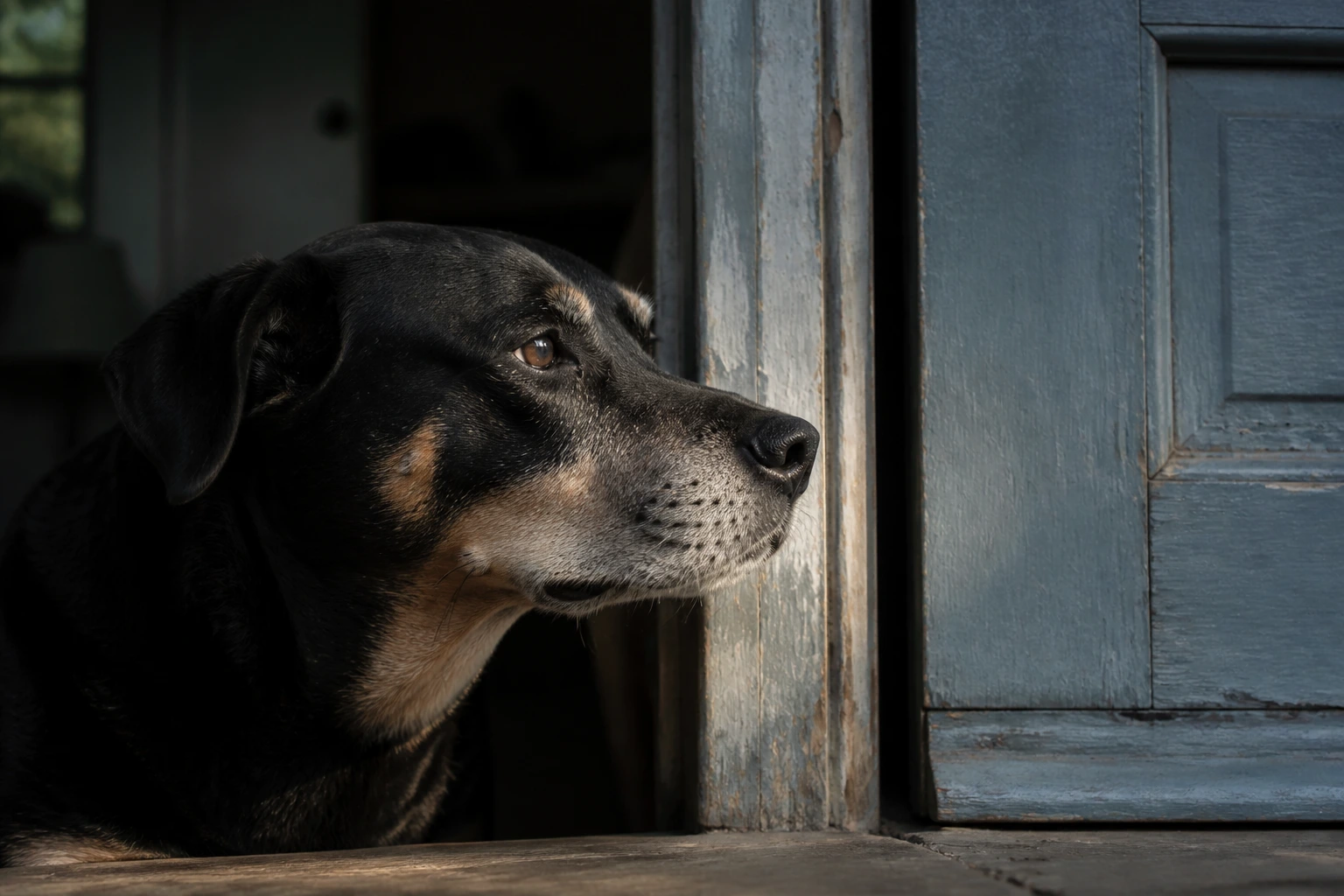
Whiskers get filed under “grooming” because they’re hairs on a dog’s face, and that filing is the whole problem. The tidy-up instinct treats them like stray eyebrow hairs. Biologically they have far more in common with the dog’s eyes or ears: they’re a sensory organ, wired into the nervous system, doing a job every hour the dog is awake. Once you see them that way, the question “can I trim them” answers itself, and so does the more useful question of what you’re actually taking away when you do.
What whiskers are, and why “hair” undersells them
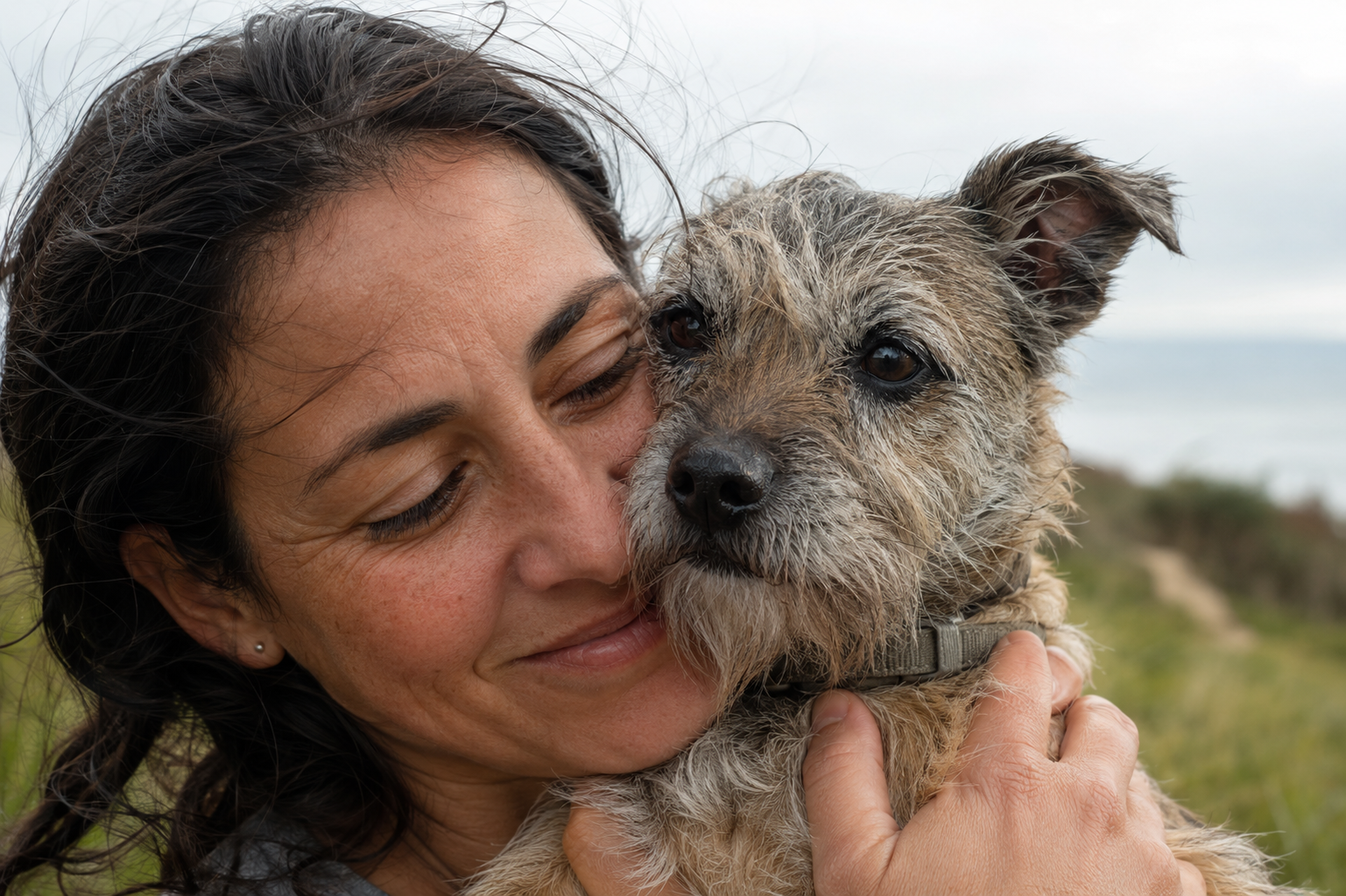
The proper name is vibrissae, and the structure is what sets them apart. Each whisker grows out of a specialized follicle packed with blood vessels and nerve endings, closer to a tiny sensor than an ordinary hair. Most dogs carry them in several groups: along both sides of the muzzle, above the eyes, on the cheeks, and under the chin. Depending on coat type they can lie almost flat and invisible when the dog is relaxed, then stand up into a little halo when the dog tenses its face to pay attention.
That single detail, whiskers that deploy when the dog focuses, tells you they’re active equipment, not ornament. Here’s the work they do.
Sensing the space around them. The hairs pick up minute changes in air currents, which can flag the movement or location of another animal before the dog sees it. Dogs don’t have especially sharp vision, so this extra channel matters more than we assume.
Navigating and measuring gaps. Dogs use whiskers to feel their way around objects and, notably, to judge whether they can fit through a narrow opening. Related work in other mammals shows whiskers guiding movement along walls and around obstacles in the dark.
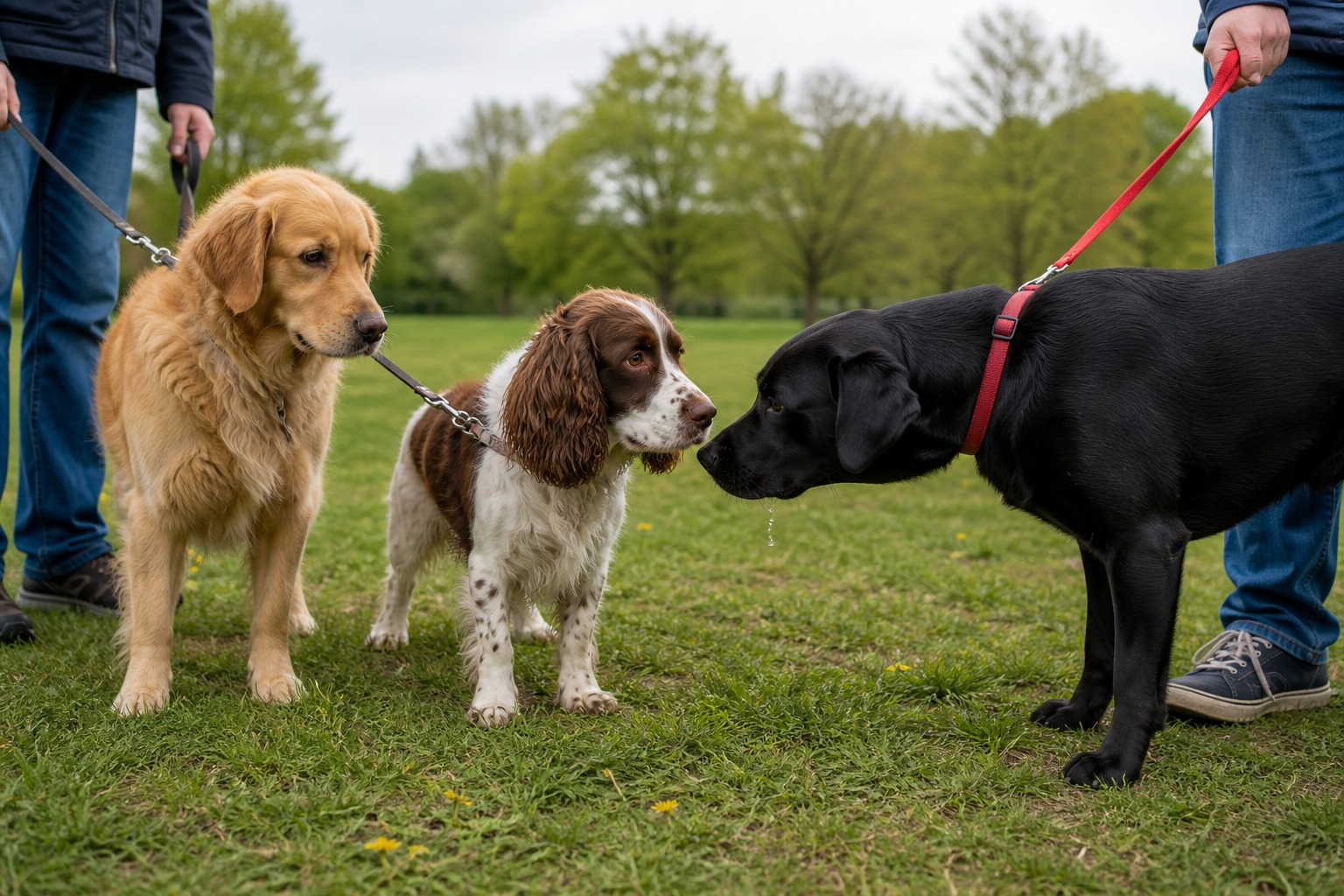
Signaling mood. Flared whiskers can mean a dog is unhappy with a situation; whiskers pinned back often read as fear. They’re part of how dogs communicate with each other and with attentive people.
Protecting the face and eyes. Because they extend past the muzzle, whiskers give a split-second warning before something reaches the head, triggering the blink-and-flinch that shields the eyes.
“Owners tell me their dog seemed totally fine after a whisker trim, and I believe them,” says Dr. Mara Chen. “Dogs are superb at compensating. But ‘coping without a tool’ and ‘not needing the tool’ aren’t the same thing. You’ve quietly narrowed how much of the world they can feel.”
What actually happens when you cut them
Because dogs adapt so gracefully, the costs are easy to miss, which is precisely why they’re worth spelling out.
A dog without its whiskers loses one of its main ways of reading nearby space, so it feels changes in wind, movement, and close objects less well. Navigation suffers, and that hits hardest in the dogs who lean on whiskers most, seniors with fading eyesight and any dog moving through the dark. Even a sharp-eyed dog uses the whiskers under its chin and on its muzzle to locate the food bowl and orient its head to eat and drink. There’s a stress cost too: studies of animals with whiskers removed show more hesitation approaching objects, likely because distances and sizes have gone fuzzy. And with the early-warning system gone, reactions to potential hazards slow, which raises the odds of a bump or a poke to the face.
None of this is dramatic in a single dog on a single day. Across a life, it’s a real subtraction.
The myths worth retiring
“They’re just for looks.” They’re a sense and a signaling system. That’s the opposite of decorative.
“Removing them is painless, so it’s harmless.” Cutting the shaft doesn’t hurt, true, and that’s the trap: painlessness gets read as harmlessness. The hair carries no pain, but the organ still does a job you’ve disabled. (Plucking is a different story entirely, it’s genuinely painful and bleeds freely because of the rich blood supply at the base. Never do it.)
“They grow right back.” They regrow slowly, often not until the next shedding cycle, and full length can take months. This isn’t a quick undo.
When trimming is genuinely warranted
There’s a narrow, legitimate exception, and it’s medical, not cosmetic. A veterinarian may trim whiskers to get a clean area to treat a cut or scrape, to prep a surgical site, to remove a nearby mass, or to deal with an abnormal whisker that’s rubbing an eye or growing under the skin. Even then, the goal is to remove as few as possible and leave the dog as much sensation as it can keep. Your dog may need a little time to adjust, and then bounces back. That’s the difference that matters: trimming to heal a specific problem, versus trimming a working sense off a healthy dog to make its face look finished.
What’s new since this was written
The show world is where this is visibly shifting. More breed clubs have concluded that trimming whiskers is both pointless and detrimental and have written it out of their AKC breed standards, and the direction of travel is clear rather than universal. A concrete marker: the AKC Terrier Group breed standards were amended effective January 1, 2026, reflecting the move away from requiring whisker removal, and some judges now look unfavorably on dogs that appear to have had theirs cut.
The bigger picture is a growing consensus among breeders, handlers, and judges that vibrissae are a welfare issue, not a styling choice. Several countries already prohibit removing a dog’s whiskers purely for cosmetic reasons, treating it as closer to amputating a useful body part than to a haircut. If you show, check your breed’s current standard rather than an old grooming habit; if you don’t, the simplest instruction stands, leave them alone.
References
- What Can Whiskers Tell Us About Mammalian Evolution, Behaviour, and Ecology?, Frontiers in Zoology
- That Dog Won’t Fit: Body Size Awareness in Dogs, PubMed
- AKC Terrier Group Breed Standards, amended January 1, 2026
- The Importance of the Tactile Hairs in Domestic Dogs: An Animal Welfare Perspective, veterinary literature
- Structure and Function of the Vibrissae (Whiskers), veterinary anatomy reference