


There Are Two Kinds of Anthropomorphism. One Helps Your Pet, One Hurts
Treating your pet like a person isn't a vice or a virtue. It's a tool with a sharp edge, and the skill is telling apart the version that builds the bond from the version that hides a real problem.

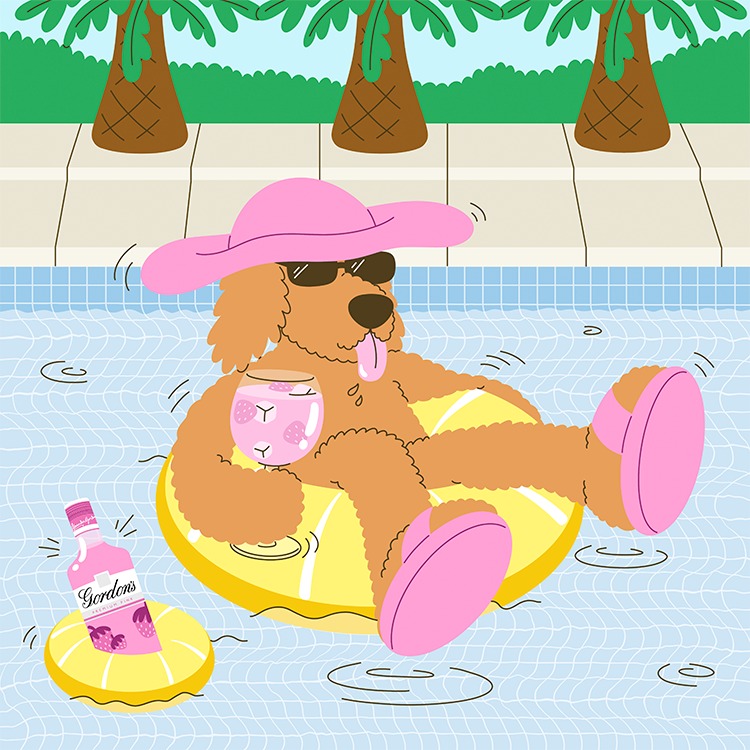
I narrate my dog’s inner monologue at family reunions, much to the annoyance of cousins busy raising actual humans. “We’re deep in the picky-eater phase,” I’ll sigh. “Dinner gets refused unless somebody stands there offering moral support.” The clinical name for this is anthropomorphism, attributing human characteristics to animals, and most articles about it want to answer one question: is it good or bad? That framing is a dead end. Anthropomorphism is neither. It is a tool, and like any tool it has a sharp edge. The only question worth asking is which way you are pointing it.
Because here is the distinction the “is it good or bad” debate misses entirely: there are really two kinds of anthropomorphism, and they pull in opposite directions. One kind connects you to your pet and makes you a more attentive parent. The other kind quietly hides medical and behavioral problems and makes you a worse one. They feel identical from the inside. Learning to tell them apart is the actual skill.
Why we do it at all
First, the impulse itself is not a character flaw, it is empathy doing what empathy does. “It’s incredibly common, because pets are central to our lives, and projecting human feelings onto them is one of the main ways people find connection with an animal,” says Dr. Nina Kohl, a veterinary behaviorist. Wanting to know what another creature feels, and whether it is all right, is baked into us regardless of species. It is the impulse that has kept animated animals steadily employed from Bambi to BoJack, and it is why an entire theater once worried itself sick over the feelings of a volleyball named Wilson.
“Reading our pets through a human lens is natural, because the human lens is the main frame of reference we have,” says Marcus Webb, a trainer who works with anxious and reactive dogs. “The real question is never whether we do it. It’s whether we’re right.” That last sentence is the hinge for everything that follows.
The connecting kind: when it makes you better
Some anthropomorphism is not a misreading at all, it is picking up on a signal that is genuinely there, and acting on it. Two strands of research show how real this can be.
The first is in your dog’s face, and it evolved specifically to reach you. A landmark 2019 study on the facial-muscle anatomy of dogs found that dogs possess a muscle for raising the inner eyebrow that wolves essentially lack, and they use it far more, and more intensely, than wolves do. That movement, the “puppy-dog eyes” expression, makes a dog’s eyes look larger and more infant-like, and it closely resembles the face humans make when sad. In other words, dogs were shaped by domestication to produce an expression that triggers our nurturing instinct. So when you look at your dog and think they’re trying to tell me something, you are often correct; they have evolved to tell you exactly that.
“Dogs learn that a particular look gets a particular response, and because they’re social, different dogs land on different ways to ask for what they want,” Dr. Kohl says. “It’s not so different from how people who live together signal each other, one person says ‘let’s hang out on the couch,’ a dog learns the doe-eyed look gets the same result.” Reading that look as a real request, and responding, is the connecting kind of anthropomorphism. It is communication, not delusion.
The second strand is chemical, and it runs both ways. Research on the human-dog bond found that mutual gazing between dogs and their owners raises oxytocin, the hormone tied to trust and bonding, in both species, which in turn increases the urge to keep making eye contact, a positive feedback loop. “So when your dog gives you those big eyes and you hold the gaze, you’re not just being sentimental, you’re building the bond in real time, both of you,” Webb says. The same study notably did not find the effect with wolves; this is something dogs and humans co-evolved to do with each other.
Anthropomorphism also makes some genuinely good care possible. Pushing a senior or mobility-limited dog in a stroller is technically treating them like a human baby, and it gives them many of the benefits of a walk, the stimulation and the outing, minus the joint strain. And imagining yourself in your pet’s position is a tool Dr. Kohl uses deliberately in practice. “When a stressed client comes in, I’ll ask them to imagine being in their dog’s or cat’s position, how would you feel if this happened to you,” she says. “It builds empathy, and empathy makes people both calmer and closer to their pet.” Recognizing your pet as a sentient being with real, if non-human, emotions is what motivates better care in the first place.
The concealing kind: when it makes you worse
Now the sharp edge. The exact same habit, narrating your pet’s inner life in human terms, turns dangerous the moment your story is wrong, because a confident wrong story stops you from looking for the right one. This is where anthropomorphism hides problems instead of revealing them.
“Once you hand an animal a human motive, the real reason for the behavior can sail right past you,” Webb says. “That misread leads straight to the wrong training, or to ignoring a health issue, because you think you already know the answer.” The classic example is the dog who shreds the couch while you’re out. The human story, they did it out of spite for being left alone, feels obvious. But spite is a human frame, and it papers right over the real and common explanation: separation anxiety. Believe the spite story and you will never treat the anxiety.
The single most expensive misread, though, is guilt. You come home, the dog has had an accident, and the dog looks guilty, head down, ears back, slinking. Surely they know they did wrong. They almost certainly do not. “Study after study lands the same way: spite and guilt are simply not what drives these behaviors,” Dr. Kohl says. “Dig underneath and you will almost always find anxiety, panic, or something medical — never a bad conscience.” The “guilty look” is not remorse, it is an appeasement display. “Dogs are excellent at reading body language and predicting what’s coming,” she explains. “They’ve connected the mess on the floor with you getting upset, so the second you walk in, they brace for the scolding. That flinch you read as guilt is really just a prediction.” Read it as guilt and you will keep scolding a dog who needs more frequent bathroom breaks, or a return to house-training, or a vet visit. The human story buries the actual fix.
How to tell which kind you’re doing
Here is the part the source material never gives you: a way to catch yourself. Before you act on a story about what your pet feels, run it through three quick checks.
- Does my story have an action attached, and is that action about my pet’s needs or my feelings? “They want to cuddle” leads to cuddling, harmless and probably right. “They’re being spiteful” leads to scolding, and scolding is about your frustration, not their need. Stories that license punishment deserve extra suspicion.
- Would a medical or behavioral cause explain this better than the human emotion? Accidents, destruction, hiding, sudden clinginess, appetite changes, these read as “moods” but are far more often anxiety, pain, or illness. If a vet visit could plausibly explain it, the human story is a guess you should not bet your pet’s health on.
- Am I using the human frame to connect, or to close the case? Connecting anthropomorphism stays curious, maybe she’s anxious, let me watch. Concealing anthropomorphism declares the answer and stops looking, he knows what he did. Curiosity is the safe version. Certainty is the dangerous one.
As Dr. Kohl puts it, “What matters is using everything you actually observe to work out what your pet needs, and staying open to the possibility that what they’re communicating isn’t what you assume.” That openness is the whole difference. Narrate your dog’s bedtime drama all you want, I certainly will. Just hold the story loosely enough that, when the behavior is really a symptom, you are still able to see it.
References
- Kaminski, Juliane, et al. “Evolution of Facial Muscle Anatomy in Dogs.” Proceedings of the National Academy of Sciences, vol. 116, no. 29, 2019. https://www.pnas.org/doi/10.1073/pnas.1820653116
- Nagasawa, Miho, et al. “Oxytocin-Gaze Positive Loop and the Coevolution of Human-Dog Bonds.” Science, vol. 348, no. 6232, 2015. https://www.science.org/doi/10.1126/science.1261022
Sara Lim leads our Product Picks coverage, testing and comparing the things pets and their owners actually use. From everyday essentials to home-and-style finds, she focuses on honest, useful recommendations rather than hype.
Meet our experts ↗Keep reading
 LivingThere's No National Dog-Barking Law. Here's What Actually Gets You FinedSasha Ford · 11 min
 Training5 Reasons Your Dog Follows You Into the Bathroom (One Is Worth Watching)Dr. Nina Kohl · 6 min
 LivingYou're Not Soft for Loving Your Dog This Much. You're Wired for It.Dr. Mara Chen · 6 min
 LivingYour Kid Isn't Scaring the Cat on Purpose. Here's the Fix.Dr. Nina Kohl · 6 min
 TrainingYour Dog Isn't Trolling You. They're Playing, or Trying to Tell You Something.Dr. Nina Kohl · 7 min
 LivingScientists Ranked Which Dogs 'Smile' Most. Your Beagle Is Not Winning.Dr. Nina Kohl · 5 min