


With Tortilla Chips, the Flavor Is the Whole Risk
A plain corn chip is merely junk food for a dog. But tortilla chips are a flavor lottery, and the seasonings and dips are where 'unhealthy' quietly becomes 'toxic.' Here is the risk ladder.

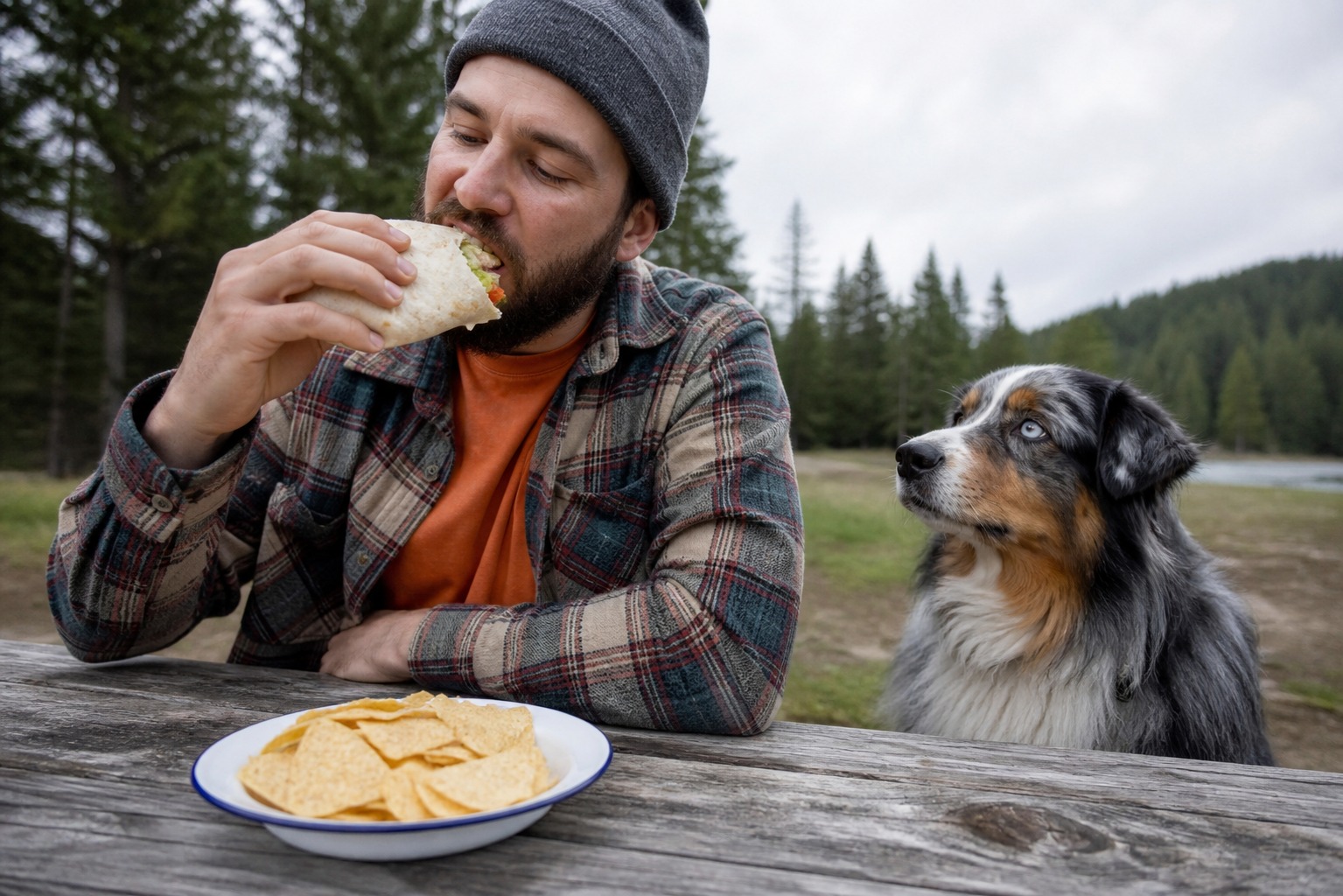
A chip hits the floor and your dog inhales it before you can move. Fair enough, and one plain chip will not hurt a healthy dog. But the reason “can dogs eat tortilla chips” has no clean answer is that tortilla chips are not one food. They are a flavor lottery. The plain corn-and-salt version is simply junk food a dog does not need. The nacho, the lime-chili, the “everything,” and the ones you dunk in queso can quietly cross the line from unhealthy into toxic, and the packaging rarely makes that obvious.
So the honest guidance is not a flat “no.” It is: the base chip is a shrug, and the flavor is where the real risk lives. Learn the ladder below and you will know instantly whether a given chip is a non-event or a reason to watch your dog.
The base chip: unhealthy, not dangerous
Strip a tortilla chip to its essentials and you get corn, vegetable oil, and salt, usually fried for crunch. That trio is not toxic, but it is a poor fit for a dog:
- Sodium. Some salt is necessary, too much is not. A salty snack makes a dog thirsty and pee more, and a steady habit pushes toward high blood pressure and heart strain. A sudden large load, salt toxicity or hypernatremia, can in severe cases swell the brain.
- Fat. Frying makes chips fatty. Too much fat brings stomach upset, and in prone dogs, pancreatitis, plus it stacks up calories fast.
- Simple carbohydrates. Refined-corn carbs add calories without the fiber and nutrients of whole foods, nudging a dog toward weight gain over time.
None of that is an emergency in one chip. All of it is why a bowl of chips is not a snack to share.
The risk ladder: read the flavor, not the category
Here is where tortilla chips stop being simple. Rank them by seasoning and the picture changes fast:
- Plain, lightly salted (lowest risk). A dropped chip is a non-event for a healthy dog. Still not something to hand over on purpose.
- Lime, or lightly spiced. More salt and acid, plus chili in some. Chili and capsaicin can irritate a dog’s gut. Skip it.
- Nacho or cheese-dusted. A heavier load of fat and salt, and the seasoning blends often hide onion and garlic powder. Now you are into “call the vet if they ate a lot” territory.
- “Everything,” ranch, or onion-and-garlic seasoned (highest chip-level risk). Onion and garlic powder are toxic to dogs, and powdered forms are concentrated, so a seasoned chip carries a real dose in a small package.
- Dip-loaded chips. The dip is often worse than the chip. Queso and sour cream pile on fat and dairy; guacamole means avocado; French onion dip means alliums; salsa can be spicy. A chip scooped through any of these inherits all of it.
The lesson: the same “tortilla chip” can be a shrug or a hazard depending entirely on what is dusted on it and what it is dunked in. When you cannot read the seasoning, treat the chip as if it is on the high end.
If a chip hits the floor and your dog beats you to it, do not panic. The thing I actually worry about is the loaded chip, the nacho seasoning with onion and garlic powder, or the one that just went through the queso. When you cannot vouch for what is on it, the safe move is simply not to share it.
The hazard nobody flags: sharp edges
Beyond nutrition, tortilla chips have a physical problem that softer snacks do not. They are stiff, pointed, and brittle, and a dog that gulps one without chewing can scrape the roof of the mouth, the gums, or the throat on a sharp edge. A large piece can also lodge as a choking hazard. For a fast eater or a small dog, that mechanical risk is a real reason to keep chips out of reach, independent of any seasoning.
If your dog raids the bag
A single plain chip needs no response. A dog that gets into a large amount, or into a flavored or dip-covered batch, is a different matter. Call your vet, describe the flavor and roughly how much, and watch for vomiting, diarrhea, heavy thirst, lethargy, or belly pain. With onion- or garlic-seasoned chips, note that allium damage to red blood cells can show up over the following days, so do not treat a normal-seeming evening as the all-clear.
Better crunchy swaps
The whole appeal of a chip, a crunchy, shareable bite, is easy to replace without the salt, fat, and mystery seasoning:
- Green beans, raw or lightly cooked
- Carrot coins or cucumber slices
- A few plain, air-popped popcorn pieces, unsalted
- Blackberries or blueberries, lower in sugar than many fruits
And keep the genuine toxins away regardless: chocolate, grapes and raisins, and anything with onion or garlic.
The bottom line
Tortilla chips are not one food with one answer. The plain corn chip is merely junk a dog does not need, but the flavor coatings and the dips are where the real danger sits, onion and garlic powder, capsaicin, heavy fat and dairy, and even avocado by way of guacamole. Read the specific chip, not the category. A dropped plain chip is a non-event; a nacho chip through the queso is a reason to watch your dog and, if they ate a lot, to call your vet.
References
- FDA. “Good Dog, Bad Food: Foods for People That Are Bad for Your Dog.” https://www.fda.gov/animal-veterinary/animal-health-literacy/foods-can-be-poisonous-pets
- Merck Veterinary Manual. “Garlic and Onion (Allium spp) Toxicosis in Animals.” https://www.merckvetmanual.com/toxicology/food-hazards/garlic-and-onion-allium-spp-toxicosis-in-animals
- Merck Veterinary Manual. “Salt Toxicosis in Animals.” https://www.merckvetmanual.com/toxicology/salt-toxicosis/salt-toxicosis-in-animals
- Cridge, Harry, et al. “New Insights into the Etiology, Risk Factors, and Pathogenesis of Pancreatitis in Dogs.” Journal of Veterinary Internal Medicine, vol. 36, no. 3, 2022, pp. 847–864. https://doi.org/10.1111/jvim.16437
Common questions
Is it OK to give dogs tortilla chips?
A stray plain chip is a non-event. Sharing a bowl is a bad idea, and flavored or dip-loaded chips can cross from unhealthy into genuinely toxic depending on the seasoning.
Why do dogs like tortilla chips?
The crunch plus the fat and salt make them appealing, which is exactly the combination that makes them a poor choice.
Can dogs eat other chips?
It depends entirely on the flavor. Plain is merely unhealthy; onion, garlic, and heavy cheese or spice coatings can be harmful, so the seasoning decides.
Are tortilla chips safe for dogs?
Most plain chips are not toxic but are unhealthy. The danger rises sharply with flavored varieties and with the dips people eat them with, so read the specific chip before sharing anything.
Not a substitute for your vet. Our guidance is educational. For urgent symptoms, contact a vet or emergency clinic right away. Editorial standards
Dr. Nair is a veterinarian focused on diet and feeding. She covers everyday nutrition, treats, and the many "can they eat this?" questions owners ask, grounding each answer in what is actually safe and sensible for dogs and cats.
Meet our experts ↗Keep reading
 FoodThe Fruit Is Never the Problem. It's the Pit, the Skin, and the Seasoning.Dr. Priya Nair · 8 min
 FoodScrambled Eggs Are Great for Dogs. Your Skillet Is the Problem.Dr. Mara Chen · 6 min
 FoodBananas Are Basically Dog Candy. That's Exactly Why They're UsefulDr. Lena Park · 5 min
 Health & WellnessThe Sweetener That Kills Dogs Often Isn't Labeled "Xylitol"Dr. Ravi Mehta · 8 min
 FoodNot All Bell Peppers Are Equal: Why Red Beats Green in Your Dog's BowlDr. Lena Park · 6 min
 FoodThe Persimmon Rule for Dogs: Flesh Yes, Everything Else NoDr. Priya Nair · 7 min