


The Cat Decides When the Photo Shoot Is Over. Never the Photographer.
Paul Barbera shot interiors for Vogue Living, then tried to photograph cats in them and nearly quit on day one. What a Russian Blue named Diego taught him is the only cat-photography advice that works.
Affiliate disclosure. This article contains affiliate links. We may earn a small commission if you buy through a link, at no extra cost to you. How we handle recommendations.
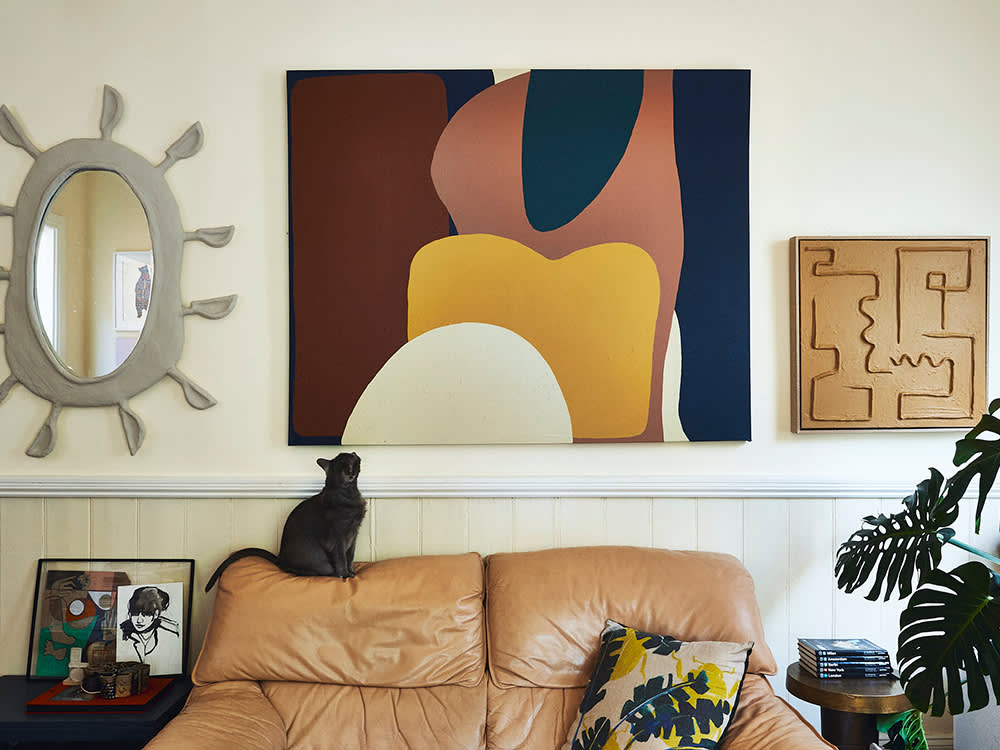
Paul Barbera has photographed interiors for Vogue Living. He has worked with Hermès. He has photographed SZA. He is, by any measure, a professional who walks into a room and takes control of it.
Then he tried to photograph a Russian Blue named Diego, and very nearly abandoned an entire book on the first afternoon.
What happened in that house, and the rule he built out of it afterward, is the most useful thing anyone has said about photographing a cat. It holds whether you are making a Thames & Hudson coffee-table book or simply trying to get one non-blurry picture of your own cat with a phone.
The book that crept up on him
Barbera never planned a cat book. Cats had simply been wandering through the edges of his working life for years: a shoot in the Hamptons, a client’s house, an appealing animal on a sofa, a quick frame grabbed before getting back to the job.
He already had a long-running personal project, Where They Create, photographing artists, designers, and architects inside their studios. The accumulating cat pictures felt like a scrappy cousin of it, and he gave them an obvious name, Where They Purr, posted a few to Instagram, and left it there without much idea of what they were for.
Then the pandemic stranded him and his wife, Queen Chan, at his mother’s house in Melbourne, and the idle side project got a shove. A friend who edits at Thames & Hudson sent over a list of titles that had been selling and told him to go away and come back with something. Among them was Resident Dog by Nicole England, a coffee-table book of dogs photographed in beautifully designed homes.
The parallel was not subtle. Chan, the writer in the household, helped him assemble the pitch.
Within about a week, there was a deal.
He threw away the pictures he already had
The path of least resistance was to build the book from the archive. He didn’t. He started from zero, which meant sourcing subjects at the junction of two worlds he happened to straddle: people who love cats and people who care about design.
He worked the phone, calling round the interior design firms he had shot for over the years. And his brother, the Australian furniture designer Daniel Barbera, opened up the rest of the address book. As Barbera cheerfully notes, his brother’s furniture ended up appearing in roughly half the homes that made the book.
So the houses were secured. All that remained was photographing the cats inside them.
Diego
The first house belonged to friends. That was deliberate: start somewhere comfortable.
Their Russian Blue, Diego, declined to participate. Not shy-then-thawing. Not eventually. Hours passed. Barbera’s entire concept depended on getting a portrait of every single cat in the book, and there he sat in his friends’ living room, at house number one, concluding that the thing could not be done.
Deflated but well-mannered, he offered to shoot his friends a family portrait as thanks for the wasted day. He set them up. He began working.
And that, inevitably, is the moment Diego materialized, on the lip of the stairwell, directly behind him.
He got the picture.
The rule, which is the entire article
That day produced Barbera’s operating principle, and it is the thing to take away:
Do not take the camera off until you have physically left the house.
The cat arrives, he has found, precisely when the shoot is nominally finished and the room has gone slack. The gear is down, the humans have exhaled, and something in the atmosphere shifts. The cat registers that shift, and that is when the picture happens.
There is a version of this you can use tonight. The reason you cannot photograph your cat is that you are trying to photograph your cat, and she can detect the difference between a person occupying a room and a person hunting in one. Intent leaks. It shows in your posture, your speed, your held breath.
Cats do not approach the camera. They approach its absence.
So the technique, such as it is: stop. Sit down. Do something genuinely else. Keep the phone in your hand but quit looking through it. Let the room become boring. And be ready, because the second you sincerely stop caring is the second she strolls into frame and settles, as though she had been waiting all evening for you to calm down.
Cats, as Barbera puts it, reliably do the reverse of whatever is wanted, and that is a large part of why he loves them. He compares living with one to being in a relationship with a person who is affectionate and devoted and still, permanently, slightly out of reach. The unreachable part is the part that keeps you interested.
What the professional rig tells you
The rest of his method matters because of what it reveals about where he thinks the difficulty actually lies.
Three cameras. One locked on a tripod and framed the way he would compose an interior for a magazine, which is the photograph the book is fundamentally about. Two more in his hands, ready to pursue.
And a sports camera. He shoots with a body built for photographing Olympic athletes, capable of 30 frames per second. Without it, he says flatly, cats cannot be photographed at all.
Look at what that setup encodes. The controllable variable, the room, gets pinned down on a tripod. The uncontrollable variable, the animal, gets met with brute-force frame rate. He is not attempting to time the moment. He is attempting to make it impossible to miss.
Phone translation: burst mode. Hold the shutter down. Take forty, keep one. The good cat photograph is almost never composed. It is caught.
Almost no crew. On an advertising job he might have five or six assistants. For this, he worked alone, occasionally with a stylist’s assistant sent by the interior designer. His stated priority is to disturb the house as little as possible.
And half an hour of doing nothing. This is what separates him from everyone else. For the first thirty minutes he deliberately does not work. He lets the cat get accustomed to him and to the camera, keeps his energy low, and stays calm even when he is eventually chasing the animal around a house, because a cat reads agitation instantly. The posture he adopts is something close to studied indifference.
Thirty minutes of a working photographer’s paid day, spent conspicuously not taking photographs. That is the price of entry.
Not every cat is Diego
Some are considerably worse.
Barbera describes shooting a cat named Reuben in a three-story townhouse, with the owner having breezily left them to it. He needed the bedroom on the top floor, so he picked Reuben up and started climbing.
Reuben weighed something like 25 pounds. Barbera had been attacked by a different cat two days earlier, so he was trying to hold this one at arm’s length from his own face while it slid, steadily and unstoppably, through his grip. He compares the experience to carrying a sack of potatoes up a staircase.
There is an entire professional discipline contained in that image, and no dignity anywhere in it.
Buy the book
Where They Purr by Paul Barbera — $39
It is a genuine design book that happens to contain cats, rather than a cat book with nice furniture in the background. The houses are extraordinary and mostly anonymous, and the animals inside them are doing what cats do in beautiful rooms, which is treat them as terrain.
It sold well enough that Barbera went straight into a follow-up, this one focused on American homes, with access to houses that have never been photographed before. He has been angling to get a few celebrity cats into it, on the entirely sound theory that America is celebrity-minded enough for it to pay off.
Given the chance, he says, he would make one of these every year, purely for the pleasure of the process and the people and animals it puts him in front of.
He will still have to sit quietly in every single one of those rooms for half an hour first, waiting to be declared boring.
References
- Barbera, P. Where They Purr: Inspirational Interiors and the Cats Who Live There. Thames & Hudson, 2022.
- Barbera, P. Where They Create. instagram.com/wheretheycreate
- England, N. Resident Dog: Incredible Homes and the Dogs That Live There. Thames & Hudson, 2019.
Sasha Ford is a certified cat behaviour consultant who has worked with shelters, catteries, and private clients across the country. They review all feline behaviour content at The Pet Times, with expertise in multi-cat households, indoor enrichment, and stress-related disorders.
Meet our experts ↗Keep reading
 LivingEverybody Got a Second Dog. Her Order Book Was the First to Know.Jordan Ellis · 6 min
 Product PicksYour 'Non-Toxic' Houseplant Can Still Land Your Pet at the VetSasha Ford · 6 min
 Product PicksCat-Lover Gifts That Are Actually Chic, Not Cringe: 12 PicksSara Lim · 7 min
 Product PicksThe Cat Tree You Won't Shove in the Basement Before Guests ArriveLeila Torres · 6 min
 Product PicksMost Cat Gifts Are Bought for the Human. These 6 Actually Get Used.Sasha Ford · 7 min
 Product PicksMost Cats Don't Need a Sweater. These 7 Are for the Ones That Do.Sasha Ford · 6 min