


A Dad Told His Kids Cats Were Poisonous. It Took a Ragdoll to Undo It.
Jason Kelce's anti-cat propaganda campaign collapsed the moment his daughters met one. What Taylor Swift did next is, accidentally, exactly how you introduce a kid to a cat.
Some parents tell their kids that broccoli makes you strong. Jason Kelce told his four daughters that cats are poisonous.
It was, by his own admission on the New Heights podcast, a strategic lie: a dog person’s preemptive strike against ever having to live with a cat. It worked right up until his brother started dating a woman with three of them.
When Taylor Swift made her first podcast appearance on New Heights in August 2025, hosted by Travis Kelce and his brother Jason, the headline was her album announcement. The subplot was better. Swift described dismantling Jason’s cat smear campaign one daughter at a time, and she did it by picking exactly the right cat.
The tactic was better than she probably realized
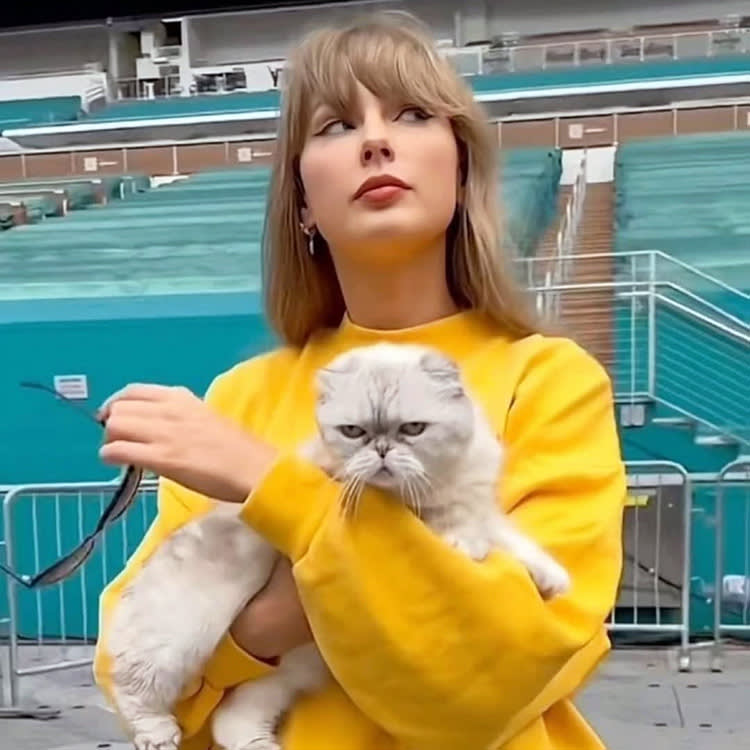
Her opening move was to hand the girls Benjamin, her Ragdoll, the one cat in the house who tolerates being carried around like an infant. Not the shy one. Not the one who would bolt under a bed and confirm every scary thing their father said. The one who goes limp and purrs.
That is not a celebrity anecdote. That is the whole playbook for introducing a child to a cat, and most adults get it backwards.
The instinct is to bring the kid to the cat, any cat, and coach the kid to be gentle. The better move is to control which cat is in the room. A first meeting that goes badly, a scratch, a hiss, a cat vanishing behind the couch, does not teach a kid to be careful. It teaches them the thing they were already half-expecting: that this animal is unpredictable and possibly, per Dad, poisonous.
Swift picked the animal that could not fail. Then she let the kids do the rest.
Then she let the cat come to them
The second thing that happened is the part you cannot script. Swift says the girls started finding Benjamin on their own and simply hanging on to him, and that they now request her cats by name. “Meredith is here!” is apparently the greeting, which is a lot of enthusiasm for a cat who is famously not enthusiastic.
That progression, from a supervised, guaranteed-safe first meeting to a kid seeking the cat out unprompted, is exactly the arc you want. Nobody made them do it. The cat stopped being a rumor and became an individual with a name.
The undoing of the original lie, meanwhile, is ongoing. Swift has taken to pointing out, after each uneventful encounter, that nobody has been bitten, and that a bite would not be poisonous anyway. The girls’ rebuttal is a small masterpiece of childhood logic: that is not what our dad said.
What actually made this work (steal this part)
Strip out the famous people and the sequence is one any household can copy.
- Choose the cat, not just the moment. In a multi-cat home, one animal is nearly always the ambassador. Use that one first. The shy cat gets to stay out of it.
- Let the cat be held only if the cat likes being held. A Ragdoll who goes boneless in a kid’s arms is unusual. Most cats are not that cat, and forcing the hold is how a first meeting becomes a scratch.
- Give the cat a name and a personality, not a category. “This is Benjamin, he likes being carried” gets you further than “this is a cat, be gentle.”
- Let the kid be the one who comes back. The second visit should be their idea. If it is not, the introduction is not finished yet.
- Correct the myth, but expect the myth to have staying power. Kids believe their parents. Swift has been at this for a while and Jason’s story is apparently still in circulation.
The barn-cat loophole
Jason, for his part, has not surrendered so much as retreated to a defensible position. He has floated the possibility of a barn cat: an animal that lives outdoors, survives on field rodents, and guards the property. A cat that is, crucially, not in his house.
Swift’s response, roughly, was that his daughters would smuggle the animal indoors and into their beds within days. That is not just a joke about kids. It is a fair prediction, and it is the reason every parent should be suspicious of the barn-cat compromise: a “working” outdoor cat often turns into a regular cat with a worse life, one that faces cars, coyotes, and parasites while the family it lives with cannot quite decide what it is.
Kylie Kelce, meanwhile, has been running her own campaign on her podcast Not Gonna Lie, where she has said she is in it for the long game and that a cat is in their future.
How the campaign is actually going
She may have been right about the long game and wrong about the species. In late March 2026, Kylie announced on the Not Gonna Lie Instagram that the family had worked with the Pennsylvania SPCA’s Main Line Animal Rescue and adopted an eight-week-old German Shepherd puppy, a dog whose name changed roughly as many times as the family could vote on it.
So the household added a pet. It just wasn’t the one the girls have been lobbying for, and it wasn’t the barn cat either. Kylie has kept the door open, and the plan, when it happens, is a shelter adoption.
Which leaves the Kelce daughters exactly where Swift left them: fully converted, currently outnumbered, and armed with the knowledge that their dad made the whole thing up.
Sasha Ford is a certified cat behaviour consultant who has worked with shelters, catteries, and private clients across the country. They review all feline behaviour content at The Pet Times, with expertise in multi-cat households, indoor enrichment, and stress-related disorders.
Meet our experts ↗Keep reading
 LivingCan Cats Sense When Death Is Near? Inside the Mystery of Oscar the CatTom Hadley · 7 min
 LivingThe 'Sexy Cat Dad' Thing Isn't About Cats. It's About Consent.Leila Torres · 6 min
 LivingYour Cat Doesn't Know You're Pregnant. It Knows Your House Is ChangingDr. Priya Nair · 7 min
 LivingPeople Crowned a 'Sexiest Cat Dad,' and the Joke's Actually on Anyone Who Thinks It's a JokeSasha Ford · 3 min
 LivingYour Cat Isn't Watching You Cook. He's Reading the Room.Dr. Mara Chen · 7 min
 LivingHer Cats Kept Sneaking Into the Drawings. Then They Took Over.Leila Torres · 6 min