


Sweet Potato Is a Real Dog Superfood. One Rule Makes It Safe.
Sweet potatoes are one of the few human superfoods that genuinely help dogs, as long as you cook them. Here is the nutrition, the portions, and two easy chew recipes.

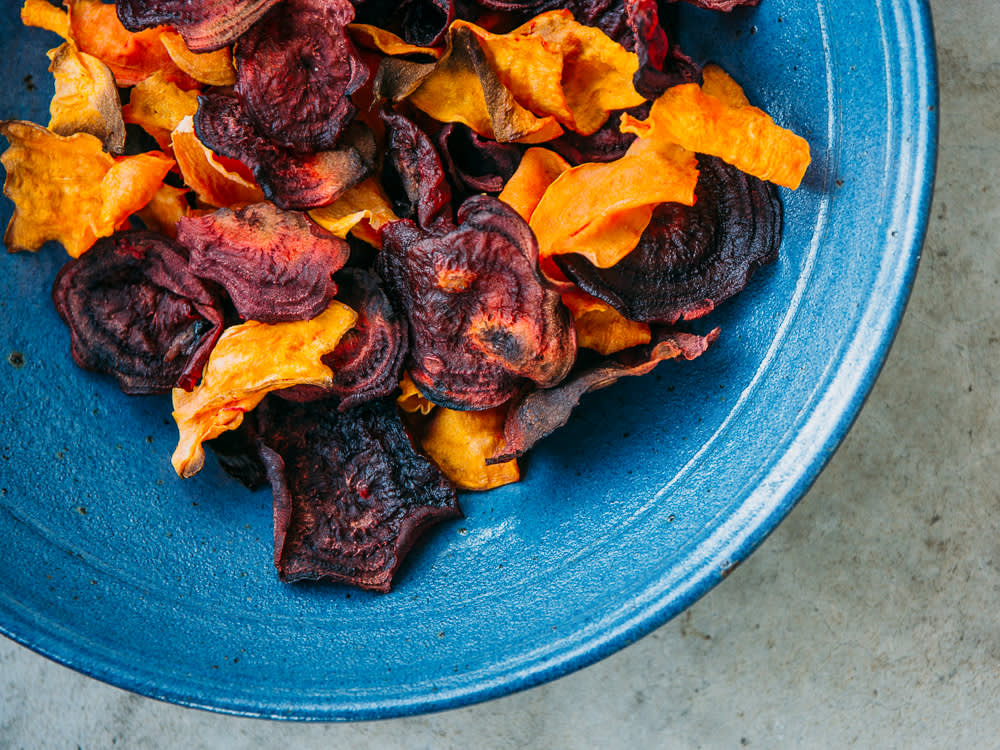
Most “superfoods for dogs” lists are wishful thinking, human health trends stretched to cover the dog bowl. Sweet potato is one of the rare exceptions that earns the label. It is genuinely nutrient-dense, most dogs love the taste, and it slots into a dog’s diet more easily than almost any other people-food. There is only one rule that separates a great dog snack from a stomachache, and it comes down to how you serve it.
That rule: cook it, every time. Raw sweet potato is tough to chew and hard for a dog to digest. Cooked and cooled, it becomes soft, sweet, and easy on the gut. Get that part right and the rest is upside.
Why sweet potato actually pulls its weight
A sweet potato is not empty filler. It brings carotenoids, vitamin C, and vitamin A, plus antioxidants and phytochemicals that support cell health. It is high in pyridoxine (vitamin B6), potassium, fiber, and magnesium, and it supplies copper, iron, and manganese. Those trace minerals are not trivia; they do real jobs in a dog’s body, from carrying oxygen in the blood to helping build proteins. And all of that arrives in a food that is low in fat, which matters for dogs prone to weight gain or pancreatitis.
The fiber is the part owners feel first. It firms up stool and can help a dog who runs a little loose, which is exactly why so many vets reach for a spoonful of plain sweet potato or pumpkin during a mild digestive hiccup.
Sweet potato is one of the few kitchen foods I actively encourage people to share, because the nutrition is real and the fiber is gentle. The only mistake I see is folks handing over a raw chunk or a candied Thanksgiving version. Plain and cooked is the whole secret.
A quick myth: it is not really a potato, or a yam
Worth knowing before you swap things in the kitchen. Despite the name, sweet potatoes are not related to white potatoes at all, and they are not yams either. A true yam is a separate, rough-skinned root vegetable. In American supermarkets the words “yam” and “sweet potato” get used interchangeably, but the orange root you are picturing is a sweet potato. Colors vary, too: the Japanese variety has purple skin and pale yellow flesh, tastes sweeter, and is especially rich in phytonutrients, something a lot of dogs happily notice.
How to work it into the bowl
Start small, because fiber that helps in the right dose can loosen stools in too big a dose. Steam or boil the sweet potato (both hold more nutrients than roasting or baking), mash it, and stir a little into your dog’s normal meal. It also stuffs beautifully into a rubber toy; freeze the stuffed toy and it becomes a long, cooling project on a hot afternoon.
Keep an eye on the math. Treats and extras should stay under ten percent of your dog’s daily calories, sweet potato included. A spoonful for a small dog is plenty; a larger dog can handle a bit more.
Two chews worth making
The most popular way to serve sweet potato is as a dried chew, and it is a genuinely better everyday option than rawhide, which has a long track record of causing choking and blockages. Dried sweet potato brings none of that reputation and adds fiber and vitamins instead.
Chewy dried sweet potato strips. Wash the sweet potatoes and slice them lengthwise into quarter-inch pieces. Soak in water two hours, drain, and dry. Spray lightly with olive oil to boost beta-carotene absorption, then dehydrate at 145 to 155 degrees Fahrenheit for six to eight hours (longer for crunchier). No dehydrator? Set an oven to its lowest temperature, prop the door, and lay the slices on a rack so air moves underneath. At 115 degrees this can take up to 20 hours; at 145 it runs closer to 12. Check often. Store in an airtight container.
Baked sweet potato chips. Heat the oven to 250 degrees. Slice whole sweet potatoes into rounds; a quarter-inch round crisps up, a half-inch round stays chewier. Lay them on a foil-lined sheet and bake about two hours, turning once. Cool on the sheet, then store airtight.
What newer guidance adds
Nothing about the core advice has changed, and that is the point: sweet potato has held up as a vet-recommended staple precisely because it is simple and low-risk. The one caution worth repeating in today’s grain-free debate is that sweet potato is a fine treat or meal topper, not a reason to build a whole homemade diet around one vegetable. Boutique and grain-free diets heavy on peas, lentils, and potatoes have drawn scrutiny for a possible link to a heart condition called dilated cardiomyopathy, and that conversation is still active. The takeaway for sweet potato is reassuringly narrow: a spoonful on top of a complete, balanced dog food is great; a bowl that is mostly sweet potato is not a balanced diet. When in doubt about portions for your specific dog, your vet can give you a number.
The bottom line
Sweet potato is that unusual thing, a human superfood that is also a legitimately good dog snack. Cook it, keep it plain, start with a small amount, and count it toward the daily treat budget. Do that, and you have a cheap, nutritious, dog-approved reward that beats most of what is sold in the treat aisle.
References
- Tanprasertsuk, Jirayu, et al. “Roles of Plant-Based Ingredients and Phytonutrients in Canine Nutrition and Health.” Journal of Animal Physiology and Animal Nutrition, 8 Sept. 2021, https://doi.org/10.1111/jpn.13626.
- “Sweetpotato, cooked, baked in skin, flesh, without salt.” USDA FoodData Central. Accessed 2 July 2026, https://fdc.nal.usda.gov.
- U.S. Food and Drug Administration. “FDA Investigation into Potential Link between Certain Diets and Canine Dilated Cardiomyopathy.” FDA.gov. Accessed 2 July 2026, https://www.fda.gov/animal-veterinary/outbreaks-and-advisories/fda-investigation-potential-link-between-certain-diets-and-canine-dilated-cardiomyopathy.
Common questions
How much sweet potato can a dog have?
Keep sweet potato and all treats to under ten percent of your dog's daily calories. For most dogs that means a spoonful or two of mashed sweet potato, or a couple of small dried chews, introduced slowly.
Are sweet potato chews better than rawhide?
For most dogs, yes. Dried sweet potato chews do not carry rawhide's reputation for causing choking or digestive blockages, and they add fiber and vitamins on top.
Not a substitute for your vet. Our guidance is educational. For urgent symptoms, contact a vet or emergency clinic right away. Editorial standards
Dr. Nair is a veterinarian focused on diet and feeding. She covers everyday nutrition, treats, and the many "can they eat this?" questions owners ask, grounding each answer in what is actually safe and sensible for dogs and cats.
Meet our experts ↗Keep reading
 FoodCooking for Your Dog Is the Easy Part. Balancing It Is Where People Fail.Dr. Priya Nair · 7 min
 FoodDump-and-Go Crockpot Dog Dinner: Chicken, Rice, and Almost No EffortDr. Priya Nair · 4 min
 FoodThis Homemade Dog Stew Is a Hit. Here's How to Keep It From Hurting Your Dog.Dr. Amara Solis · 6 min
 FoodThis Homemade Kibble Looks Complete. Almost No Recipe Actually Is.Dr. Priya Nair · 6 min
 FoodRaw Dog Food's Real Danger Isn't the Meat. It's What You Skip.Dr. Priya Nair · 6 min
 Food"Superfood" Is Marketing. Nutrient Density Is the Real Test.Dr. Priya Nair · 8 min