


Cooking for Your Dog Is the Easy Part. Balancing It Is Where People Fail.
Homemade dog food rarely goes wrong in the pan. It goes wrong at the nutrient math, and studies show most online recipes are missing something essential. This nutritionist-built chicken-and-vegetable recipe closes that gap.

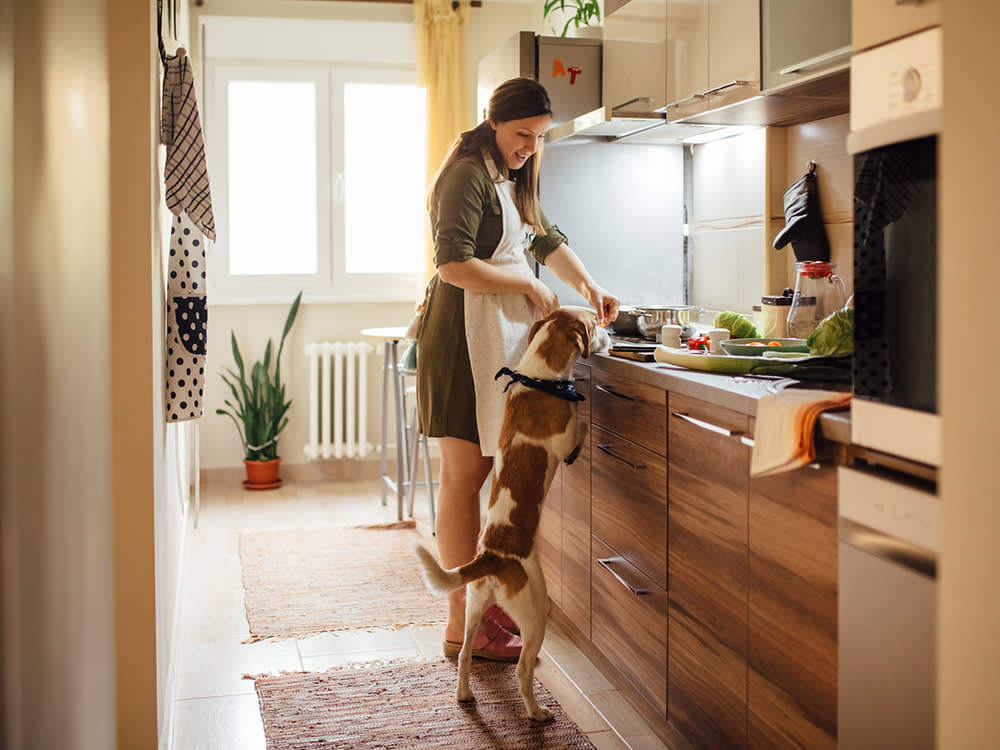
There is a comforting myth that the hard part of home-cooking for your dog is the cooking. Buy good chicken, add some vegetables, how wrong can it go? The answer, according to the research, is: quite. When veterinary nutritionists have actually analyzed homemade dog-food recipes floating around online and in books, the large majority turn out to be missing at least one essential nutrient. The stove is not the problem. The nutrient balance is, and that is invisible until a deficiency shows up in your dog months later.
So the real value of a good homemade recipe is not the flavor combination. It is the supplement math, the specific vitamins and minerals bolted on in exact amounts to turn a tasty meal into a complete one. The recipe below was built with a canine nutritionist and balanced to the National Research Council’s guidelines, which is precisely why the supplement list is not optional garnish. It is the part that makes the whole thing safe to feed every day.
Before you start
This recipe yields about 15 pounds of food, roughly a week of two daily meals for a 40-pound dog, at 1,200 kilocalories per kilogram, or 34 kilocalories per ounce. An electric pressure cooker is easiest, but slow cookers, poaching, roasting, sous vide, or steaming all work.
A few ground rules. Weigh every ingredient on a kitchen scale; the amounts matter and the supplements especially are non-negotiable. Ingredients are fresh and raw unless noted, and thawed frozen produce is fine. You have some flexibility in which fruits and vegetables you use, but not in the quantities or the supplements, which supply a specific mineral and vitamin profile. Because the volume is large, split it into two batches rather than overfilling one pot; these cookers should never go past three-quarters full. The recipe was tested in an 8-quart cooker. You can also halve everything for 7½ pounds.
Homemade Chicken and Vegetable Dog Food
Made in a slow cooker or electric pressure cooker. Yields about 15 pounds.
Ingredients
Animal protein
Note: chicken can shrink up to 30 percent while cooking, so start with 10 pounds raw to end with 7 pounds cooked.
- 6 pounds chicken breast, skinless, boneless (raw)
- 4 pounds chicken thigh, skinless, boneless (raw)
- 7 ounces chicken liver
- 3 ounces chicken gizzards
- 3 ounces chicken hearts
- 6 eggs (raw)
- 24 ounces chicken stock (from cooking the chicken)
- 3.75 ounces canned sardines in spring water, drained
Vegetables and fruit
- 1½ pounds sweet potatoes (unpeeled)
- 10 ounces carrots (unpeeled)
- 8 ounces cabbage (or broccoli, Brussels sprouts, etc.)
- 4 ounces kale or other leafy greens
- 8 ounces butternut or similar squash
- 4 ounces blueberries (or other berries, fresh or frozen)
- 12 ounces green beans or peas
- 6 ounces pumpkin purée
- ¼ cup parsley, stems included
- 8 ounces apple
Seeds and grain
- 6 ounces quick-cooking oats (dry)
- 8 ounces cooked garbanzo beans (chickpeas)
- 3 tablespoons ground pumpkin seeds
- 3 tablespoons ground sunflower seeds
- 1 tablespoon chia seeds
- 1 tablespoon ground flax seed
Supplements
- 1 vitamin E, 100 IU
- 4½ teaspoons (17 grams) calcium carbonate made from eggshells
- 1¼ teaspoons taurine powder
- 1 tablet zinc copper
- 2 tablets ground Up & Up Woman’s Daily Multivitamin
- ¼ teaspoon kelp powder (NOW); using its tiny spoon, 10 spoonfuls equal ¼ teaspoon
Directions
Step one. In the pressure cooker, cook 4 ounces of dried garbanzos in 2 cups of water on the bean/chili setting at high pressure for 20 minutes, which gives you 8 ounces cooked. Or use drained canned beans. Drain, cool, and empty the pot.
Step two. Chop the chicken into big chunks, cutting away most of the fat, and coarsely mince the organ meats. Cook half of it in 1½ cups of water on low pressure for 10 minutes, letting the pressure come down on its own. Lift the chicken into a large bowl and hold onto the broth. Pour 1½ cups of that broth back in, drop in the remaining raw meat, and run it again. Set the second round of broth aside.
Step three. Finely chop, or run through a processor, the sweet potatoes along with the rest of the vegetables, fruit, and parsley, then grind the cooked garbanzos. Put half the cooked chicken back in the pot with 12 ounces of reserved broth and half the vegetables, and cook 5 minutes on low pressure with a manual release. Because the chicken is already cooked, the produce only needs a light pass.
Step four. Fold in three eggs, beaten, plus 4 ounces of the ground garbanzos, half of the ground seeds (hold back the heat-sensitive flax for now), half the sardines, and 3 ounces of uncooked oats. Mix well, then leave it covered for a few minutes so the eggs and oats can finish cooking. The chia, oats, and eggs double as binders. Take the inner pot out and let the food cool.
Step five. Transfer that batch to a large bowl and run the whole process again for the second half of the ingredients.
Step six. Dissolve the supplements and the ground flax in a small amount of stock, breaking or grinding any tablets and opening capsules. Sprinkle half over each cooled batch and mix in well; even distribution is critical. Pulse everything in a food processor, or mash by hand, until it reaches a uniform, thickly puréed consistency, breaking the shredded chicken through it. The mush-like texture is deliberate, since it aids digestion and nutrient absorption even if it looks less appetizing to us.
How much to feed
Amounts vary with age and activity; this is a guide for an altered, moderately active adult dog, split into two daily servings.
- 10 lb dog: 349 kcal/day, about 10 ounces
- 20 lb dog: 586 kcal/day, about 17 ounces
- 30 lb dog: 794 kcal/day, about 23 ounces
- 40 lb dog: 986 kcal/day, about 29 ounces
- 50 lb dog: 1,166 kcal/day, about 34 ounces
- 60 lb dog: 1,337 kcal/day, about 39 ounces
- 70 lb dog: 1,501 kcal/day, about 44 ounces
By calories, the recipe runs about 45.4 percent protein, 24 percent carbohydrate, and 30 percent fat.
What’s new since this was written
The case for using a properly balanced recipe, rather than improvising, has only gotten stronger. A widely cited study in the Journal of the American Veterinary Medical Association evaluated 200 homemade maintenance recipes for dogs, many written by veterinarians, and found that the overwhelming majority failed to meet at least one established nutrient standard, with a substantial share short on multiple nutrients. Later analyses of recipes aimed at dogs with specific illnesses reached similarly worrying conclusions.
The practical lesson is not that home cooking is dangerous, it is that the balancing is the skill, and eyeballing it does not work. If you want to cook for your dog long-term, the safest path is a recipe formulated by a board-certified veterinary nutritionist, or a consult through a service like the American College of Veterinary Nutrition’s directory, ideally with periodic bloodwork to confirm your dog is thriving. Recipes like this one exist precisely so the nutrient math is already done for you, which is the whole point.
References
- Stockman, J. et al. “Evaluation of Recipes of Home-Prepared Maintenance Diets for Dogs.” Journal of the American Veterinary Medical Association, vol. 242, no. 11, 2013.
- National Research Council. Nutrient Requirements of Dogs and Cats. National Academies Press.
- American College of Veterinary Nutrition. “Find a Nutritionist.” acvn.org
Not a substitute for your vet. Our guidance is educational. For urgent symptoms, contact a vet or emergency clinic right away. Editorial standards
Dr. Nair is a veterinarian focused on diet and feeding. She covers everyday nutrition, treats, and the many "can they eat this?" questions owners ask, grounding each answer in what is actually safe and sensible for dogs and cats.
Meet our experts ↗Keep reading
 FoodA Beef-and-Veggie Dog Topper That Follows the 10% RuleDr. Lena Park · 5 min
 FoodThis Homemade Kibble Looks Complete. Almost No Recipe Actually Is.Dr. Priya Nair · 6 min
 Food5 Reasons to Cook for Your Dog. Just Don't Cook All of It.Dr. Priya Nair · 6 min
 FoodThis Homemade Dog Stew Is a Hit. Here's How to Keep It From Hurting Your Dog.Dr. Amara Solis · 6 min
 FoodHome-Cooked Dog Food Can Run $3 a Day. The Real Price Is Your Sundays.Dr. Amara Solis · 9 min
 FoodDump-and-Go Crockpot Dog Dinner: Chicken, Rice, and Almost No EffortDr. Priya Nair · 4 min