


A Beef-and-Veggie Dog Topper That Follows the 10% Rule
A homemade beef and veggie topper your dog will love, built around the one number that keeps a topper from quietly making your dog overweight: keep it to 10 percent of daily calories.

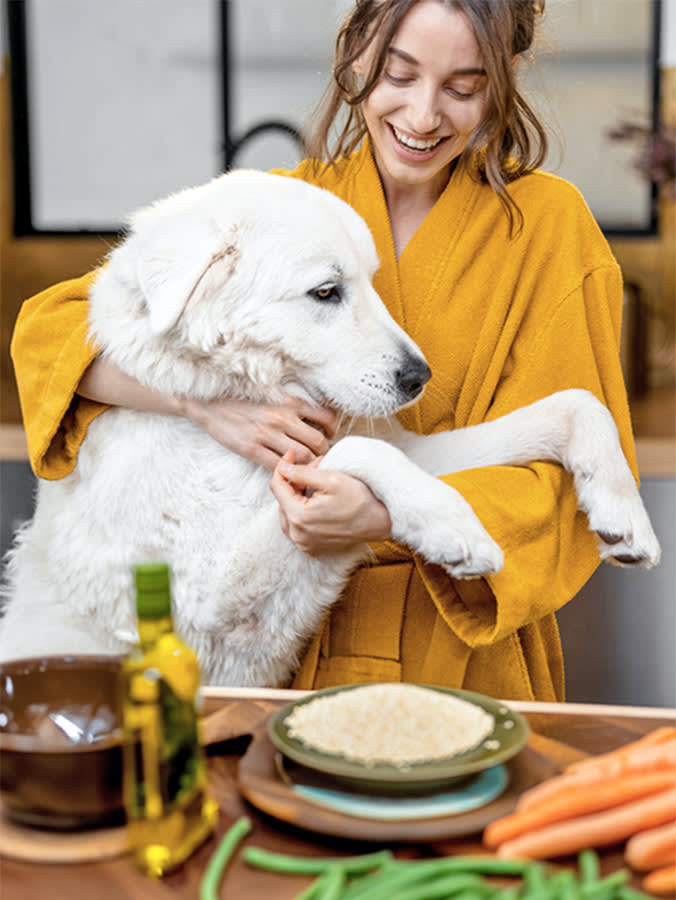
A topper is the easiest way to make a tired bowl exciting again, and it is also the easiest way to quietly fatten up your dog if you treat it like a second dinner instead of a garnish. So before the recipe, the one number that matters: a topper is a treat, and treats should stay under 10 percent of your dog’s daily calories. Everything else, including how much of this you spoon out, follows from that.
The mix below, lean beef, quinoa, carrots, green beans, flaxseed, and a little olive oil, is genuinely good for your dog. The protein and amino acids support muscle and cell repair, the beta-carotene in carrots feeds vision and immune health, green beans add low-calorie fiber and vitamins C and K, and the omega-3s in flaxseed help skin and coat. It comes together in about 20 minutes. The trick is keeping it in its lane as a flavor-and-nutrition boost, not a meal replacement that throws your dog’s complete-and-balanced diet out of proportion.
How much to actually use
“Add 1 to 2 tablespoons” is the line every topper recipe gives you, and it is fine as a starting point, but it ignores that a 12-pound terrier and an 80-pound shepherd are not the same animal. Anchor to the 10 percent rule instead.
| Dog’s weight | Rough daily calories | ~10% topper allowance |
|---|---|---|
| 10 lb | 250–350 kcal | about 1 level tablespoon |
| 25 lb | 500–700 kcal | about 2 tablespoons |
| 50 lb | 850–1,100 kcal | about 3 to 4 tablespoons |
| 80 lb | 1,300–1,700 kcal | about 5 to 6 tablespoons |
These are starting estimates, not prescriptions. Active dogs burn more, seniors and couch companions burn less, and your dog’s actual maintenance needs can vary by 25 percent in either direction. If you are adding a topper most days, trim their base food slightly so the total stays steady. The goal is to upgrade the meal, not inflate it.
The safety swaps that matter
Homemade food for dogs is forgiving, but a few ingredients are not negotiable.
- No onion or garlic, ever. Both are toxic to dogs and damage red blood cells. That rules out pre-seasoned ground beef and most “flavored” broths, so cook from plain ingredients.
- Drain the fat, and lean toward lean. A sudden hit of fatty meat can trigger pancreatitis, especially in prone breeds like Miniature Schnauzers. Use lean ground beef (90/10 or leaner) and pour off everything you can after browning.
- Skip the salt and oil in the cooking water. Your dog does not need either, and the olive oil in the recipe already covers healthy fat.
- Cook the quinoa, and rinse it first. Raw quinoa carries saponins that can irritate the gut; rinsing and cooking removes them.
If your dog has a chronic condition, kidney disease, a history of pancreatitis, food allergies, or is on a prescription diet, clear any topper with your vet first. A diet built around a medical need can be undone by a generous spoonful of beef.
Beef and Veggie Boost Dog Topper
Ingredients
- 1 pound lean ground beef (90/10 or leaner), cooked and well drained. High-quality protein for muscle growth, repair, and energy.
- 1 cup cooked quinoa. Gluten-free, protein-rich grain with essential amino acids.
- ½ cup steamed carrots, finely diced or pureed. Beta-carotene (vitamin A) for vision and immune health.
- ½ cup steamed green beans, finely chopped. Low-calorie fiber plus vitamins C and K.
- 1 teaspoon ground flaxseed. Omega-3 fatty acids for a shiny coat and healthy skin.
- 1 tablespoon olive oil. Healthy fats that support skin and coat.
Directions
- Brown the ground beef in a dry skillet over medium heat until fully cooked. Drain off all the fat. No oil, salt, onion, or garlic.
- Rinse and cook the quinoa in plain water per the package directions.
- Steam the carrots and green beans until just fork-tender so they keep their nutrients, then finely dice or puree them.
- In a large bowl, fold together the cooled beef, quinoa, vegetables, flaxseed, and olive oil until evenly combined.
- Spoon your dog’s allowance (see the table) over their regular meal.
Store in an airtight container in the refrigerator for up to 4 days, or freeze portion-sized amounts for up to 1 month. Thaw a portion in the fridge before serving, and never leave a cooked topper at room temperature for more than two hours.
References
- U.S. Food & Drug Administration. “People Foods to Avoid Feeding Your Pets.” https://www.fda.gov/animal-veterinary/animal-health-literacy/people-foods-avoid-feeding-your-pets
- WSAVA Global Nutrition Committee. “Guidelines on Selecting Pet Foods.” https://wsava.org/global-guidelines/global-nutrition-guidelines/
- American College of Veterinary Nutrition. “Homemade Diets and the 10% Treat Rule.” https://acvn.org/
Not a substitute for your vet. Our guidance is educational. For urgent symptoms, contact a vet or emergency clinic right away. Editorial standards
Dr. Park is a board-certified emergency and critical care specialist. She reviews our health and safety content for clinical accuracy and contributes guides on recognising urgent conditions. Her focus is helping owners act quickly and correctly when it matters most.
Meet our experts ↗Keep reading
 FoodOnly 6% of Homemade Dog Diets Are Complete. Yours Is Probably in the Other 94%.Dr. Amara Solis · 12 min
 FoodThis Homemade Kibble Looks Complete. Almost No Recipe Actually Is.Dr. Priya Nair · 6 min
 FoodRaw Dog Food's Real Danger Isn't the Meat. It's What You Skip.Dr. Priya Nair · 6 min
 FoodThis Homemade Dog Stew Is a Hit. Here's How to Keep It From Hurting Your Dog.Dr. Amara Solis · 6 min
 FoodCooking for Your Dog Is the Easy Part. Balancing It Is Where People Fail.Dr. Priya Nair · 7 min
 FoodSweet Potato Is a Real Dog Superfood. One Rule Makes It Safe.Dr. Priya Nair · 5 min