


The BPA-in-Dog-Toys Study, Read Right: One Chemical to Avoid, Two to Stop Fearing
A 2024 study found BPA leaches from dog toys into saliva and can nudge a dog's body toward storing fat. The same study quietly cleared two other chemicals owners fear, and the fix for the real one takes about five minutes.

Affiliate disclosure. This article contains affiliate links. We may earn a small commission if you buy through a link, at no extra cost to you. How we handle recommendations.
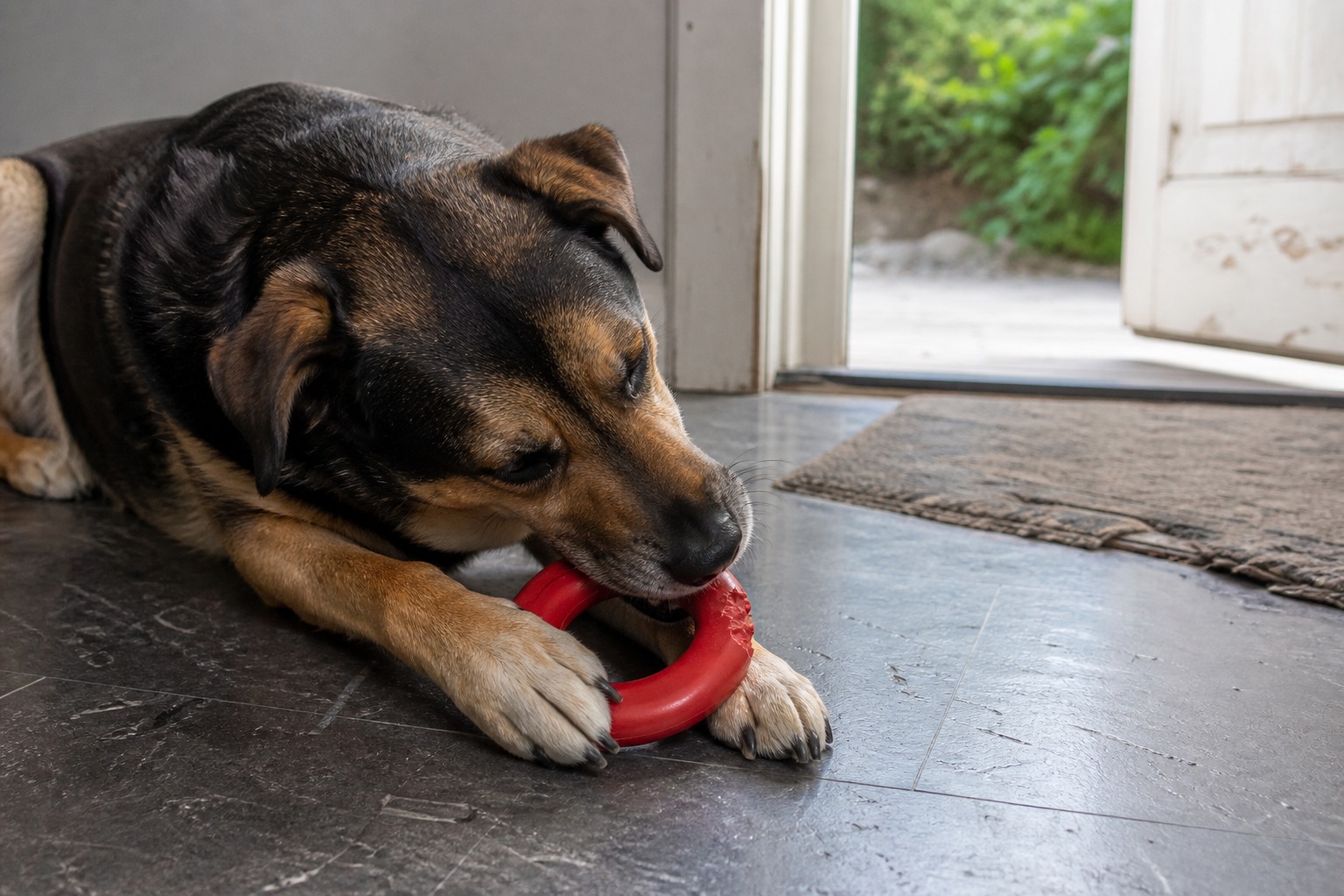
The headline that traveled was “BPA in dog toys may cause obesity.” It is accurate, but it buries the two most useful things the underlying study actually found. The first is reassuring: of the three chemical families researchers tested for, only one, BPA, actually leached out of the toys. The second is practical: the fix is not a lifestyle overhaul, it is a swap of a few chew toys you can make this afternoon. Here is what the research really says, separated from the alarm.
What the study did, and the one result that matters most
The 2024 study, published in the journal Chemosphere, set out to answer a narrow, concrete question: when a dog mouths and chews a toy, does anything harmful come out of it? To find out, the team led by Eun-Jung Park borrowed a method normally used to test children’s products, soaking dog toys in artificial saliva to see what migrated into the liquid.
This is where the nuance lives. They tested for three things owners commonly worry about: BPA, phthalates, and azo dyes. Only BPA showed up in the leachate. Phthalates and azo dyes were not detected in any of the samples. In other words, the study did not find that dog toys are a chemical soup. It found one specific culprit, which is far more actionable than a vague “toys are toxic” takeaway.
Then the researchers asked what that leached BPA does inside a dog. Exposing canine adipose-derived stem cells (the cells that become fat cells) to BPA pushed them to mature into fat cells more readily. On a genetic level, BPA switched up the expression of a cluster of fat-storage genes, including ADIPOQ, PLIN1, and FABP4, by acting on the PPAR signaling pathway, a master switch for fat-cell development. “Our findings suggest that companion dogs are at risk of BPA exposure, which may contribute to obesity in dogs,” Park wrote, adding that “the implementation of precautionary measures is crucial.” That is the mechanism behind the obesity headline: not extra calories, but a chemical nudging the body’s fat-storage machinery.
Why BPA was already on the watch list
BPA’s bad reputation predates this study by years. The FDA maintains that low levels of BPA are safe in food-contact uses, but a number of researchers disagree, and higher exposures have been linked in people to high blood pressure, diabetes, and cardiovascular problems. BPA is also an endocrine disruptor, meaning it interferes with hormones, and those hormonal changes have been associated with infertility in both dogs and humans.
There is precedent for it building up in pets, too. An earlier study found that switching just 14 dogs to a canned-food diet (cans are often lined with BPA-containing resin) tripled their blood BPA levels in two weeks, and altered their gut microbiome in the process. The toy finding adds a second, easy-to-overlook exposure route to the one already known from food packaging.
The five-minute fix: a quick BPA-free toy audit
This is the part the headline should have led with. You do not need to throw out the toy box. You need to know which toys to replace, and good BPA-free options are easy to find.
Start by sorting your dog’s toys into three piles:
- Hard or semi-hard plastic chew toys are the ones to scrutinize, because they are made of exactly the kind of plastic that can contain BPA, and chewing is what releases it into saliva. These are your replacement candidates.
- Plush toys are usually fabric and stuffing, but check the squeaker and the filling, both of which can be plastic. The chewing risk is lower unless your dog destroys and mouths the insides.
- Natural-material toys, made of wood, wool, rope, or natural rubber, sidestep the issue entirely and are a safe default.
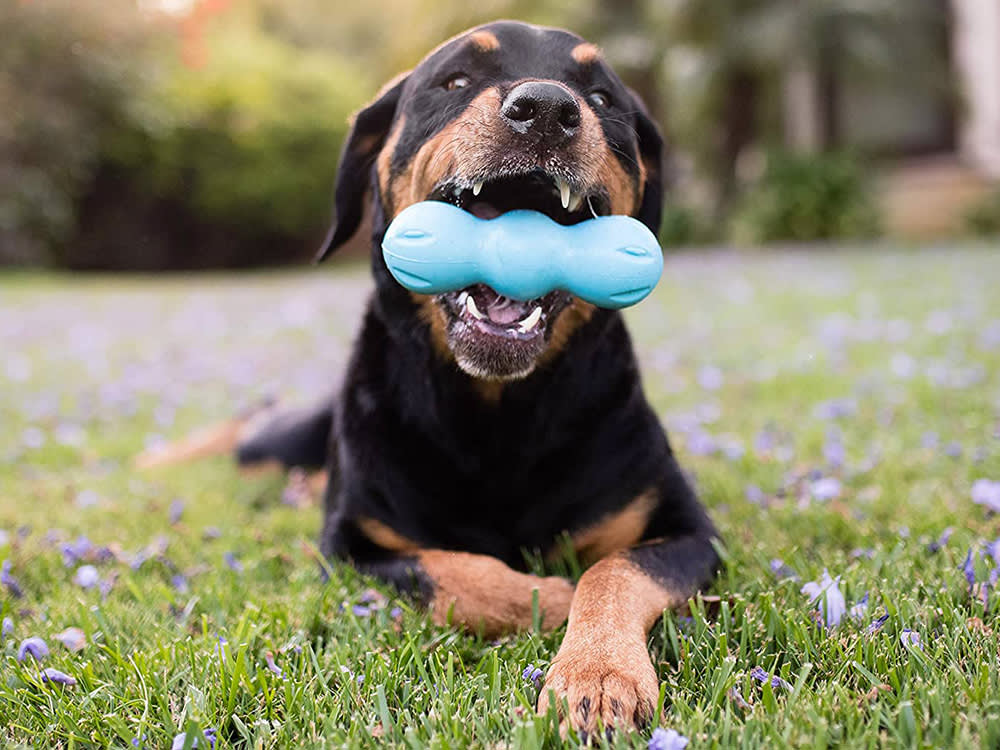
For the replacement pile, look for toys explicitly labeled BPA-free and phthalate-free. One widely available, well-regarded option is West Paw’s Zogoflex line, which is BPA-free, phthalate-free, latex-free, FDA-compliant, dishwasher-safe, and made in the USA; the Toppl and Tux treat toys double as slow-feeders, which is a nice bonus given the obesity angle. The broader rule: a toy that names what it is free of has thought about it; a bargain-bin chew toy with no material information is the one to retire.
A word of caution on labels. There is currently no FDA ban on BPA in pet products, which means an “FDA-approved” or “FDA-compliant” toy is not automatically BPA-free. The only reliable signal is an explicit BPA-free claim from the manufacturer.
The reassuring part of this study is how narrow the problem turned out to be. It is not a reason to panic-toss the toy box. It is a reason to retire the cheap, unlabeled hard-plastic chews and keep everything else. That is a five-minute fix, not a lifestyle.
The honest bottom line
This is a single study, and “may contribute to obesity” is appropriately hedged language, not a verdict. A dog’s weight is still driven mostly by calories in and exercise out, and no toy swap replaces portion control and walks. But the study is a clean, useful result: it isolated one chemical worth avoiding, cleared two that owners often fear, and pointed to a fix that costs a few minutes and the price of a couple of new chew toys. That is about as easy as risk reduction gets.
References
- Park, E.-J., et al., “The Obesogen Bisphenol A Promotes Adipogenesis in Canine Adipose-Derived Stem Cells: Potential Implication in Dog Obesity,” Chemosphere, 2024.
- U.S. Food and Drug Administration, “Bisphenol A (BPA): Use in Food Contact Application.”
- National Library of Medicine (PMC), “Bisphenol A and the Endocrine System.”
- Environmental Working Group, “BPA.”
Not a substitute for your vet. Our guidance is educational. For urgent symptoms, contact a vet or emergency clinic right away. Editorial standards
Dr. Chen is a small-animal veterinarian who leads health and safety coverage at The Pet Times. She writes and reviews the bulk of our illness, condition, and safety content, translating clinical guidance into clear, practical advice owners can act on at home.
Meet our experts ↗Keep reading
 Product PicksThis Brand Refuses to Call Its Dog Toys 'Toys.' Here's Why That's Not Just Marketing.Marcus Webb · 5 min
 Product PicksThat Bright Red Ball Is Basically Invisible to Your Dog. 12 Toys They Can Actually SeeSasha Ford · 6 min
 TrainingThe Cheapest Fix for a Bored, Destructive Dog Lives in Your FreezerSasha Ford · 6 min
 Product PicksBuy for Your Dog's Size, Not Its Cuteness: 18 Holiday Gifts Done RightNina Vasquez · 8 min
 Product PicksA Dog Trainer's Rule for Brain Toys: Match the Toy to the Boredom, Not the DogSasha Ford · 5 min
 Product PicksThis Montana Factory Grinds Up Your Dog's Old Toy and Makes You a New OneSara Lim · 8 min