


Your Chihuahua Isn't 'Naturally' Anxious. Look at How You Treat Him.
A study of nearly 50,000 dogs ranked which breed stereotypes hold up. The headline finding — small dogs are the most fearful — has a twist buried in it that changes how you should read your own dog's behavior.

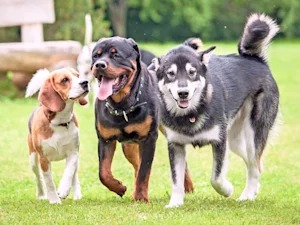
Say “Chihuahua” and a picture arrives before you can stop it: a trembling, yappy little thing that wants to bite the mail carrier. Say “Golden Retriever” and you get the opposite, a sunny dog who loves everyone. We carry a whole mental filing cabinet of these images, and most of us assume they come from the dogs themselves.
A large new analysis suggests the picture is real but the caption is wrong. When researchers scored the behavior of nearly 50,000 dogs, the stereotypes about which breeds seem fearful or calm largely held up. What the data can’t tell you is the thing everyone assumes it proves: that the fear is baked into the breed. Read closely, and the study points somewhere more uncomfortable and more useful, at us.
What the numbers actually said
The behavior scores come from the Dog Aging Project, a long-running study of canine health and aging that enrolled tens of thousands of dogs whose owners rated them on standardized behavior traits. Mapping breed against those traits produced a ranking that will surprise no one at the dog park.
Smaller dogs, overall, came across as more reactive and excitable than big ones. Chihuahuas topped the fear charts, rating high when it came to unfamiliar people and rating high around unfamiliar dogs alike. At the other end sat the mellow giants: Newfoundlands were the least wary dogs measured, low on touch sensitivity, separation anxiety, and fear of other dogs. Golden Retrievers ranked least fearful of strangers, and Rottweilers shrugged off noises, objects, and strange situations.
Energy broke some myths. Greyhounds, the racing breed, registered as the lowest-energy dogs on the list, the couch potatoes they famously are at home. The live wires were the working breeds: Belgian Malinois led on raw energy, German Shorthaired Pointers on excitability, and Brittanys on the urge to chase. Shiba Inus came off as aloof, lowest on attention-seeking and touch tolerance, while Pugs were the most attachment-hungry breed of all.
The twist that matters
Here’s the sentence to underline. One of the study’s collaborators, veterinarian Dr. Audrey Ruple, offered a plain explanation for why the little dogs look so anxious, and it isn’t genetics. She suspects it comes down to how differently we treat small and large dogs.
Think about what that means in daily life. When a 90-pound dog lunges or barks, we correct it, train it, and hold it to a standard, because a large dog that can’t handle strangers is a liability. When an eight-pound dog does the exact same thing, we scoop it up, laugh, and call it feisty. The big dog gets socialization and consequences. The small dog gets carried away from every situation that scares it, which teaches it that the world is scary and that being scared works. We don’t measure a difference in the dogs so much as a difference in our own patience.
We read a small dog’s fear as personality and a big dog’s fear as a problem to fix, and then we act on that difference every single day. The little dog almost never gets the training and the gradual exposure we’d give a Lab without thinking twice. So of course the fear sticks. We practically coach it in.
The same logic showed up in the trainability numbers. Purebred dogs scored as more trainable than mixed breeds, with Malinois at the top and Greyhounds near the bottom. Ruple’s read on that gap wasn’t about intelligence either. Many people assume a shelter mix arrived with a rough past, and that assumption shapes how, and how much, they bother to train.
What to do with this
The practical takeaway isn’t “ignore your dog’s breed.” Breed tendencies are real, and knowing yours helps you plan. A Malinois needs a job. A Pug needs to not be left alone all day. What the study should knock loose is the fatalism, the idea that your nervous little dog is simply built this way and can’t change.
If your small dog is fearful, treat it like the fixable behavior it usually is. Socialize deliberately and early. Reward calm instead of rewarding the panic by picking your dog up mid-meltdown. Give the gradual, patient exposure to strangers and other dogs that you’d give a large dog as a matter of course. Small dogs can learn confidence the same way big ones do. Most just never get the chance.
And resist the urge to read a breed label as a personality verdict, for your dog or anyone else’s. The dog in front of you is an individual. Breed nudges the odds; it doesn’t write the script.
What newer research adds
The picture of the anxious dog got broader, and more sobering, in 2026. A separate study out of Texas A&M, published that spring in a veterinary research journal, analyzed owner reports and found that more than 84 percent of dogs show at least some signs of fear or anxiety. In other words, fearfulness isn’t a small-dog quirk or a bad-breed problem. It’s close to universal, showing up across sizes and backgrounds, and most of it goes unaddressed because owners read it as normal.
That reframes the whole conversation. If most dogs carry some fear, then the small trembling dog isn’t an outlier, it’s just the loudest version of something almost every dog is doing more quietly. The takeaway for owners is the same either way: fear is common, it is readable in body language long before it becomes a bite, and it responds to patient training far more than to the label on the dog.
References
Dr. Chen is a small-animal veterinarian who leads health and safety coverage at The Pet Times. She writes and reviews the bulk of our illness, condition, and safety content, translating clinical guidance into clear, practical advice owners can act on at home.
Meet our experts ↗Keep reading
 TrainingThe One Thing Your Dog's Breed Is Quietly Begging You ForJordan Ellis · 7 min
 LivingThere's No National Dog-Barking Law. Here's What Actually Gets You FinedSasha Ford · 11 min
 TrainingYou Didn't Cause Your Dog's Leash Reactivity. Here's How to Manage ItDr. Amara Solis · 7 min
 TrainingYour Dog Is Talking All Day. Here Are 11 Signals You're Misreading.Sasha Ford · 8 min
 TrainingThat Friendly On-Leash Hello Is Teaching Your Dog to Melt DownDr. Amara Solis · 6 min
 TrainingYour Dog Isn't Being Difficult. They're Begging for a Schedule.Dr. Lena Park · 8 min