


The Animal Pad's Secret Isn't 300 Volunteers. It's That Almost None Leave
Most rescues burn through volunteers. This San Diego group, born from one Craigslist adoption, turned the work into a social life, and that retention is what lets it pull street dogs out of Mexico and ease overcrowded U.S. shelters.

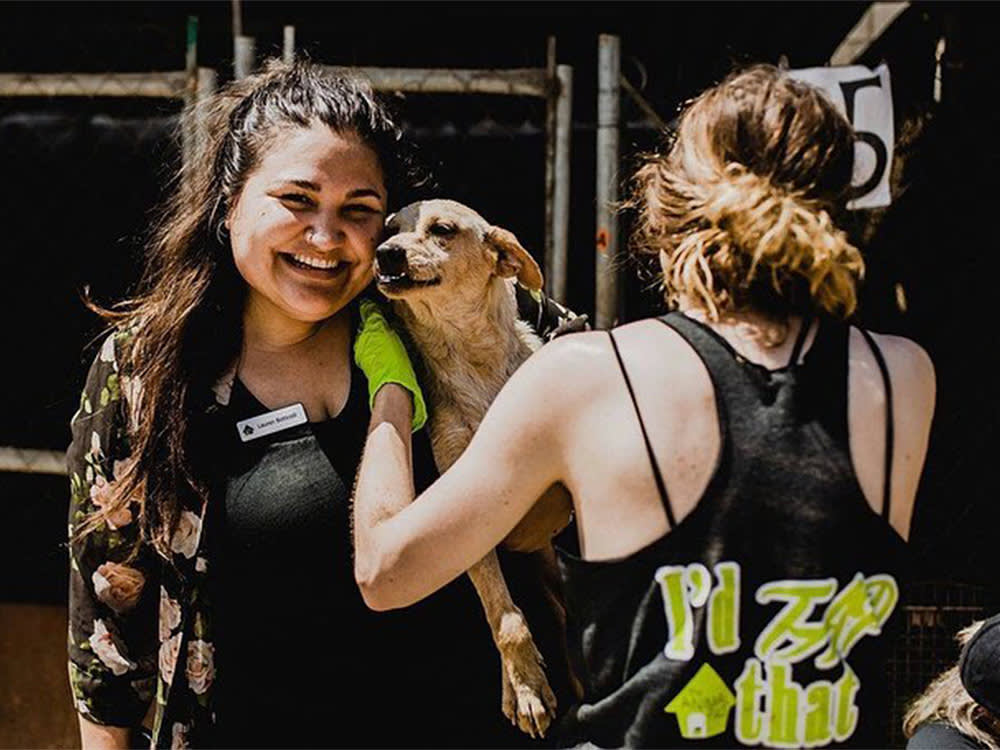
Plenty of rescues can recruit 300 volunteers. The hard part, the part that quietly determines whether a rescue can actually save dogs at scale, is keeping them. Volunteer burnout is the chronic disease of animal welfare: the work is emotionally brutal, the dogs arrive in heartbreaking shape, and most people give a few intense months and fade out. The Animal Pad, a San Diego rescue, has solved a version of that problem almost by accident, and its solution explains how a group that started with one woman and a Craigslist ad now runs cross-border rescue operations and absorbs overflow from shelters two time zones away. The dogs are the mission. The retention is the engine.
It started with a dog nobody else wanted
In 2010, Stephanie Nisan wanted a dog and didn’t know where to look. She wasn’t aware of any rescues near San Diego, didn’t want a breeder, and did what people did in 2010: she searched Craigslist. An ad pointed her to a shelter dog, she made the call, and when she met him she learned he had serious behavioral issues and was very human-aggressive. She adopted him anyway. That decision cracked something open, an awareness of how broken the local shelter pipeline was and how many dogs were in genuine danger, and she founded The Animal Pad soon after. Its reach now stretches far beyond California.
The culture that keeps people coming back
Here is the mechanism most rescues miss. At The Animal Pad, the work doesn’t feel like volunteering; it feels like belonging. Executive director Lauren Botticelli volunteered for over five years before leaving her day job to go full-time, and she insists almost nothing changed when she did.
“Honestly, this had already been my whole life for years before it became my paycheck,” Botticelli says. “Every other job I ever had was just a job. This was never that.”
She is adamant she isn’t unusual. “Nobody here is special, we all take it this seriously because it’s passion work,” she says, describing a vibe closer to a recreational softball team than a grim rescue operation. People show up because they love the animals and genuinely enjoy each other, and the social glue is the point. “At this point, all of my best friends are part of this organization.”
That is the retention secret stated plainly. Many volunteers arrived in San Diego with few connections and built their entire social lives through the rescue.
“People come in wanting to be around dogs and feel some purpose,” Botticelli says. “What they don’t expect is to walk out with a best friend and a whole support system. That’s why they stay.”
A rescue whose volunteers stay for years instead of months can take on harder, scarier, more logistically complex work, which is exactly what The Animal Pad does next.
The work that retention makes possible
Most of the dogs the group saves don’t come from San Diego at all. They come from Mexico and a life on the streets, a crisis the country lacks the resources to address.
“We almost never see senior dogs on the streets there, because they don’t survive to be seniors,” Botticelli explains. Street dogs sleep with one eye open, she explains: they forage, they defend themselves around the clock, and by the time they reach the rescue they are in rough shape.
The condition reports are grim: curable diseases left to advance, fleas, sometimes even sexually transmitted infections, dogs hit by cars and left, dogs thrown out of homes, and most often dogs simply born on the street into a population that keeps multiplying. That last fact drives strategy. The group prioritizes pulling any pregnant dog it can find and pours energy into educating locals on spaying and neutering, because rescuing dogs one at a time is losing math against an uncontrolled birth rate.
The logistics are where a committed, experienced volunteer base earns its keep. Botticelli and her teammates pack into a lime-green van and drive in and out of the country, scooping up as many dogs as will fit. They rarely hit trouble at the border, most agents support the mission, and a van full of obvious true believers tends to smooth the crossing.
That same reach-out-and-help reflex produced an only-in-rescue story: the group started getting tagged in posts about dogs in “San Diego,” except the dogs were in San Diego, Texas. “It was the wrong San Diego,” Botticelli says, “but it turned into this beautiful partnership where that shelter now transports dogs to us.” A case of mistaken identity became a supply line.
The pandemic test, and what it changed
If anything was going to break the operation, it was the pandemic and its aftermath. Like rescues everywhere, The Animal Pad saw a surge of lockdown adoptions, bored people wanting something to love, followed by a wave of returns to already-overflowing shelters. Most of the returned dogs were puppies who had spent their formative months indoors with little exposure to other dogs or people, so they came back undersocialized and harder to place.
Rather than treat that as a setback, the group reallocated resources toward training those dogs into adoptable, settled companions. Botticelli reports a striking result: once a dog is adopted the second time, after the training, not a single one has come back. Her summary of the whole philosophy is unglamorous and exactly right: “The silver lining is that we’re there for them when they need it.” A rescue can only make a promise like that if its people stay long enough to keep it.
References
- The Animal Pad. theanimalpad.org.
- Shelter Animals Count. “2024 Statistics.” shelteranimalscount.org.
- Humane Society International. “Street Dogs.” hsi.org.
Leila Torres leads our Living coverage, from home life and travel to the products and rescue stories that come with sharing a life with animals. She edits and writes across the section, with a soft spot for pieces about the bond between people and their pets.
Meet our experts ↗Keep reading
 LivingHe's Fostered Almost 40 Pit Bulls. The Stigma Is the Only Thing He Can't Rehome.Leila Torres · 8 min
 LivingShe Called the Sheriff to Approve Her Dog 'Rescue.' Over 100 Dogs Were Already Dead.James Okafor · 4 min
 Living'Unadoptable' Is a Description of the Building, Not the DogDr. Amara Solis · 7 min
 LivingA Layoff, a Pregnant Street Dog, and 4,500 Rescues LaterLeila Torres · 5 min
 LivingWhat It Actually Takes to Fly 29 Street Dogs to a New LifeLeila Torres · 5 min
 LivingNobody Wanted Elvis. Then an Elvis Impersonator Walked In.Nina Vasquez · 3 min