


The Pets Who Survived Hurricane Milton Left Before It Hit
When a Category 4 storm barreled toward Florida in October 2024, the shelter animals with the best odds were the ones a relay of fosters, vans, and rescue planes had already moved out. Here's how that machine worked.

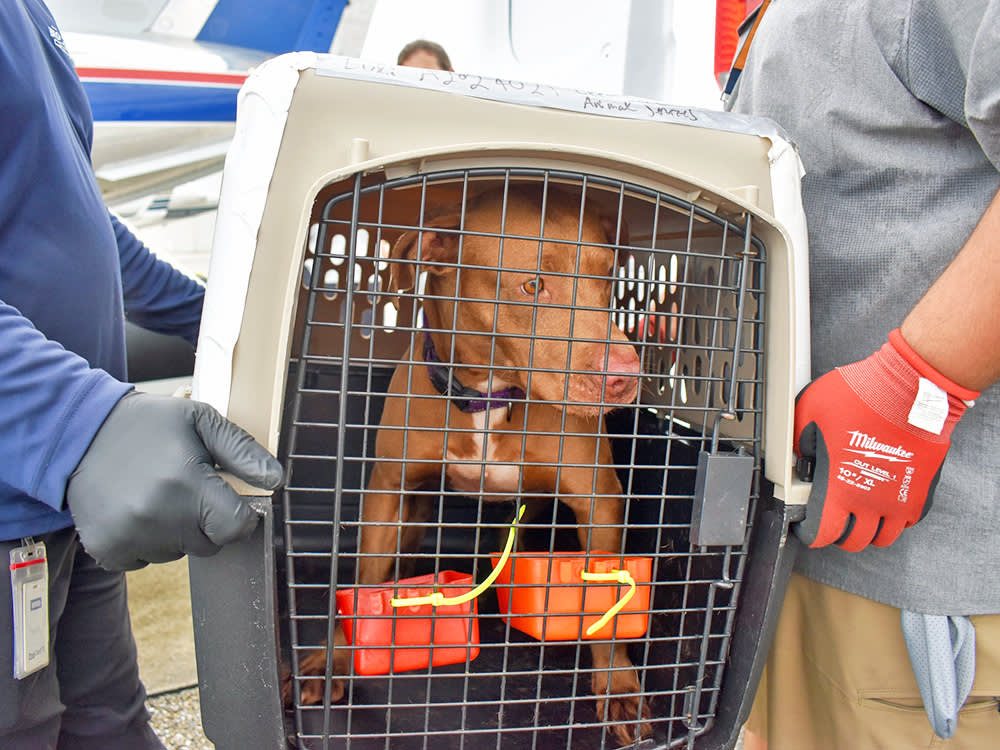
By the time Hurricane Milton made landfall near Siesta Key on the evening of October 9, 2024, the animals with the best chance of coming through it were mostly gone. Not rescued from floodwater at the last second, but loaded into carriers and driven or flown out of the state days earlier, before the storm surge maps had even settled.
That is the part of hurricane season most people never see. A shelter dog does not survive a Category 4 by riding it out in a kennel. It survives because a chain of fosters, transport vans, and volunteer pilots emptied that kennel while the sky was still clear. Milton, which briefly reached Category 5 strength and was forecast to drop up to 18 inches of rain and push storm surge of 8 to 10 feet across Florida’s west coast, turned that quiet relay into a race.
The problem: already-full shelters, a second storm in a week
Milton had terrible timing. Barely a week earlier, Hurricane Helene had torn through the Southeast, and the rescue groups that respond to these disasters were already stretched thin, their foster networks tapped and their transport routes still busy. Fifty-one Florida counties went under emergency orders. Shelters in the projected path were at or over capacity, which meant the math was brutally simple: every animal that left created a slot for one caught in the storm.
That is why “foster a pet” became the loudest request coming out of Florida that week. It was not sentiment. An empty foster bed is emergency capacity, and in a disaster it saves two lives at once, the animal you take home and the one who takes the kennel you vacated.
The relay that moved them
Several groups did the heavy lifting in the days before landfall.
Wings of Rescue, which flies animals out of danger zones, flew 65 homeless pets out of Milton’s path and set them up in a makeshift refuge at Alaqua Animal Refuge in the Florida Panhandle. It was the group’s second hurricane airlift in under a week. The Humane Society of the United States had teams on the ground pulling more than 50 cats and dogs out of Florida’s shelters, and worked with Wings of Rescue to fly roughly 60 adoptable animals out of the Tampa area to Alaqua, both clearing the animals to safety and freeing up local capacity for storm intakes.
Closer to the coast, Peggy Adams Animal Rescue League in West Palm Beach, a shelter that serves more than 30,000 animals a year, evacuated 48 animals out of Milton’s path and into its own facilities. Combined with the animals it had already taken in from Helene, that left it with more than 60 pets ready for emergency fostering and adoption. Big Dog Ranch Rescue worked to clear space for incoming storm dogs and put out an urgent call for fosters and supplies. Palm Beach County Animal Care and Control, at capacity itself, asked residents to come in person to foster so it could hold room for emergency intakes. Broward County Animal Care, sheltering more than 200 dogs and cats, made the same plea.
What actually happened to them
The relay did not stop at the state line. In the days after Milton passed, a group of 52 dogs and 93 cats displaced by the storm was distributed among eight shelters across Wisconsin and northern Illinois, opening Florida kennels back up for local strays and lost pets. Greater Good Charities ran evacuation flights that carried hundreds of already-waiting shelter pets to states with open kennels and adopters ready to meet them.
Not every animal left the state, and not every animal needed to. Halifax Humane Society in Daytona Beach rode the storm out as a shelter for people and animals both, taking in 126 dogs, 53 cats, and 10 small animals, including birds and a pet mouse, across nine emergency locations. Collier County Domestic Animal Services placed 78 shelter pets in foster homes for the duration, and staff slept over with the ones who stayed so none of them weathered the night alone.
What’s new since the storm
In the two years since Milton, the pattern it exposed has only hardened into standard practice: the most effective disaster response for shelter animals now happens days before landfall, not during. Groups like Greater Good Charities and Wings of Rescue increasingly pre-position transport flights the moment a major storm enters a forecast cone, moving adoptable animals inland early so coastal shelters start the emergency with empty kennels instead of full ones.
For anyone who wants to help the next time a storm spins up, the single most useful thing is boring and enormous: sign up as a foster with a local shelter before hurricane season, not during it. A vetted foster who can take a pet on 24 hours’ notice is the capacity that makes the whole relay possible.
References
- “Shelter dogs evacuated out of Hurricane Milton’s path.” dvm360, October 2024.
- “First reports from animal agencies & rescuers after Hurricane Milton.” Animals 24-7, October 10, 2024.
- “Wisconsin shelters take in pets displaced by Hurricane Milton and Helene.” Spectrum News 1, October 13, 2024.
- “Peggy Adams Animal Rescue mobilizes for massive pet evacuation as Hurricane Milton nears.” CBS12, October 8, 2024.
Marcus Webb writes about the gear, gadgets, and everyday choices that make life with a pet easier. His coverage runs from product picks to training and the causes worth paying attention to, always with an eye on what actually earns a place in your home.
Meet our experts ↗Keep reading
 LivingOne Fake Email Nearly Shut Down This Animal ShelterMarcus Webb · 5 min
 LivingBroadway Barks Rehomed 2,000 Animals by Hijacking Actors' One Daily BreakNina Vasquez · 4 min
 LivingShelters Stopped Guessing: How Science Rebuilt the Modern ShelterClaire Sutton · 10 min
 LivingAn Oklahoma Lab Didn't Just Lose Its Animals. It Lost Its LicenseNina Vasquez · 4 min
 LivingShelters Hit Their Breaking Point Over the Holidays. Fostering Is the Fix.Nina Vasquez · 7 min
 LivingYour Team's Most Valuable Rookie This Year Might Be a Shelter DogJames Okafor · 8 min