


An Oklahoma Lab Didn't Just Lose Its Animals. It Lost Its License
More than 200 dogs and cats walked out of a Nowata, Oklahoma testing facility, but the bigger story is how the Beagle Freedom Project got the lab to close for good.
Rescues from animal-testing labs usually follow a familiar, frustrating script. An organization pulls a batch of animals out, places them in homes, and the facility restocks and keeps running. The animals are saved. The pipeline is not. What happened in Nowata, Oklahoma, broke that script, and that is the part of the story worth paying attention to.
Yes, the Beagle Freedom Project (BFP) freed more than 200 dogs and cats, plus a family of pigs, from a 30-acre facility that had tested flea and tick chemicals on animals for decades. But the group did not rescue them one cage at a time while the lab carried on. It went after the business itself, and the lab is now gone.
The move that mattered: ending the operation, not just emptying it
For years, the standard tool against a cruel facility has been the periodic rescue. BFP had used it here before, pulling animals out while the lab kept its doors open and its U.S. Department of Agriculture (USDA) license active. The facility, Riner and Associates, also operating as Animal Health Innovations Inc., had collected multiple USDA citations along the way and simply continued.
So the organization tried something structurally different. Rather than keep extracting animals from a running operation, it approached the owner about ending the operation entirely.
“Rescuing animals a handful at a time from a facility that keeps operating is bailing a boat with the leak still open. Persuading the owner to give up the license drains the whole problem at once,” said Dr. Mara Chen, a veterinarian who reviews laboratory-release cases for The Pet Times. “That is the difference between treating the symptom and closing the wound.”
It worked. Animal Health Innovations Inc. surrendered its USDA license and ceased operations. The animals were not transferred to another lab or sold off. The legal machinery that let the place exist was switched off.
What those 200 animals had endured
The conditions were exactly as grim as the outcome was hopeful. Animals were kept outdoors in cold, cramped enclosures with only tents for shelter, or indoors in small cages on bare concrete. Many were bred specifically for testing, which is the quiet engine behind most lab cruelty: an animal born into a barren steel cage has known nothing else.
The Humane Society of the United States describes the baseline as animals “typically kept alone in barren steel cages with little room to move around and few, if any, comforts, such as toys or soft bedding,” left “excruciatingly lonely and anxious.” When studies end, animals “are typically killed … so that their tissues and organs can be examined.” In some protocols, death is the intended endpoint.
At this lab specifically, the harm was chemical and physical: skin burned and infected, seizures from toxin exposure, and fleas and ticks bred directly on the animals’ bodies, with cones placed so the animals could not relieve their own itching. That last detail is the one that tends to stay with people.
Why beagles, and why that 96 percent figure matters
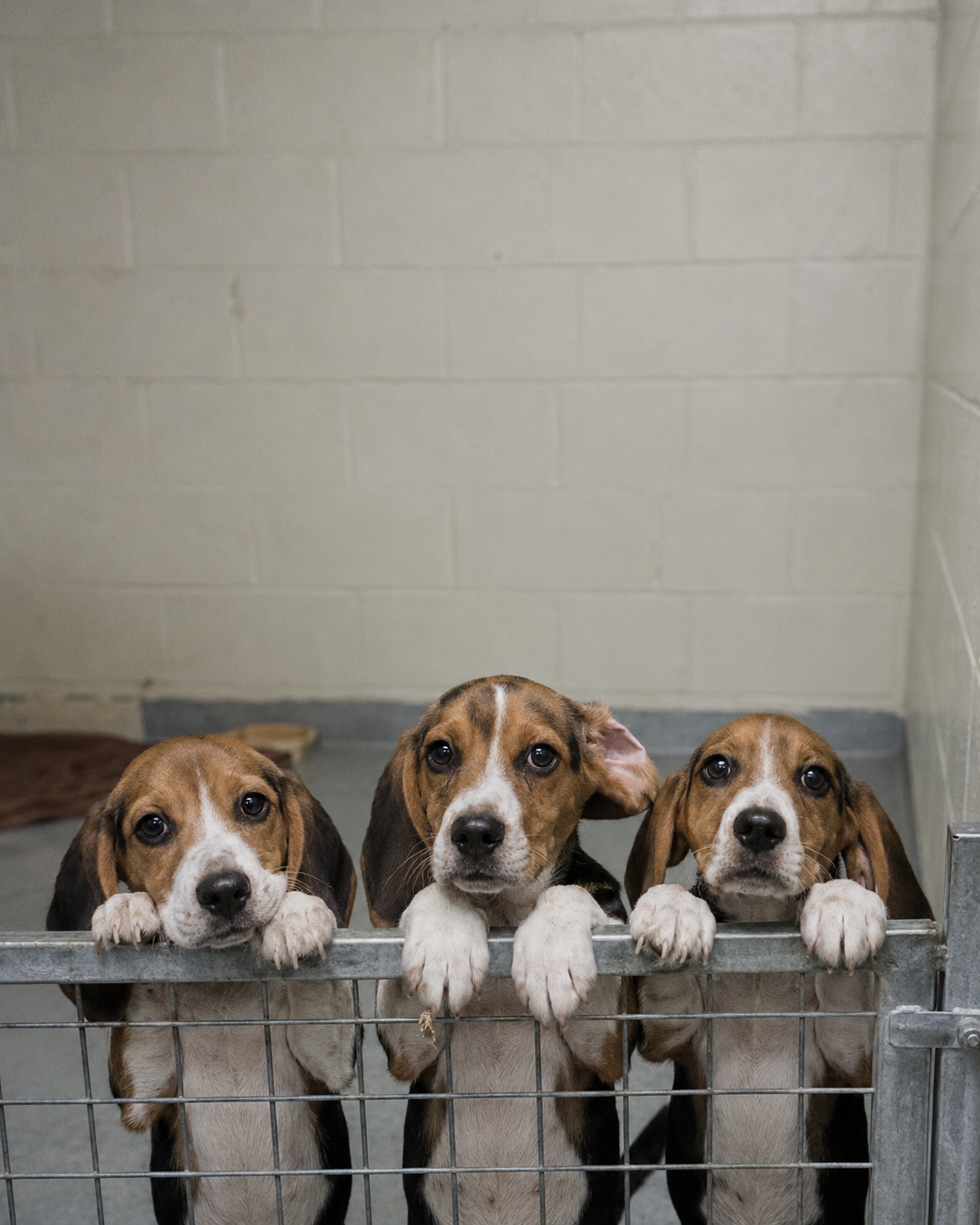
The organization’s name is not arbitrary. Roughly 96 percent of dogs used in U.S. laboratory research are beagles, and the reason is bleak in its logic. The breed was selected for being small, docile, trusting, and eager to please, the same temperament that makes a beagle endure handling without fighting back. The traits that make them good family dogs are the traits that made them convenient test subjects. It is why a row of beagles pressed against a kennel gate has become the defining image of this entire issue.
Freedom Fields: turning the lab into its own antidote
BFP is not razing the property. It is converting the same 30 acres that held the animals into a rescue, rehabilitation, and adoption center called Freedom Fields, sited in the Oklahoma countryside. The plan includes a dog park, a cat cafe, a catio, a groom room, dog dens, barns for farm animals, and open space to rest and play. A visiting center is designed to walk guests through how animal testing works before they meet adoptable animals, which turns the site itself into an education tool.
The project has been built out in stages and has drawn outside support, including a reported $25,000 grant toward the Oklahoma rehabilitation work. The symbolism is deliberate. The buildings where animals were harmed become the buildings where rescued animals recover.
How to actually help
If you want to do more than feel good about the headline, there are concrete options. BFP accepts donations of any size toward veterinary care, food, bedding, treats, pig pens, nurseries, and dog-park construction. You can sponsor a beagle for $500, which covers transport to a foster home, immediate medical needs, and monthly updates on that specific dog. You can also apply to foster or adopt one of the animals awaiting a home. A foster slot, in particular, frees the organization to take in the next group, which is the entire point of a model built to keep going.
References
- Beagle Freedom Project. “Beagle Freedom Project Rescues 200 Animals From Oklahoma Testing Facility.” https://bfp.org/beagle-freedom-project-rescues-200-animals-from-oklahoma-testing-facility/
- Beagle Freedom Project. “Freedom Fields.” https://bfp.org/freedom-fields/
- The Humane Society of the United States. “Animals Used in Experiments FAQ.” https://www.humaneworld.org/en/animals-used-experiments-faq.html
- KTUL. “Beagle Freedom Project Receives $25,000 Grant for Oklahoma Animal Rehab.” https://ktul.com/news/local/beagle-freedom-project-receives-25000-grant-for-oklahoma-animal-rehab
Nina Vasquez writes about life at home with pets and the relationships at the heart of it. Her work covers day-to-day living, people-and-pet stories, and the products that fit into a real household, with a warm, grounded take on everyday pet ownership.
Meet our experts ↗Keep reading
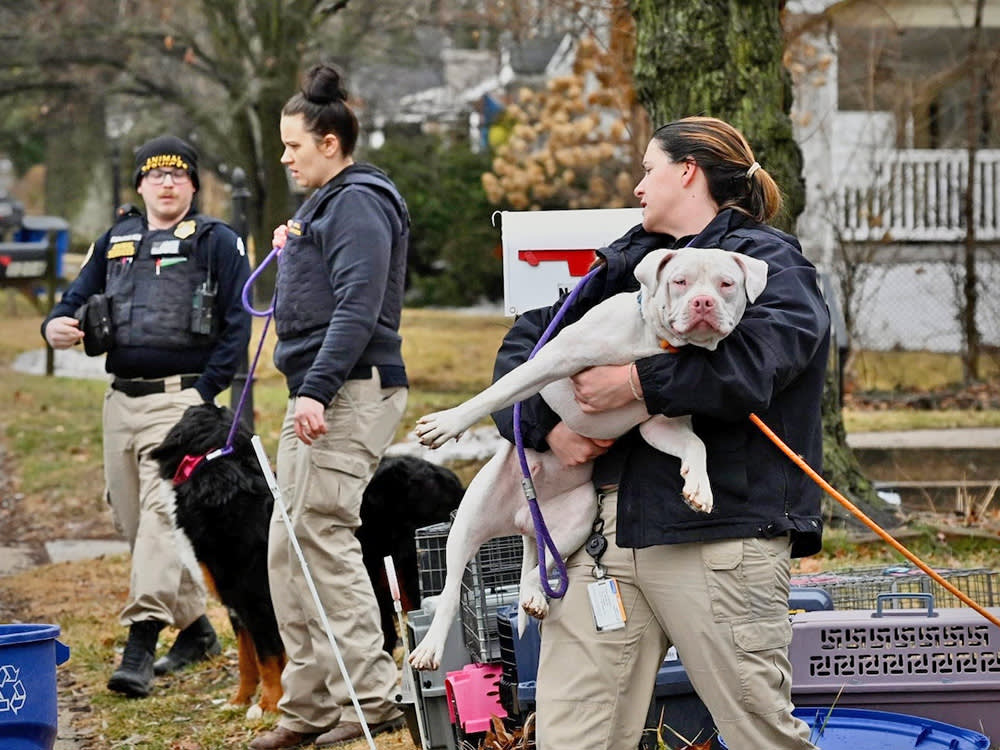 LivingShe Was Convicted of Torturing Animals. The Law Still Called Them Hers.James Okafor · 6 min
 LivingThe Most Useful Thing You Can Give a Shelter Isn't a Forever Home. It's a Weekend.Leila Torres · 8 min
 LivingThe Texas Flood Pet Rescue You're Picturing Is the Wrong OneNina Vasquez · 5 min
 LivingBroadway Barks Rehomed 2,000 Animals by Hijacking Actors' One Daily BreakNina Vasquez · 4 min
 LivingNearly Half of Abuse Survivors Stay Because of a Pet. These Groups Exist to End That Trap.Nina Vasquez · 7 min
 LivingWhen Fiona Drowned the Power Grid, Puerto Rico's Dog Rescuers Got in the WaterJordan Ellis · 5 min