


Your Old Dog Doesn't Want to Rest. Their Brain Wants a Puzzle.
We assume gray-muzzled dogs just want to nap, and researchers using touchscreen games are proving otherwise. Mental work keeps aging brains sharp, and a new console for dogs might even flag dementia early. Here's what the science actually shows.

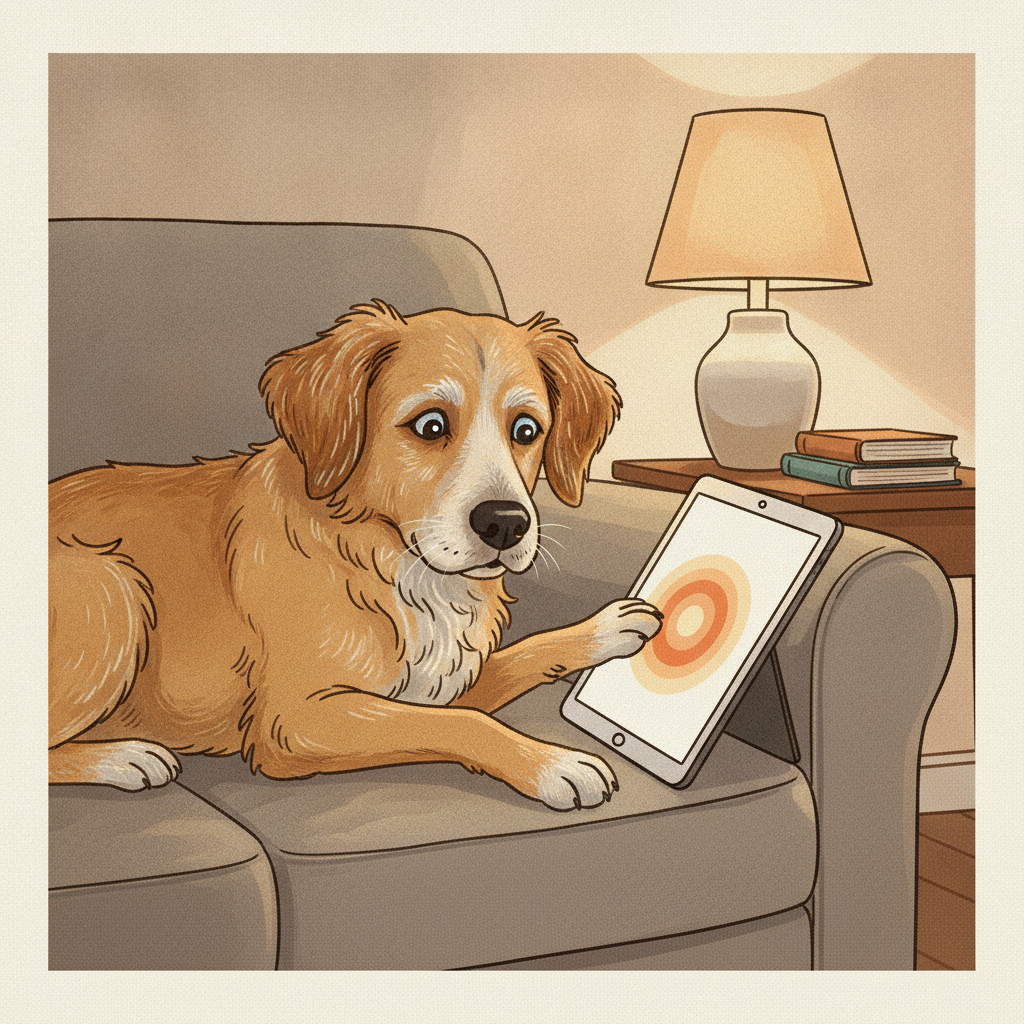
Watch how people treat a dog once the muzzle starts going gray. The walks get shorter, the training tapers off, the games slow down, sometimes because of a real injury but often just because of a quiet assumption that an old dog wants to be left alone to sleep. It is a kind assumption. It is also frequently wrong, and it can rob a dog of the exact thing that keeps their mind from sliding.
The evidence that aging brains stay sharper with continued mental and physical engagement is strong, in dogs as in people. Older humans with mild, age-related cognitive decline have improved their thinking with something as simple as a memory game on a tablet. The obvious question is whether the same holds for dogs. Researchers went looking, and they went looking with a screen.
What the touchscreen research found
One line of study set out to test whether a touchscreen could keep aging dogs content and mentally sharp. The setup was elegant: dogs were offered games on a screen where making the correct choice earned a food reward. That detail matters more than it looks. Dogs, along with the other species researchers have tested, value food more when they have worked for it than when it is simply handed over, so a game that makes them earn each treat has real potential to lift their quality of life.
Getting there took a training ladder. Dogs first learned to press the screen to earn a treat, then to aim for a particular spot on it, and finally to choose correctly between options. Once they had that foundation, harder cognitive tests could be layered on. The work ran with 265 dogs, alongside 20 wolves, and it pointed to touchscreen puzzles as a promising tool for dogs of all ages, with older dogs the clearest beneficiaries. Owners reported that their dogs grew visibly happier with each trip to the lab, and that the experience seemed to spill over into better everyday lives.
The real ingredient is effort, not electronics
Strip away the hardware and the principle is plain: a brain that has to work, with a payoff waiting, is a brain being maintained. The screen is just one way to stage that. Think of it as an active dinner, where the food is the reward for solving something rather than the default.
A striking, and honest, wrinkle came from the owners. Many were genuinely taken aback by how worn out their dogs were once a session of cognitive work ended, which sold them on the value of mental exercise. A lot of them went on to invest more effort in enrichment at home, got more engaged with their dogs, and grew prouder of what their dogs could do, which strengthened the bond between them. The researchers were careful here, and so should we be: that warmer relationship might come from being involved in any structured project with your dog, not from touchscreens specifically. The point stands either way. Giving an old dog something to figure out changes how you both spend your time.
The team also flagged what they wanted to measure next, including stress hormones like cortisol, motivation markers like dopamine, effects on the dog-human relationship, and changes in learning and emotion. In other words, this is an opening chapter, not a closed case.
What’s new since this was written
The idea has left the lab and turned into a product. A UK startup called Joipaw, founded by dog owner Dersim Avdar, has built an actual gaming console for dogs: a drool-resistant touchscreen paired with a treat dispenser, plus a camera, microphone, and speakers. Dogs play simple games, including a whack-a-mole-style task, and here is the clever part. While the dog plays, the system quietly logs cognitive data in the background.
That data is the real ambition. The company’s pitch is early warning: patterns in how a dog performs over time could surface signs of canine cognitive decline, essentially dog dementia, sooner than an owner would ever notice at home, giving a vet something concrete to work with. It fits a broader shift in the field. A 2024 review in Frontiers in Veterinary Science highlighted growing interest in digital cognitive tests, touchscreen interfaces, and biometric sensors as tools to assess and support how dogs think as they age. Joipaw began rolling out in 2025. Whether or not a console ends up in your living room, the concept, using play to both exercise and monitor an aging mind, is where this is heading.
The catch worth taking seriously
None of this is an unqualified win, and the researchers who hope these tools reach the market raised the concerns themselves.
- A screen can become a babysitter. The risk is that people lean on a tablet to occupy the dog instead of interacting with them directly, which trades one kind of neglect for another.
- Dogs could inherit the downsides humans know from gaming, including too little exercise, over-reliance, and social isolation, especially if the tool is used constantly rather than in moderation the way it is meant to be.
The fix is the same as it is for us: a puzzle is enrichment, not a replacement for a walk, a sniff, or your attention.
The most useful thing this research does is kill the idea that a senior dog wants to be left alone to fade out quietly. Their brain is the organ most worth exercising at that age, and you don’t need a gadget to do it. Ten minutes of a new trick or a food puzzle before dinner does the same job, and the dog who’s mentally worked is calmer and sleeps better too.
References
- Lifespan Development of Attentiveness in Domestic Dogs: Drawing Parallels With Humans (Wallis et al.)
- Using a Touchscreen to Test Cognition in Aged Dogs (Clever Dog Lab, Messerli Research Institute)
- Fighting Dog Dementia With Video Games (StudyFinds coverage of Joipaw)
- Digital Approaches to Canine Cognition and Welfare (Frontiers in Veterinary Science, 2024)
Common questions
Is my dog too old to start?
Almost certainly not. The touchscreen research specifically found benefits in older dogs, and the whole point is that mental engagement helps most exactly when people tend to offer it least. Start gentle and easy, and let success, not difficulty, drive the pace.
Not a substitute for your vet. Our guidance is educational. For urgent symptoms, contact a vet or emergency clinic right away. Editorial standards
Dr. Kohl is a board-certified veterinary dentist with a particular interest in preventive oral care. She reviews all dental health content at The Pet Times and contributes practical guides on home dental routines, professional cleaning, and oral disease prevention.
Meet our experts ↗Keep reading
 LivingMalamute or Husky? One of Them Will Redecorate Your House FasterDr. Nina Kohl · 8 min
 LivingThe Best Walk for Your Dog Is the Slowest OneSasha Ford · 6 min
 TrainingSix Weeks of Crate Rest Will Break You Both. Give the Dog a Job Instead.Dr. Nina Kohl · 8 min
 Health & WellnessThe Real Threat to an Old Dog Isn't Age. It's a World That Keeps Getting Smaller.Dr. Ravi Mehta · 8 min
 LivingYour Dog Sleeps Pressed Against You. The Night That Changes Is the One to Notice.Dr. Amara Solis · 7 min
 Health & WellnessThe Alzheimer's Drugs Did Nothing. Playtime Grew Their Brains.Dr. Ravi Mehta · 4 min