


Malamute or Husky? One of Them Will Redecorate Your House Faster
Alaskan Malamutes and Siberian Huskies look like cousins and act like different jobs. Here's how to tell which Arctic dog actually fits your life, room by room.

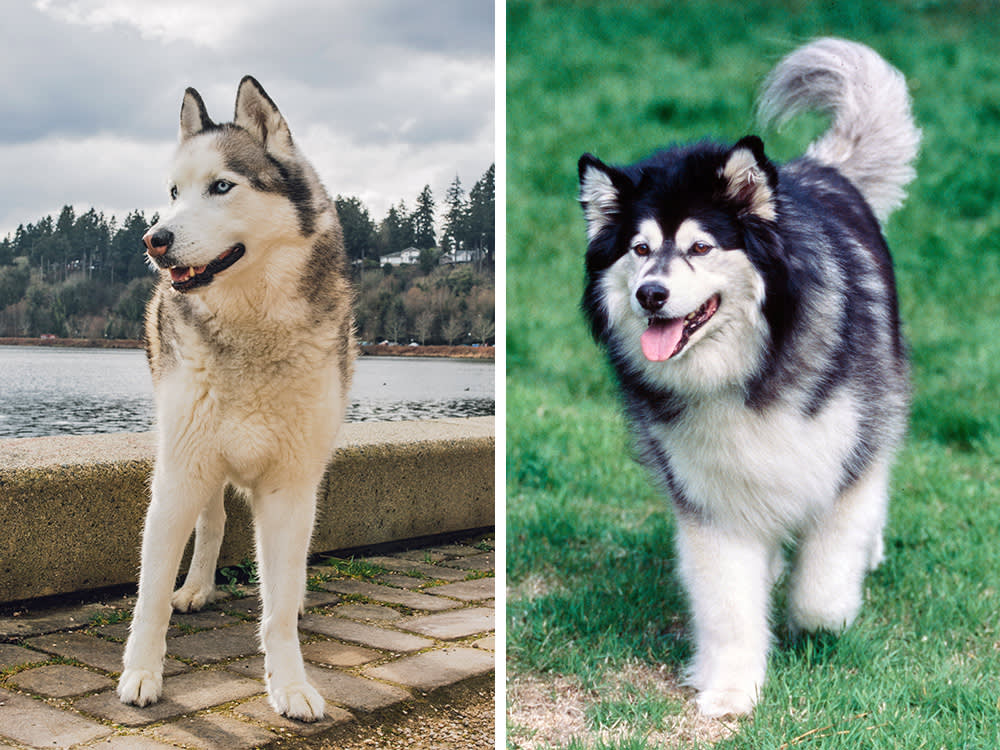
If you have ever stood in front of a photo of an Alaskan Malamute and a Siberian Husky and thought “aren’t those the same dog,” you are in good company. They share the almond eyes, the wolfish mask, the thick coat built for weather that would flatten most breeds. They even share a resume: both are Arctic sled dogs.
But here is the thing the matching coats hide. These two were bred for completely different jobs, and that old job is still running quietly in the background of everything they do, from how they burn energy to how loudly they argue with you about it. Pick the wrong one for your life and you won’t get a bad dog. You’ll get a magnificent dog who is bored, under-exercised, and creatively destructive. So this isn’t really a “which is prettier” question. It’s a “which job am I actually hiring for” question.
The short version of who they are
The Alaskan Malamute is the older of the two, developed by the Malamute people of Alaska to haul heavy freight over long distances. Think power and endurance, not speed. A modern Malamute is still a large, muscular, deliberate dog; males commonly run from 75 to more than 100 pounds, with females smaller. Coats come in grays and white, black and white, sable and white, red and white, and solid black-and-white, usually with facial markings and a plumed tail carried over the back. Under that plush outer coat sits a dense, heavy undercoat. For all their size, they are loyal and genuinely affectionate with their people.
The Siberian Husky comes from a different corner of the world, northeastern Asia, where the job was pulling lighter loads quickly across long distances. That built a smaller, more aerodynamic dog, usually 35 to 60 pounds, with a medium-length double coat and eyes that can be brown, blue, or one of each. Huskies are, if anything, even more social than Malamutes: outgoing, energetic, and famously mischievous. They tend to greet strangers like long-lost friends, which makes them lousy guard dogs and excellent escape artists. They are also relentless “talkers.”
The differences that actually change your daily life
Plenty of breed comparisons stop at “one is bigger.” The distinctions that matter are the ones you’ll feel every single day.
Build and horsepower. The Malamute is the heavyweight, wired for strength and steady pulling. The Husky is the sprinter, wired for speed and lighter, faster work. That shows up in how they move through a walk and how they hit the end of a leash.
Temperament indoors. Both are affectionate and social, but they decompress differently. A well-exercised Malamute is often calm and settled inside and tends to act more independently. A Husky is more likely to stay a playful, in-motion prankster who keeps looking for the next thing to do.
Living with other dogs. Malamutes can be more selective, especially about same-sex housemates, and multi-male or multi-female households may need careful management. Huskies are usually more broadly social with other dogs, though “usually” is not “always,” so thoughtful pack management matters for both.
Trainability. Both are smart and independent, which is a polite way of saying both will absolutely negotiate. Huskies are the classic boundary-testers and are notoriously unreliable off-leash. Malamutes often keep a bit more focus on their handler, though nobody would call either breed biddable in the border collie sense.
Prey drive and escapes. Both breeds are gifted at chasing small animals and at getting out of yards. A Malamute’s size can make some of the acrobatics slightly less common, but do not mistake that for a fence guarantee.
Volume. Huskies are the famous howlers and “roo-roo” talkers. Malamutes can be vocal too, just usually in a lower-key register.
Coat and shedding. Both carry heavy double coats and shed with real commitment.
Lifespan and health. Huskies tend to live a little longer, roughly 12 to 14 years, while Malamutes generally live about 10 to 12. Both breeds can be affected by hip dysplasia, certain eye conditions such as cataracts and progressive retinal atrophy, and thyroid disease. Malamutes carry a risk of inherited polyneuropathy, while Huskies are the breed more often flagged for zinc-responsive skin issues.
People fall for the wolf-dog look and forget they’re adopting an athlete with a working-dog brain. The health screenings I care about most before you bring one home are hips, eyes, and thyroid, plus a frank conversation about whether your week has room for a dog that needs a real job.
Where they’re basically the same
For all the differences, these two overlap in the ways that will define your calendar. Both need daily, vigorous activity plus real mental work. Both thrive in cool weather and struggle badly in heat, so warm months take active management. Both are clever, resourceful, and perfectly willing to be stubborn. Both do best with consistent, reward-based training. Both can be triggered into a chase by squirrels, cats, or wildlife, so reliable recall is a fantasy you should not bet a dog’s life on; secure fencing and leash discipline are non-negotiable. Both blow their coats seasonally and need routine brushing to keep it manageable. And both, despite the intimidating looks, are affectionate family dogs rather than natural guardians. They are also high-metabolism animals that need quality nutrition, appropriate calories, and steady access to water, especially when it’s warm.
A decision framework the breed pages skip
Instead of a vague “pick the one you like,” walk your actual life through four filters. If a filter clearly points one way, weight it heavily.
Filter 1: Your pace. Do you want a fast, frequent, high-variety companion for runs, skijoring, bikejoring, and long hikes? Lean Husky; they especially shine at speed-and-endurance sports. Do you want a powerful, steadier workout partner for canicross, weighted backpacking, or carting? Lean Malamute. If your schedule is genuinely inconsistent, be honest: neither is a good fit, because both need high, predictable exercise plus enrichment like puzzle feeders, scent games, and pulling sports.
Filter 2: Your square footage. Apartment life is possible for either if you truly deliver the daily activity, but it’s harder with a Malamute’s size; a Husky’s smaller footprint gives you more margin. Yards need six-foot (or taller) secure fencing for both, with dig guards and reinforced gates, because Huskies in particular climb and excavate like it’s a career.
Filter 3: Your climate. Both prefer cool weather. If you live somewhere hot, you are signing up to push activity into the cool hours, keep them shaded, keep water in front of them, stay off scorching sidewalks, and lean on cooling mats or vests. This is a bigger deal than most first-time owners expect.
Filter 4: Your household. With kids, both can be great, but a Malamute’s mass means more supervision around toddlers. With other dogs, plan careful introductions, and know a Malamute can be pricklier about a same-sex housemate. With small pets like rabbits or hamsters, the strong prey drive of both breeds makes cohabitation genuinely risky. And neither breed wants to be left alone for long stretches; they need company, structure, and something to do.
Set either one up to win
Whichever way you land, the same fundamentals apply. Start training early and keep it reward-based. Feed the brain with trick training, scent work, urban agility, weighted pulling, and food puzzles. Commit to weekly brushing, daily during blow-outs, plus undercoat raking, occasional baths, short nails, and routine ear and dental care. Feed a complete, high-quality diet and adjust calories to body condition and activity, and ask your vet about joint support. On the health side, ask about OFA hip and elbow evaluations, eye exams, and thyroid and neurologic screening. And because these are large, brilliant, high-drive escape artists, treat ID tags, microchips, a well-fitted harness, a martingale collar, and secure fencing as basic equipment, not extras.
Bottom line
If you want a smaller, quicker endurance buddy with a comedic streak and the ongoing puzzle of outsmarting an escape artist, the Siberian Husky is your dog. If you want a large, strong, steady companion who can do serious work and settle down at home once the work is done, and you can manage the size and independence, the Alaskan Malamute is your match. Either way, the price of admission is the same: daily exercise, genuine mental enrichment, a real grooming commitment, and steady, consistent training. Pay it, and you get a charismatic, deeply affectionate partner who carries a little Arctic weather into your ordinary life.
References
- Braund, Kyle G., et al. “Idiopathic Polyneuropathy in Alaskan Malamutes.” Journal of Veterinary Internal Medicine, vol. 11, no. 4, 1997, pp. 243–249.
- Brown, S. K., et al. “Using Multiple Markers to Elucidate the Ancient, Historical and Modern Relationships among North American Arctic Dog Breeds.” Heredity, vol. 115, no. 6, 2015, pp. 488–495. nature.com
- Wójcik, Anna, and Kinga Powierża. “The Influence of Breed, Sex, Origin and Housing Conditions on Undesirable Behaviors in Ancient Dog Breeds.” Animals, vol. 11, no. 5, 2021, p. 1435. NCBI
- Orthopedic Foundation for Animals. “Hip Dysplasia and Breed Statistics.” ofa.org
Common questions
Which breed is better with kids?
Both can be wonderful with respectful, supervised children. Huskies bring goofy, playful energy that many kids love. Malamutes are simply bigger and stronger, so they need closer supervision around small children to avoid accidental knock-downs.
How much grooming do they really need?
A lot, for both. Expect year-round shedding plus one or two seasonal 'blow-outs' where the undercoat comes out in fistfuls. Plan on weekly brushing, daily during blow-outs, plus undercoat raking, occasional baths, and routine nail, ear, and dental care.
Dr. Kohl is a board-certified veterinary dentist with a particular interest in preventive oral care. She reviews all dental health content at The Pet Times and contributes practical guides on home dental routines, professional cleaning, and oral disease prevention.
Meet our experts ↗Keep reading
 LivingYour Senior Dog Isn't Slowing Down. He's Bored.Dr. Nina Kohl · 8 min
 LivingThe Only People Who Should Own a Husky Walk 11 Miles a DayMarcus Webb · 7 min
 LivingYour Dog Sleeps Pressed Against You. The Night That Changes Is the One to Notice.Dr. Amara Solis · 7 min
 LivingThe Doodle Was Sold to You on Three Promises. The Data Backs None of ThemDr. Mara Chen · 9 min
 Health & WellnessThe Real Threat to an Old Dog Isn't Age. It's a World That Keeps Getting Smaller.Dr. Ravi Mehta · 8 min
 Health & WellnessThe Alzheimer's Drugs Did Nothing. Playtime Grew Their Brains.Dr. Ravi Mehta · 4 min