


Your Senior Dog Isn't Slowing Down. He's Bored.
When an older dog gets restless, everyone assumes he needs more exercise. Often he needs the opposite: less mileage, more to think about. Seven brain games for a dog whose body has slowed but whose mind hasn't.

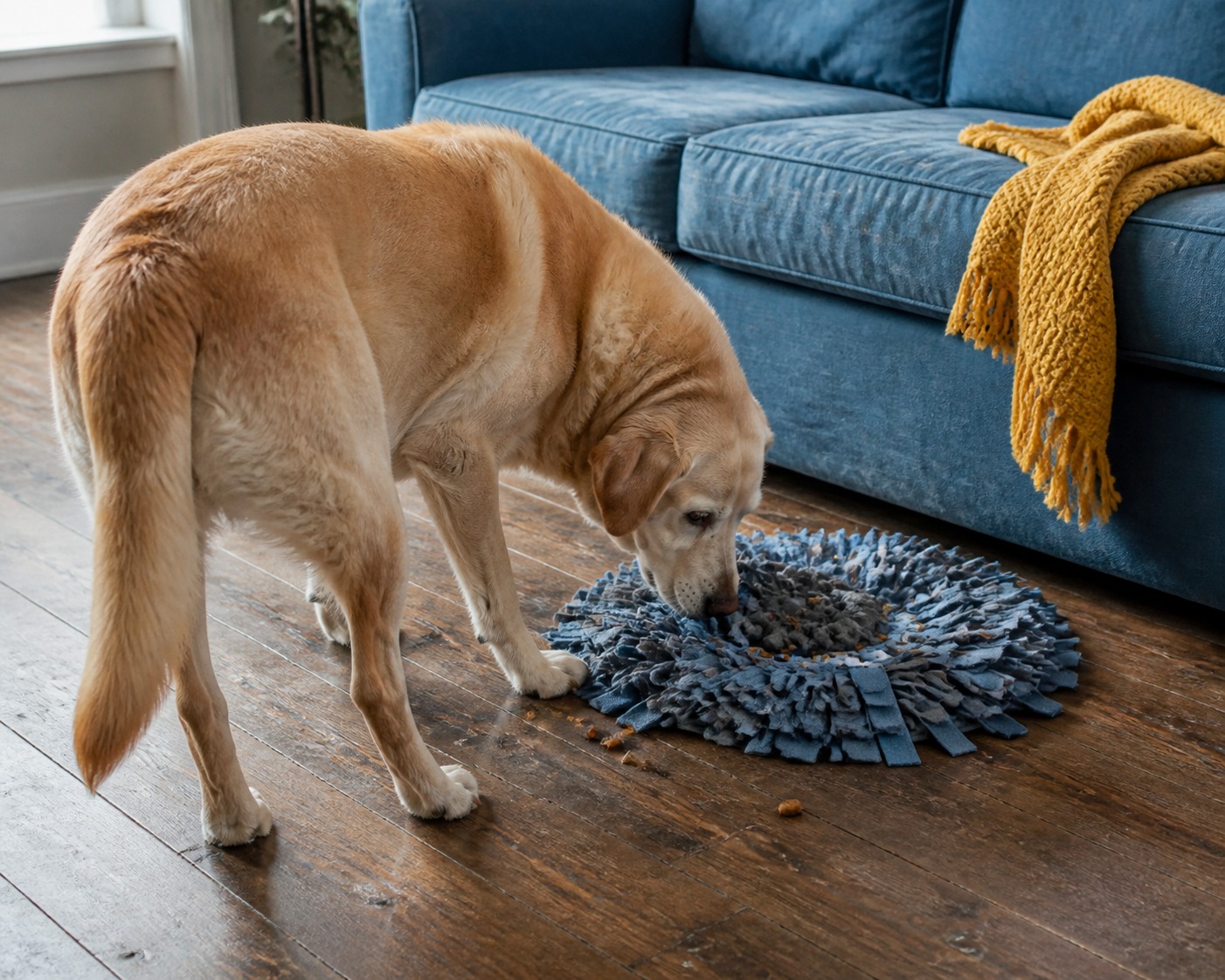
Picture a graying dog who has started pacing the house, nudging you while you work, and generally seeming unsettled in a way he never used to. The instinct is to assume he needs to run it off. But here is the twist worth sitting with: for a lot of older dogs, restlessness is not a sign they need more exercise. It is a sign they need more to think about.
That distinction matters most exactly when it is hardest to act on. An arthritic senior may be under vet’s orders to keep walks and play short, so “just tire him out” is off the table. Good news: physical exertion was never the only way to satisfy a dog. A tired brain settles a dog as surely as a tired body, and mental work is something even a stiff, achy senior can do all day. Reframe the problem from “my dog needs more exercise” to “my dog needs more engagement,” and a whole menu opens up. Here are seven ways to work it, starting with the ones that also strengthen your bond and ending with pure comfort.
1. Train for the fun of it
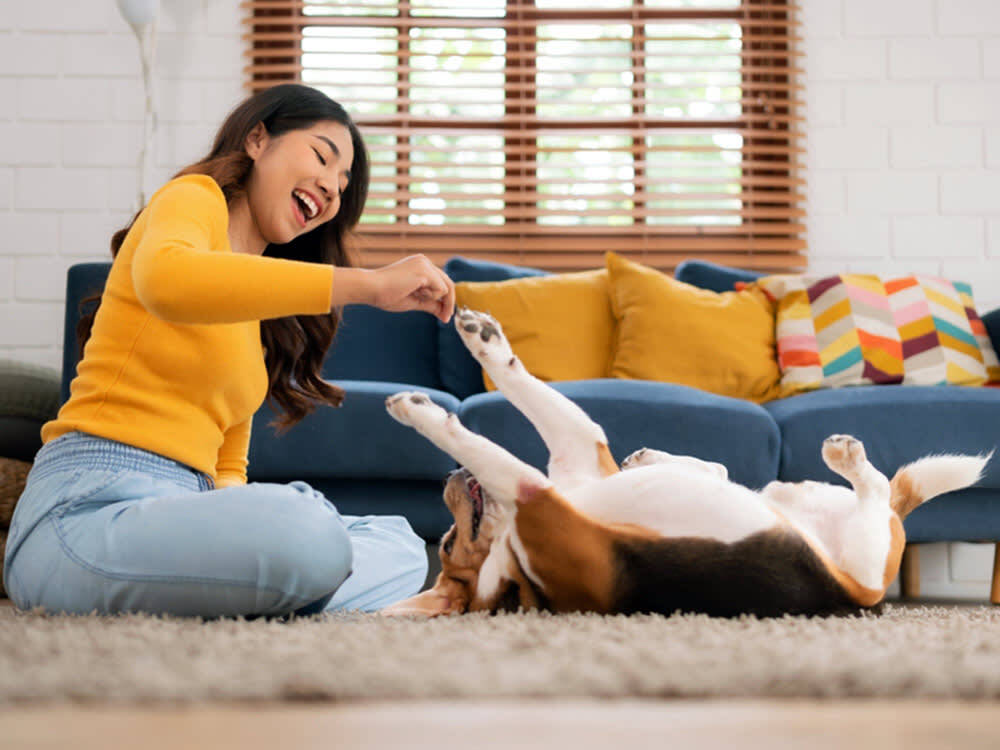
Training is not just for puppies learning manners, and it is not only about the skills. For an older dog, a short, upbeat training session is quality time that happens to exercise the mind. Teach a new trick, run through cues your dog already knows, or shape a silly behavior just because. Keep it positive and set your dog up to be right often, because the wins are the point: the chances to figure something out, try something new, and earn your delight are exactly the mental engagement a bored senior is missing. Tricks especially tend to be low-pressure and fun, and many dogs love the attention they get for performing them.
2. Lay a treasure trail
Make your dog’s nose do the work. Drag something smelly along the floor to create a scent trail, or scatter a handful of kibble with a few high-value treats mixed in. The tracking itself is satisfying, and you can raise the payoff by having the trail end at a discovery: a new chew, a stuffed toy, or a small jackpot of treats waiting at the finish. It costs nothing and it turns an ordinary hallway into an adventure.
3. Play real nosework
If the treasure trail is a hit, take it a step further into structured scent games, the informal version of the sport called nosework. Hide a strongly scented treat in one of several boxes and let your dog find it, then gradually make the hides trickier. Scentwork is close to ideal for seniors: it is low-impact on the joints, it is deeply absorbing, and sniffing itself has a calming, self-soothing effect on dogs. A ten-minute search can leave an old dog as content as a long walk once did, without asking anything of sore hips.
4. Turn dinner into a puzzle
The single easiest source of mental stimulation is already in your hand twice a day: the food bowl. Feeding a meal through a puzzle instead of a dish makes your dog work for it, and most dogs genuinely enjoy the challenge as long as they can succeed. The goal is a fun problem, not a frustrating one, so keep the difficulty where your dog wins.
The options are endless. Stuff a Kong (freeze it to make it last longer), scatter kibble into a snuffle mat, or use a treat-dispensing puzzle toy that releases food as the dog nudges it around. Low-tech works just as well: tuck bits of food into the cups of a muffin tin or the sections of an egg carton, each hidden under a folded paper towel or a scrap of fabric your dog has to move. Supervise with anything new so your dog doesn’t swallow parts that aren’t food, and skip non-edible wrappers for dogs who bolt things whole. If your dog tolerates it without cracking a tooth or gulping, treats frozen into ice cubes are another slow, cooling puzzle for a warm day.
5. Bring the games indoors
Two living-room games work even for dogs who never cared much for classic play like fetch or tug. The first is “Find Your Treat”: ask your dog to stay (or pop them behind a door), hide treats in another room, then release them to search. As they get sharper, hide the treats in harder spots and watch a five-minute game stretch into a happily occupied fifteen.
The second is hide-and-seek with you as the prize. Ask your dog to stay, go hide somewhere in the house, then call them to come. When they track you down, pay up with treats and a fuss. It rewards their nose, their recall, and their bond with you all at once.
6. Give them something worth chewing
Chewing is a naturally absorbing activity that can keep a dog contentedly busy for a long stretch, and it is worth offering even to a dog who has never seemed like a chewer. Some dogs only discover the pleasure once they are handed the right option, so it is worth sampling a few. Common picks include bully sticks, Nylabones, dental chews, Himalayan yak chews, and antlers.
A word of caution here, because chew safety is genuinely contested. Rawhide is widely discouraged for its choking and blockage risk, and real bones and very hard chews like antlers can crack teeth. Ask your vet what is appropriate for your dog’s age and dental health before you stock up, and always supervise.
7. Slow down and just be with them
Your undivided attention may be the thing your dog wants most, and for an older dog a calm petting or massage session delivers it while doing his body some good. Seniors often carry stiff, sore spots, and gentle, deliberate contact, slow strokes down the back, easy circles around tight muscles, can ease tension and deepen the connection between you. When the household is busy and half-present, scheduling a few minutes to focus entirely on your dog helps tame the restlessness that busy-but-absent days create. Sometimes the cure for a dog underfoot is simply ten quiet minutes that belong to him.
When restlessness is more than boredom
One caution before you assume boredom is the whole story. New or worsening restlessness in a senior dog, especially pacing, disorientation, staring at walls, waking and wandering at night, or getting “stuck” in corners, can be a sign of canine cognitive dysfunction, the dog version of dementia. Untreated pain from arthritis can look like restlessness too. Enrichment genuinely helps a cognitively aging brain stay engaged, but it is not a substitute for a diagnosis.
Mental enrichment is one of the best things you can do for an aging dog’s brain, but I always want owners to notice how the restlessness shows up. Pacing that starts at night, confusion in familiar rooms, or a dog who seems anxious for no clear reason deserves a vet visit. We can rule out pain, check for cognitive decline, and sometimes add medication or a brain-supportive diet that makes the enrichment work even better.
If the restlessness is new, worsening, or paired with any of those signs, start with your vet, then layer the games on top.
What newer research adds
Two shifts in senior-dog care are worth knowing. First, canine cognitive dysfunction is now recognized as common and, importantly, manageable: keeping an older dog mentally active is considered part of slowing its progression, alongside diets enriched with omega-3 fatty acids, antioxidants, and medium-chain triglycerides that support aging brain function. Second, the field’s whole attitude toward senior dogs has moved away from “let them rest” toward “keep them engaged.” Rest matters for sore joints, but an under-stimulated senior brain declines faster, not slower. The enrichment above is not just entertainment. It is preventive care.
You do not have to do all seven. Pick a couple that suit you and your dog, experiment to see what lights him up, and let the rest go. The aim is simple: give an old dog whose body has slowed down something worthy of a mind that hasn’t.
References
- Landsberg, Gary M., et al. “Cognitive Dysfunction Syndrome in Dogs.” Veterinary Clinics of North America: Small Animal Practice, and MSD Veterinary Manual.
- Duranton, Charlotte, and Alexandra Horowitz. “Let me sniff! Nosework induces positive judgment bias in pet dogs.” Applied Animal Behaviour Science, vol. 211, 2019, pp. 61-66.
- American Animal Hospital Association. “Senior Care Guidelines for Dogs and Cats.” aaha.org.
- Pan, Yuanlong, et al. “Dietary supplementation with medium-chain TAG improves cognitive function in aged dogs.” British Journal of Nutrition, 2010.
Dr. Kohl is a board-certified veterinary dentist with a particular interest in preventive oral care. She reviews all dental health content at The Pet Times and contributes practical guides on home dental routines, professional cleaning, and oral disease prevention.
Meet our experts ↗Keep reading
 LivingYour Dog Sleeps Pressed Against You. The Night That Changes Is the One to Notice.Dr. Amara Solis · 7 min
 LivingThe Doodle Was Sold to You on Three Promises. The Data Backs None of ThemDr. Mara Chen · 9 min
 LivingMalamute or Husky? One of Them Will Redecorate Your House FasterDr. Nina Kohl · 8 min
 Health & WellnessThe Real Threat to an Old Dog Isn't Age. It's a World That Keeps Getting Smaller.Dr. Ravi Mehta · 8 min
 LivingThe World's Shortest Dog Is 3.59 Inches Tall. That's Not the Cute Part of the Story.Nina Vasquez · 5 min
 Health & WellnessThe Alzheimer's Drugs Did Nothing. Playtime Grew Their Brains.Dr. Ravi Mehta · 4 min