


The Real Threat to an Old Dog Isn't Age. It's a World That Keeps Getting Smaller.
When a dog gets gray, we quietly do less with them, and the shrinking sets in. New data from the Dog Aging Project shows how much staying engaged protects an aging brain, plus concrete ways to keep a senior dog's mind and body switched on.

Affiliate disclosure. This article contains affiliate links. We may earn a small commission if you buy through a link, at no extra cost to you. How we handle recommendations.
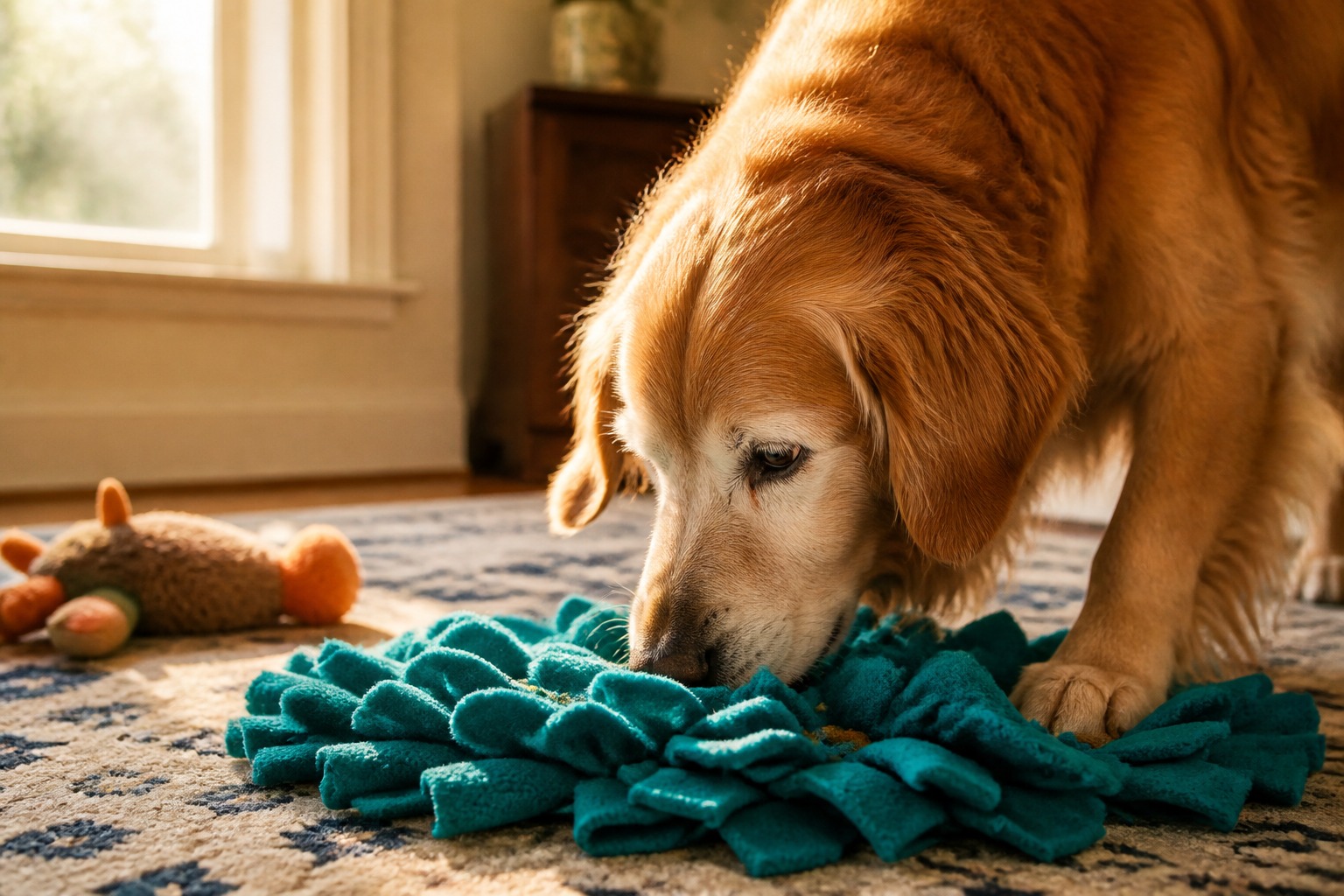
Here is how it usually happens, and it happens gently. Your dog gets older. The walks get shorter, then rarer. You stop teaching them things because they already know the routine. The trips to the dog park taper off. None of it is neglect. It is just the slow drift of a household settling into a comfortable rut with a dog who seems content to nap. And that drift, more than the gray muzzle itself, is what ages a dog.
The trap is assuming an old dog wants less. Mostly they don’t. Their senses dull and their joints protest, but the appetite for engagement, for a game, for a new smell, for time spent doing something with their person, tends to outlast the body by years. The kindest and most protective thing you can do for a senior dog is refuse to let their world shrink.
The science caught up with the instinct
For a long time, “keep your old dog active” was advice built on common sense. Now there’s data behind it. The Dog Aging Project, which tracks tens of thousands of companion dogs, has found a strong link between how active a senior dog stays and how much cognitive decline they show. Among more than 10,000 dogs, the less active seniors scored consistently worse on validated measures of canine cognitive dysfunction, the confusion, disrupted sleep, house-soiling, and aimless pacing that mirror dementia in people, even after researchers accounted for age, breed, and other health problems.
The encouraging part is that the effect runs both ways and starts small. Dogs who kept up regular mental and physical stimulation stayed sharper, and modest, realistic increases were enough to matter. It also doesn’t require a head start. Building a dog’s mental reserves early helps, but even dogs already showing signs of decline can gain ground once you turn the engagement back up.
Owners come in convinced their dog is ‘just old,’ and some of what they’re describing is disuse, not decline. When we add ten minutes of nose work and a couple of short outings back into the day, families are often startled by how much of their dog comes back.
So keep the world big. There are three levers: the brain, the body, and company.
Keep the brain busy
You can teach an old dog new tricks. In fact, seniors often learn better than young dogs, because the adolescent scatterbrain is out of their system and they focus on the lesson in front of them.
A few reliable ways to light up an aging mind:
- Rotate the toys. It’s normal for a dog’s interest in toys to fade with age, but novelty revives it. Put most of the toys away and cycle a few out each week so the old ones feel new again.
- Choose toys that make them work. Interactive and “learning” toys, especially plush ones with parts meant to be tugged or pulled free, pull a dog in. There are also toys designed specifically for seniors.
- Do nose work. Ask your dog to sit and stay, tuck a treat or favorite toy out of sight, then send them off to track it down. A little cheerleading from you raises both the stakes and the fun.
- Teach a fresh trick. The point isn’t the trick. It’s the mental workout of learning something new, which keeps a senior brain limber.
- Use puzzle feeders. Treats hidden behind sliding panels or under blocks make a dog use nose and paws together. The Swedish-designed Nina Ottosson puzzles are the standard-setters in this category.
Keep the body moving (within reason)
An active dog is a happier, and, the research suggests, a sharper one. The goal is steady, joint-friendly movement, not intensity.
Walks stay valuable well into old age, and not just for the exercise. The sights, sounds, and smells of the route are their own mental stimulation. Older dogs regulate temperature poorly, though, so skip the extremes of hot and cold and watch for signs of fatigue or overheating. Gentle uphill stretches build the hindquarters; on steep descents, zigzag down to spare the front legs, and consider grippy booties on slick ground.
Swimming is close to ideal for seniors, aerobic and low-impact at once. Lakes and ponds are free but come with hazards like submerged logs and cold water that can aggravate stiff joints, so many owners prefer a canine pool, where warm water loosens joints and builds muscle. Some rehab centers even have underwater treadmills for dogs who don’t swim, and a canine flotation vest adds security for the nervous ones.
Stretching helps too. If you’ve watched a dog luxuriate in a stretch after a nap, you know they love it, and gentle, guided stretches of the front and rear legs support the hips, spine, and shoulders. Doga, a dog-and-human take on yoga that folds in massage, is one structured option; if there’s no class nearby, a good DIY guide like Barking Buddha: Simple Soul Stretches for Yogi or Dogi will walk you through it.
Games cover both brain and body if you scale them to old joints. Three that work well:
- Flatland fetch keeps all four paws on the ground: roll a ball or make low tosses instead of the leaping catches that hammer aging joints.
- Gentle tug, played down at your dog’s level, keeps strain off the neck.
- Agility, lite: tunnels, weave poles, and a pause on a floor mat capture the thrill of the sport without the jumps, climbs, and hard landings.
Consider company
For some old dogs, the ultimate enrichment is another dog. A younger companion can pull a senior back into play and give them a purpose, while the older dog passes on manners and social savvy. There are real caveats here, chief among them that not every dog wants a new roommate. If you think yours might, fostering is a low-commitment way to test it, ideally with a somewhat younger dog of compatible temperament. Some behaviorists like an age gap of around three years; others see benefits in a wider spread. Watch the first meetings closely and let your resident dog set the terms.
What newer research adds
The old framing treated senior enrichment as a nice-to-have, a way to keep a dog entertained. The Dog Aging Project reframes it as brain protection. The connection between staying active and holding off cognitive decline is now one of the more robust findings in canine aging, and it points to a hopeful, low-cost intervention: you don’t need supplements or a diagnosis to start. You need a few new smells, a short walk, a puzzle, and the decision to keep your old dog’s days full. Their senior years can be their best ones, but only if you keep showing up for them.
References
- Bray, E. E., et al. (2022). Evaluation of cognitive function in the Dog Aging Project: associations with baseline canine characteristics. Scientific Reports, 12, 11488.
- Morris Animal Foundation. Understanding how to slow cognitive decline in dogs.
Not a substitute for your vet. Our guidance is educational. For urgent symptoms, contact a vet or emergency clinic right away. Editorial standards
Dr. Mehta is a board-certified veterinary nutritionist who evaluates pet food formulations, ingredient quality, and the science behind dietary trends. He writes and reviews all nutrition content at The Pet Times, including our food rankings and feeding guides.
Meet our experts ↗Keep reading
 LivingThe Only People Who Should Own a Husky Walk 11 Miles a DayMarcus Webb · 7 min
 LivingThe Best Walk for Your Dog Is the Slowest OneSasha Ford · 6 min
 LivingYour Dog Sleeps Pressed Against You. The Night That Changes Is the One to Notice.Dr. Amara Solis · 7 min
 Health & WellnessYour Old Dog Doesn't Want to Rest. Their Brain Wants a Puzzle.Dr. Nina Kohl · 6 min
 LivingThe Doodle Was Sold to You on Three Promises. The Data Backs None of ThemDr. Mara Chen · 9 min
 LivingThe World's Shortest Dog Is 3.59 Inches Tall. That's Not the Cute Part of the Story.Nina Vasquez · 5 min