


Your Senior Cat's 3 a.m. Yowling Might Be Dementia
Cognitive dysfunction is real in aging cats and often mistaken for plain old age. A vet explains the signs, why the medical workup comes first, and how to help a confused senior cat.

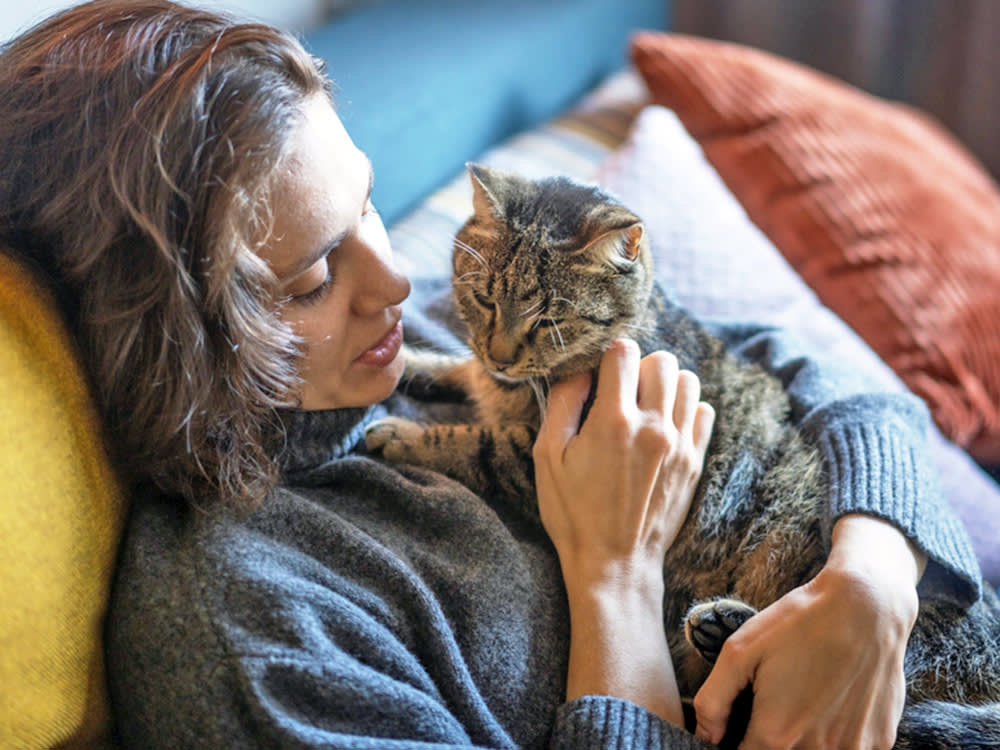
If your old cat has started wandering the house at 3 a.m. howling at a wall, it is tempting to sigh and call it old age. Sometimes that is all it is. But “old age” is not a diagnosis, and in a senior cat that behavior can be cognitive dysfunction, the feline version of dementia. It is real, it is more common than people think, and it responds to help, but only if you go looking for the cause instead of writing it off.
Here is the one idea to hold onto: cognitive dysfunction is a diagnosis of exclusion. You do not get to it by matching symptoms off a list. You get to it by ruling out everything else that could explain the same behavior, and only then landing on the brain. That order protects your cat, because several of the conditions that mimic dementia are treatable.
Cats really do get dementia
Cats can develop cognitive decline that closely mirrors the physical and behavioral changes of Alzheimer’s disease in people. In cats, we call it cognitive dysfunction. The classic picture includes staring into space for long stretches, waking more at night, crying or meowing incessantly, getting “stuck” in spots they could easily walk out of, and seeming to forget things they clearly knew, like where the food bowl lives or what a familiar cue means.
It is less studied in cats than in humans or even dogs, but we understand enough to recognize it and, importantly, to improve a cat’s quality of life once we do.
Rule out the impostors first
This is the step people skip, and it is the most important one. A whole roster of senior-cat illnesses produces behavior that looks exactly like dementia.
Hyperthyroidism, kidney disease, high blood pressure, and arthritis are all common in older cats, and every one of them can change behavior. High blood pressure can cause the same nighttime yowling. Arthritis pain can make a cat irritable, restless, or reluctant to move to the litter box. Beyond those, cats of any age can develop behavior changes from infections, head injuries, toxins, liver disease, and brain tumors.
So any cat showing sudden behavior changes, especially with other signs of illness, needs a thorough medical workup before anyone says the word dementia. Treat the treatable thing and the behavior may simply resolve.
I tell owners the yowling is not the diagnosis, it is the clue. Before I attribute it to the brain, I want a blood pressure reading, a thyroid panel, and kidney values, because a cat screaming at night from untreated hypertension looks identical to a cat with dementia, and one of those I can fix that week.
The signs of feline cognitive dysfunction
When medical causes have been ruled out, cognitive dysfunction tends to show up as a cluster of changes rather than a single symptom. Watch for:
Confusion and disorientation. Staring off for long periods, getting lost in familiar rooms, forgetting learned cues, or no longer recognizing familiar people or pets.
Mood and personality shifts. Increased aggression in some cats; in others, a shy cat that suddenly becomes more outgoing.
Litter box lapses. A senior cat that stops using the box, or stops covering their waste.
Appetite changes. Either an increase or a decrease.
Excessive vocalizing. Incessant crying or meowing with no clear trigger, often very hard to redirect.
Altered sleep patterns. Awake and vocal through the night, then sleeping much longer during the day.
Increased anxiety. More clinginess or fearfulness, sometimes tangled up with the night-waking and vocalizing.
Less grooming. Grooming drops off, and the coat can turn dry or matted as a result.
Any one of these can also come from another age-related problem, which loops back to the golden rule: rule out medical causes first.
What age this shows up
Cognitive changes are most common in cats 10 and older, and the odds climb with each additional year. But it can start earlier in some cats, and because so many senior ailments overlap, age alone never confirms the diagnosis.
How to help a cat with cognitive dysfunction
There is no cure, but there is real, meaningful support. The goal is to slow the decline and keep your cat feeling secure.
Keep their brain busy. Cats of every age need mental enrichment, and for an older cat it helps keep the mind engaged. Gentle play, food puzzles sized for a senior, and interaction all count.
Hold the environment steady. Older cats thrive on predictability. Keep the food, bed, and litter box in the same places, and stick to a consistent schedule. A cat with cognitive dysfunction adjusts to change slowly and stressfully, so consistency is a kindness.
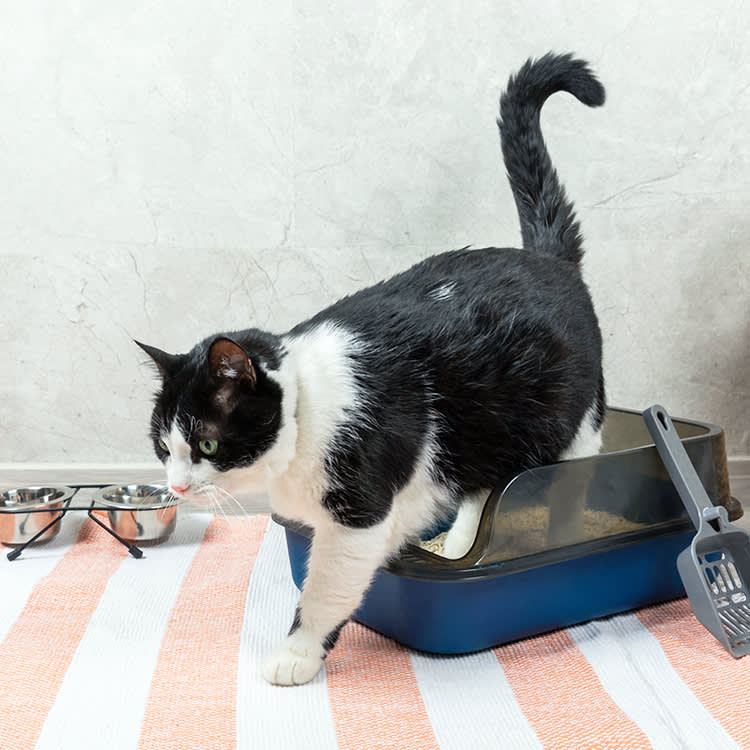
Make the home easier to navigate. Many seniors also have arthritis and shrinking mobility. Ramps and extra steps help them reach favorite spots and prevent falls, and a low-sided litter box is easier to climb into.
Ask about supplements. Antioxidants, omega-3 fatty acids, and SAM-e are being studied for brain support, and tend to help most as early preventives that slow progression. Use cat-specific products to avoid toxic ingredients, and clear anything new with your vet.
Consider prescription medication. Some cats benefit from medication targeting specific signs like night-waking, poor appetite, or anxiety. If your cat is struggling, ask your vet whether it fits.
When to get expert help
Senior cats should have a checkup every six months, because the older they get, the more likely they are to develop the very conditions that masquerade as dementia: arthritis, kidney disease, hyperthyroidism, high blood pressure, and hearing or vision loss. Frequent visits catch those early. And see your vet any time you notice a sudden shift in behavior, appetite, weight, or litter box habits. Senior cats are fragile, and early catches genuinely change outcomes.
What newer research adds
The last couple of years have handed owners and vets better tools for spotting this early. In 2025, researchers published a new owner-facing screening questionnaire, sometimes called the E-CAT, built specifically to flag behavioral and cognitive changes in aging cats across a few clear categories: orientation, activity, social interaction, and emotional state. The point of a validated checklist is to catch subtle decline before it becomes a crisis, and to give your vet a structured starting point instead of a vague “she seems off.”
Clinicians have also started using the memory aid VISHDAAL to organize the signs: Vocalization, altered Interactions, Sleep-wake changes, Housesoiling, Disorientation, Activity changes, Anxiety, and Learning and memory loss. And the prevalence numbers underline how routine this is in old age, with research finding social-interaction changes in a meaningful share of cats aged 11 to 14, and aimless activity plus excessive vocalizing in roughly half of cats over 15. The takeaway for you is simple and hopeful: this is common, it is increasingly recognizable, and catching it early buys your cat more good years.
Bottom line
Cognitive dysfunction, or feline dementia, mostly affects cats 10 and up. Senior cats also rack up other health problems that cause the very same behavior, which is why the medical workup always comes before the dementia label. There is no cure, but consistency, enrichment, mobility aids, supplements, and, when needed, medication can support your kitty and keep their life good.
References
- Cerna, P., et al. “Potential causes of increased vocalisation in elderly cats with cognitive dysfunction syndrome as assessed by their owners.” Animals, vol. 10, no. 6, 2020, p. 1092.
- Chambers, J., et al. “The domestic cat as a natural animal model of Alzheimer’s disease.” Acta Neuropathologica Communications, vol. 3, 2015.
- Landsberg, G., et al. “Cognitive dysfunction in cats: a syndrome we used to dismiss as ‘old age’.” Journal of Feline Medicine and Surgery, vol. 12, no. 11, 2010, pp. 837-848.
- Sordo, L., Gunn-Moore, D.A. “Development of an assessment tool for behavioral and cognitive changes in aging cats.” Journal of Veterinary Behavior, 2025.
- Cornell Feline Health Center. “Cognitive Dysfunction.” Cornell University College of Veterinary Medicine, 2024.
Common questions
Can cat dementia be cured?
No. There is no cure for feline cognitive dysfunction, but there is a lot you can do to slow its progression and keep your cat comfortable, from environmental consistency to supplements to prescription medication in some cases.
Is night yowling always dementia?
Not always. Loud nighttime vocalizing is a classic sign of cognitive dysfunction, but it can also come from high blood pressure, hyperthyroidism, pain, or vision and hearing loss. That overlap is exactly why a vet workup comes first.
Not a substitute for your vet. Our guidance is educational. For urgent symptoms, contact a vet or emergency clinic right away. Editorial standards
Dr. Nair is a veterinarian focused on diet and feeding. She covers everyday nutrition, treats, and the many "can they eat this?" questions owners ask, grounding each answer in what is actually safe and sensible for dogs and cats.
Meet our experts ↗Keep reading
 Health & WellnessA Kitten Sneeze Is Cute Once. Here's the Line It Shouldn't Cross.Dr. Mara Chen · 8 min
 Health & WellnessYour Cat's Litter Box Is a Daily Health Report. Learn to Read It.Dr. Nina Kohl · 8 min
 First DaysThere's No 'Best' Kitten Dewormer. Why the Schedule Beats the BrandDr. Mara Chen · 7 min
 Health & WellnessMost Cat Colds Are Harmless. Learn the One Kind That Isn't.Dr. Mara Chen · 7 min
 Health & Wellness8 Reasons Your Cat's Pee Suddenly Smells Worse (a UTI Is Rarely One)Dr. Lena Park · 9 min
 Health & WellnessYour Kitten Has Fleas. The Wrong Fix Can Be Deadlier Than the Bugs.Dr. Priya Nair · 8 min