


One Woman, a 2002 Camry, and Brooklyn's Cats Nobody Else Will Save
Sassee Walker works two jobs, runs a cat rescue out of her apartment, and pays for most of it herself. Her story is also a blunt look at who gets funded in animal welfare, and who doesn't.
Affiliate disclosure. This article contains affiliate links. We may earn a small commission if you buy through a link, at no extra cost to you. How we handle recommendations.
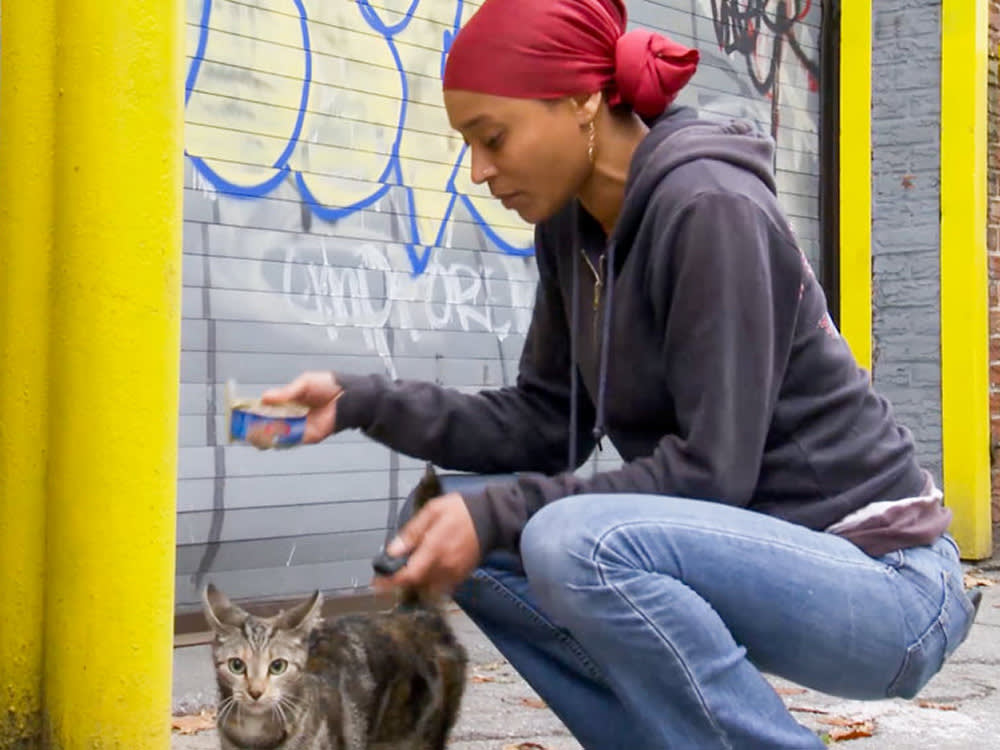
Latonya Walker, known to nearly everyone as Sassee, keeps a schedule that would flatten most people. She works a full-time remote job for a New York City hospital, Monday through Friday, and picks up weekend shifts at a spa in Far Rockaway. Around that, she runs a cat rescue. On a typical morning she is up before dawn, driving feral cats to a Brooklyn animal hospital downtown, an hour each way from her home, back at her desk in time to log on, and then out again after work to feed colonies, retrieve the cats she dropped off, check her traps, and care for the caged animals waiting at home. Some nights she does not finish until midnight. She sleeps hard, she says, when she finally gets the chance.
This is not a hobby that got out of hand. It is a one-woman emergency service for the cats of Brownsville and East New York, neighborhoods where the need is enormous and the help is thin. And the more time you spend understanding how she keeps it running, the more her story turns into something larger than one dedicated rescuer: a plain illustration of who animal welfare funds, and who it leaves to pay out of pocket.
The apartment operation
Walker runs Sassee Cats out of a two-bedroom apartment in Brooklyn, where at any given time she might have five trapped and caged cats, or as many as fourteen, on top of her own resident cats. It is a tight, complicated way to live. She flea-bombs regularly to keep infestations from spreading and to be a good neighbor, and she is diplomatically vague about exactly how many litter boxes are scattered around the place. For a while she had the use of a fellow rescuer’s basement to house the ferals at the center of her trap-neuter-return work, but when that person left the city, the cats came into her home, where they remain until she can find better space.
Trap-neuter-return, or TNR, is the humane backbone of managing feral cat populations: trap the cats, spay or neuter them, vaccinate, and return them to their colony so the group stops multiplying. Walker learned it the way she now insists others learn it, by taking a class before doing the work. When she first tried to help a feral mother cat and her kittens, an experienced woman offered to assist only on the condition that Walker get trained first. Walker found the requirement frustrating at the time. Now she understands the wisdom in it and passes the same rule along to newcomers.
How she got here
She grew up in Brownsville public housing, in a neighborhood she describes as hard on its animals, and the impulse to bring in and help the ones she could was there from childhood. She left for Queens to raise her daughter somewhere gentler, then moved back years later to save money. Volunteering at the city’s Animal Care Centers, she found the constant stream of surrendered animals heartbreaking and wanted to do more, without quite knowing where to start.
The starting point found her. Walking her neighborhood one day, she came across a feral mother cat with a litter, and quickly realized the mother would keep producing litters, abandoning each set of kittens to fend for themselves as the next arrived. Left alone, one cat becomes a colony becomes a crisis. Walker took a TNR class, rented cages, recruited her family to help set traps, and trapped 28 cats on that first outing. The person who had pushed her to train said she was a natural at it.
The money problem, up close
Eventually Walker formalized the rescue as a registered nonprofit, which unlocked things like a one-time grant she used for unglamorous necessities, new tires for the aging Toyota she uses strictly to shuttle cats, taking the train herself for anything personal. But grant money runs out, and the day-to-day is funded largely by her. She makes Costco runs several times a month for food to feed her colonies, her friends’ colonies, and the cats in her care. She gets some litter from a mentor who runs another rescue, and buys the rest herself, favoring an affordable, hard-clumping, odor-controlling brand that is a small mercy in a home this full of cats. If you are stretching a rescue budget the same way, a value pick like Dr. Elsey’s is the kind of workhorse litter that does the job without draining the account.
The scale of the expense becomes clear in a single bad week. After one particularly brutal stretch, she pulled out a kitten that needed a leg and tail amputated, then had to use that kitten to lure in its mother, and the mother to lure in the roughly eight males trailing her, keeping her perpetually pregnant. The males were badly off and required extensive care. The bill ran to about $3,000. A partner clinic absorbed that particular cost rather than charging her, but that is not how it usually goes, and most of Walker’s spare income disappears into supplies and vet care. She does not resent spending her own money. She is clear that it is not sustainable.
Who gets funded
Here is where Walker’s story stops being only hers. She is direct about a disparity she lives inside: rescuers of color, she says, tend not to get funded the way white rescuers do. When she posts asking for help, a few hundred dollars is a good result. She has watched colleagues post nearly identical appeals and pull in thousands within hours.
The gap runs in two directions. Support is hard to raise from outside her community, and hard to raise from within it too, in neighborhoods where basic human services are already scarce and residents are stretched thin surviving. She is careful not to shame anyone for that. In economically strained areas, spay and neuter services are often unavailable or unknown, and people cannot devote energy to the local cats when they are fighting to keep their own heads above water. It is not indifference. It is triage.
None of this is a knock on the organizations that do help her; a network of Brooklyn rescues and clinics donates services, foster placements, and social-media visibility that she could not do without. It is a statement about where the money pools, and where it does not.
What actually helps
Ask Walker what she needs most and money is not the first answer. It is people. There is more work than one person can physically do, even just the ferrying of cats to and from appointments. She has one reliable regular helper and would take ten more. After volunteers, she needs fosters to socialize the friendlier cats so they can be adopted out. Money comes third, though it matters, and for anyone who cannot give time, it is the next best thing.
Her ask of the rest of us is simple and unsentimental: do something. Learn why cats should not be dumped on the street, learn where low-cost spay and neuter exists, and pitch in wherever you can. If you want to support the specific work, organizations like Brooklyn Cat Cafe, Friendly Ferals, and Flatbush Cats run in the same ecosystem she does and can point you toward TNR training, fostering, and donations near you.
The feral-cat problem in a city like New York does not get solved by heroics. It gets solved by a lot of ordinary people doing a manageable amount of the work. Right now, in far too many neighborhoods, that entire load is being carried by a handful of people like Walker, in their own apartments, in their own cars, on their own dime. The least the rest of us can do is help carry it.
James Okafor covers rescue, adoption, and the causes shaping animal welfare. His work follows the people and organisations working to give more pets a home, and the issues owners and advocates care about most.
Meet our experts ↗Keep reading
 LivingYou Can't Adopt Your Way Out of a Cat Crisis. This Brooklyn Nonprofit Proved ItLeila Torres · 7 min
 LivingShe Rented a House in Tucson and Inherited 30 Cats. The Internet Did the Rest.Nina Vasquez · 6 min
 LivingKitten Season Never Ends Anymore. Blame the Vet Bill, Not the Weather.Leila Torres · 8 min
 LivingA San Diego Judge Redefined 'Abandonment' for Cats. Shelters Everywhere Are Watching.Marcus Webb · 6 min
 LivingThe Only Part of TNR People Fight About Is the Part That WorksLeila Torres · 7 min
 LivingThe Nonprofit Getting Hundreds of Businesses to Bankroll Cat RescuesNina Vasquez · 5 min