


A Peter Som Protégé Looked at the Dog-Clothes Aisle and Saw a Crime Against Craft
Rita Li trained in couture, then aimed it at the one corner of fashion everyone treats as a joke: clothing for dogs. Her label rororiri makes velvet harnesses and camo windbreakers with the rigor of ready-to-wear.

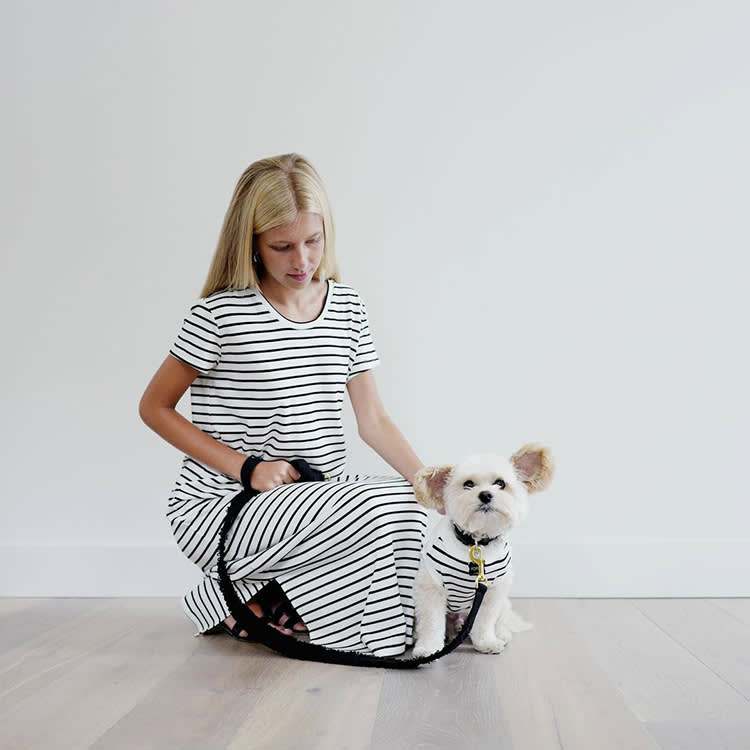
Most dog clothing is made as if the wearer will never notice, which, fair enough, they will not. But the person paying for it does, and for years the standard was quietly terrible: flimsy seams, cheap fabric, shapes that fit no actual dog. Rita Li could not unsee it. She had spent years learning to build garments the hard way, and the gap between that training and what passed for dogwear struck her as almost offensive.
Li came up through the demanding side of fashion. She earned a master’s in fashion design at the Academy of Art University in San Francisco and apprenticed in New York with the designer Peter Som, an education in the unglamorous truth of the industry: that talent gets you nowhere without relentless work, and that a label lives or dies on execution, not on how beautifully you can talk about clothes. When she got a dog of her own, a puppy named Rosie, she went looking for something well made and chic to put on her and found nothing that cleared the bar. So she made it herself. That was the beginning of rororiri.
The detail that started a brand
The specific thing Li could not find was almost comically small: a cute, well-cut outfit with a hole in the back for a harness. Rosie pulled on walks as a puppy and needed to be harnessed, and every garment forced a choice between function and looking good. Li sewed one that did both. Then another. Then a line.
That instinct, treating a tiny functional problem as worth solving properly, is the whole philosophy compressed into one design decision. It is also why the clothes read as clothes rather than costumes.
Couture references, canine proportions
Li’s influences are exactly who you would expect from someone with her training: Alexander McQueen, Azzedine Alaïa, Cristóbal Balenciaga, Raf Simons. The results are the range you would want from a real fashion label, translated to four legs: polka-dot cardigans, camouflage windbreakers, and brass-hardware velvet harnesses among them.
Getting there was not simple. Fit is a nightmare in dogwear, because dogs are not scaled-down people. Breeds vary wildly in shape, so a single style can require an enormous grade of sizes. Some rororiri pieces come in as many as eleven, and Li has described the pursuit of the right fits as a problem that never fully ends. That is the part customers do not see and the part that separates a serious garment from a novelty.
Materials get the same scrutiny. Li leans on natural fibers, mainly cotton and wool, and has walked away from gorgeous textiles once she learned what was actually in them. She does not use animal leather. The clothes are made locally in San Francisco, which keeps her close to the production she is so particular about, and slots neatly into a broader shift among pet owners who have started thinking about their dog’s wardrobe the way they think about their own: as something that should last rather than something disposable. Dog clothing takes more abuse than ours, worn inches off the ground and dragged through everything, which makes durability less a luxury than a baseline.
The store, and the reason it exists
Li opened a brick-and-mortar rororiri boutique in San Francisco in 2016, a deliberate choice in an e-commerce world. The payoff is the thing she seems to treasure most: seeing the garments on real dogs, and meeting the people who love them. Customers travel to the shop, sometimes routing a Bay Area visit around it, and the store has become a place to trade dog stories as much as to buy a sweater.
The matching human-and-dog collection deepened that. Once rororiri began offering coordinated looks across unisex, women’s, and men’s styles, whole families started shopping together, dog included, and requests rolled in for matching pieces sized to human babies. The appeal is obvious once you see it: not dressing a dog up, but dressing with the dog, as one more member of the household with a point of view.
What’s new since this profile
The brand has kept going, and it has grown beyond the city where it started. As of 2026, rororiri has expanded onto the Peninsula, with a location at Stanford Shopping Center in Palo Alto joining its Bay Area presence, a sign that the appetite for genuinely well-made dogwear has outgrown a single San Francisco storefront. Each piece is still designed by Li, still cut with that just-off-the-runway sensibility, and still built around the conviction that a dog deserves construction as serious as anything hanging in your own closet.
You can see the current collection and store locations at rororiri. For a small, designer-run label like this one, buying direct is also the most meaningful way to support the work.
Sasha Ford is a certified cat behaviour consultant who has worked with shelters, catteries, and private clients across the country. They review all feline behaviour content at The Pet Times, with expertise in multi-cat households, indoor enrichment, and stress-related disorders.
Meet our experts ↗Keep reading
 Product PicksMost Dog Sweaters Are for You. Here's How to Tell If Your Dog Actually Needs One.Dr. Lena Park · 4 min
 Product PicksThese Dog Beds Are Handwoven by Indian Artisans, Not Stamped Out in a FactorySasha Ford · 4 min
 Product PicksThe Pet Brand That Started on a Napkin and 411 Safety TestsLeila Torres · 6 min
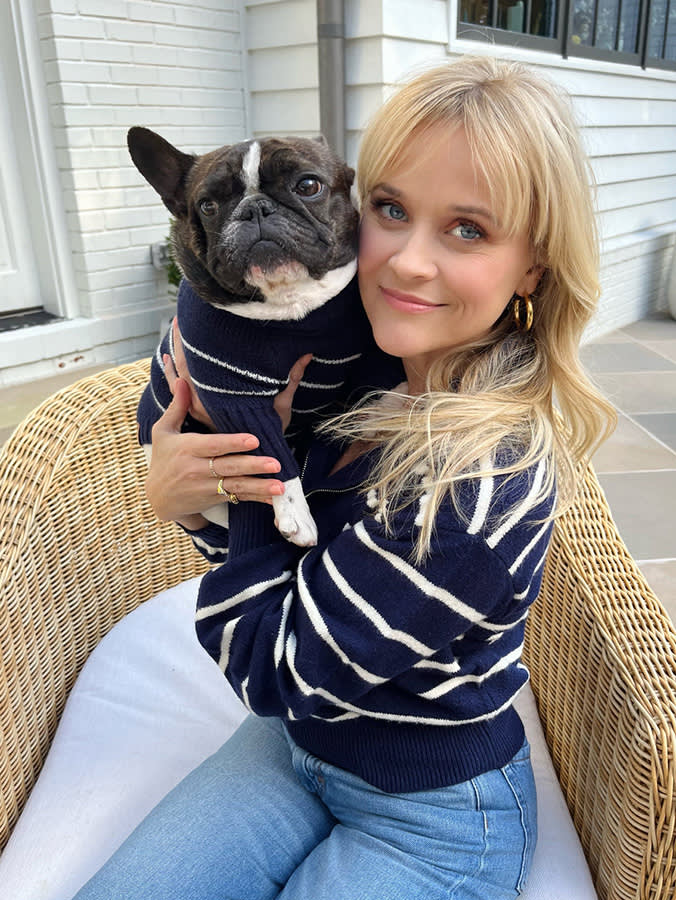 Product PicksThe Matching Dog-and-Owner Set That Doesn't Make You Rebuy Your Whole ClosetJordan Ellis · 3 min
 Product PicksPuppy Milestone Cards Are a Photo Prop. Yours Should Be a Deadline.Sasha Ford · 6 min
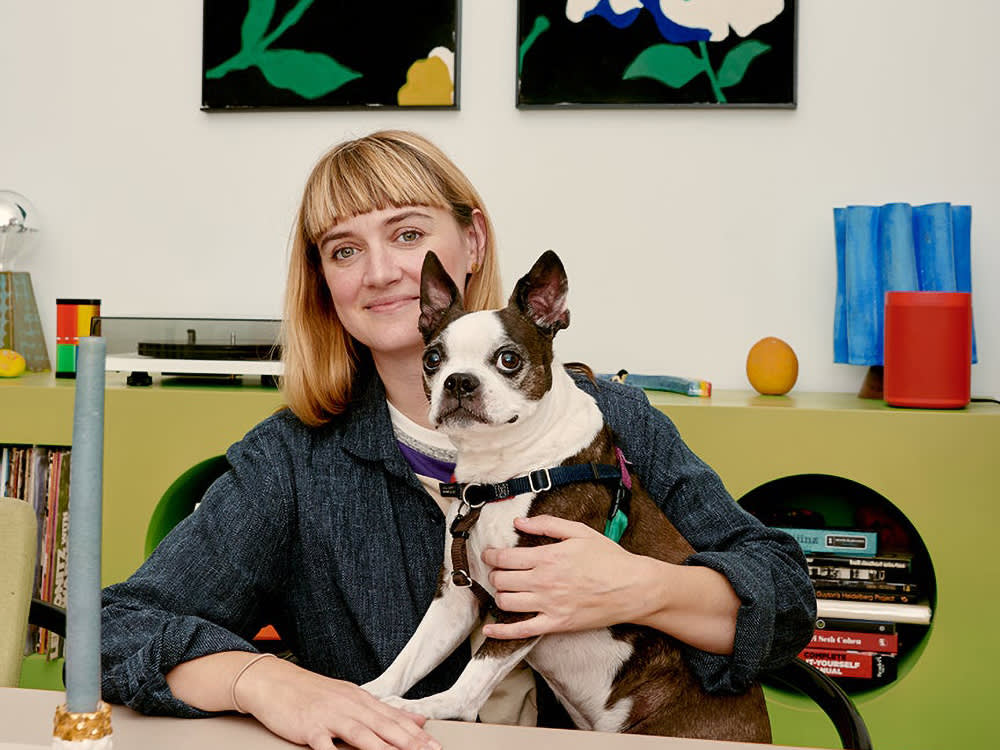 LivingHer Boston Terrier Can Barely See Color. She Designs for Him Anyway.Leila Torres · 6 min