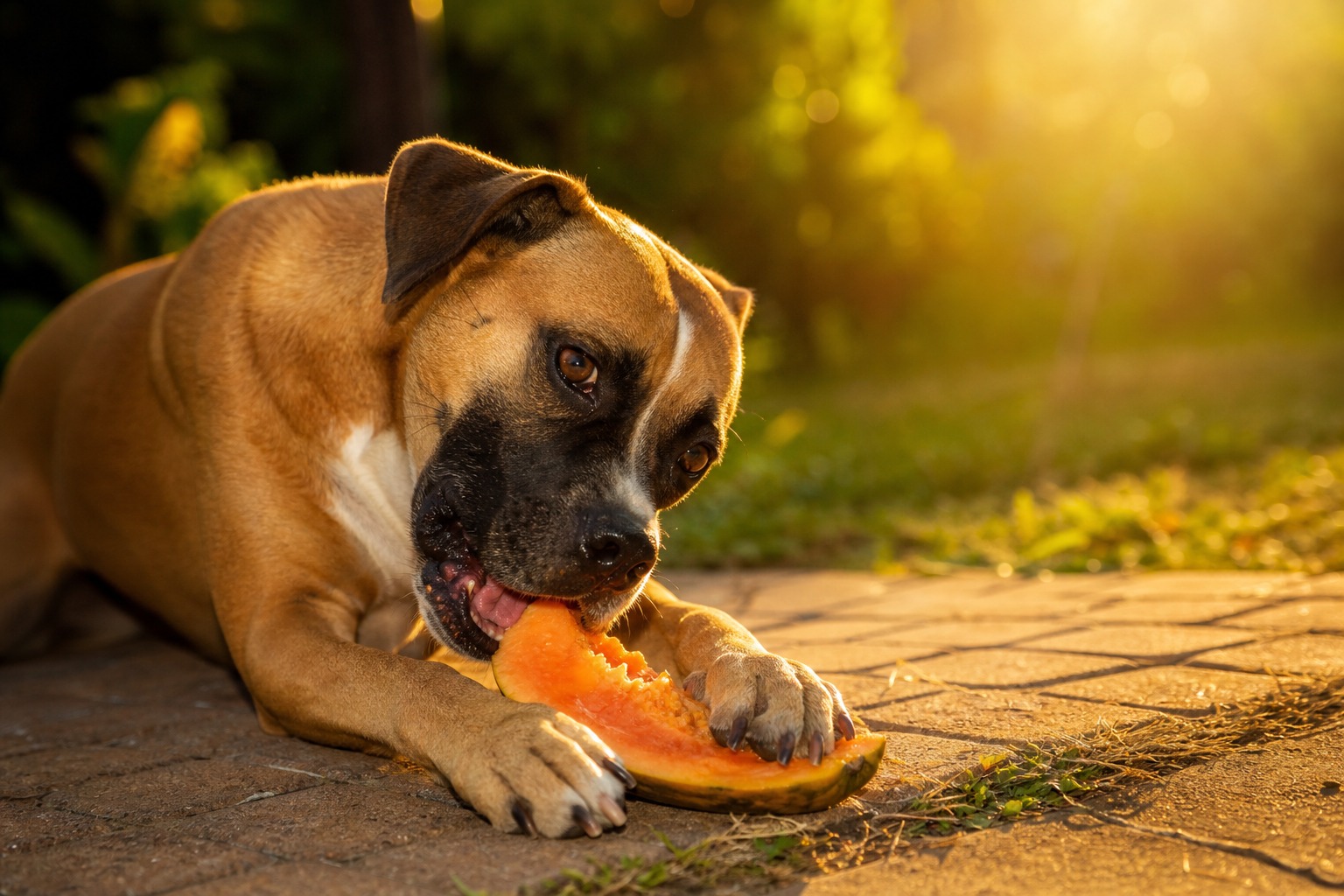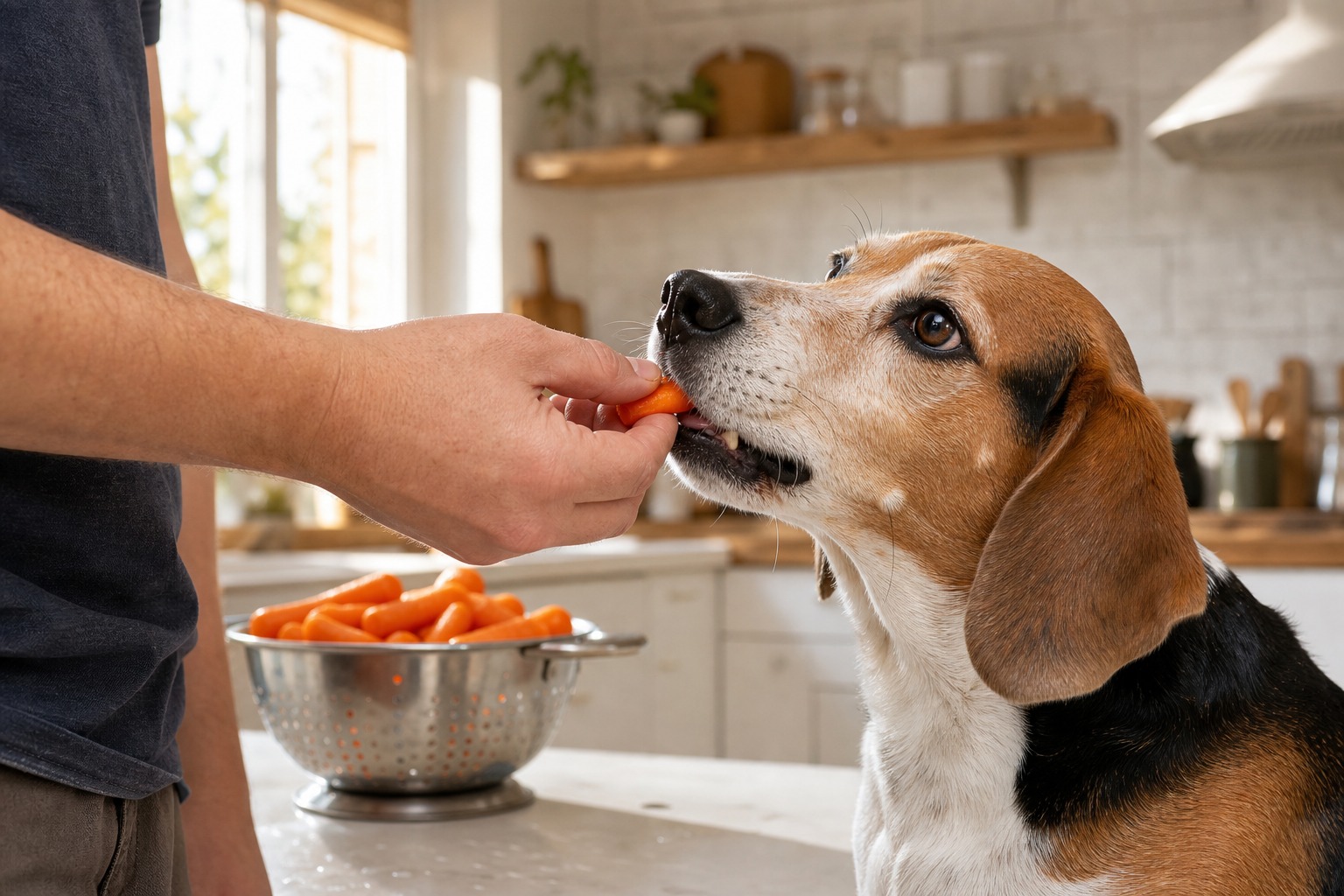

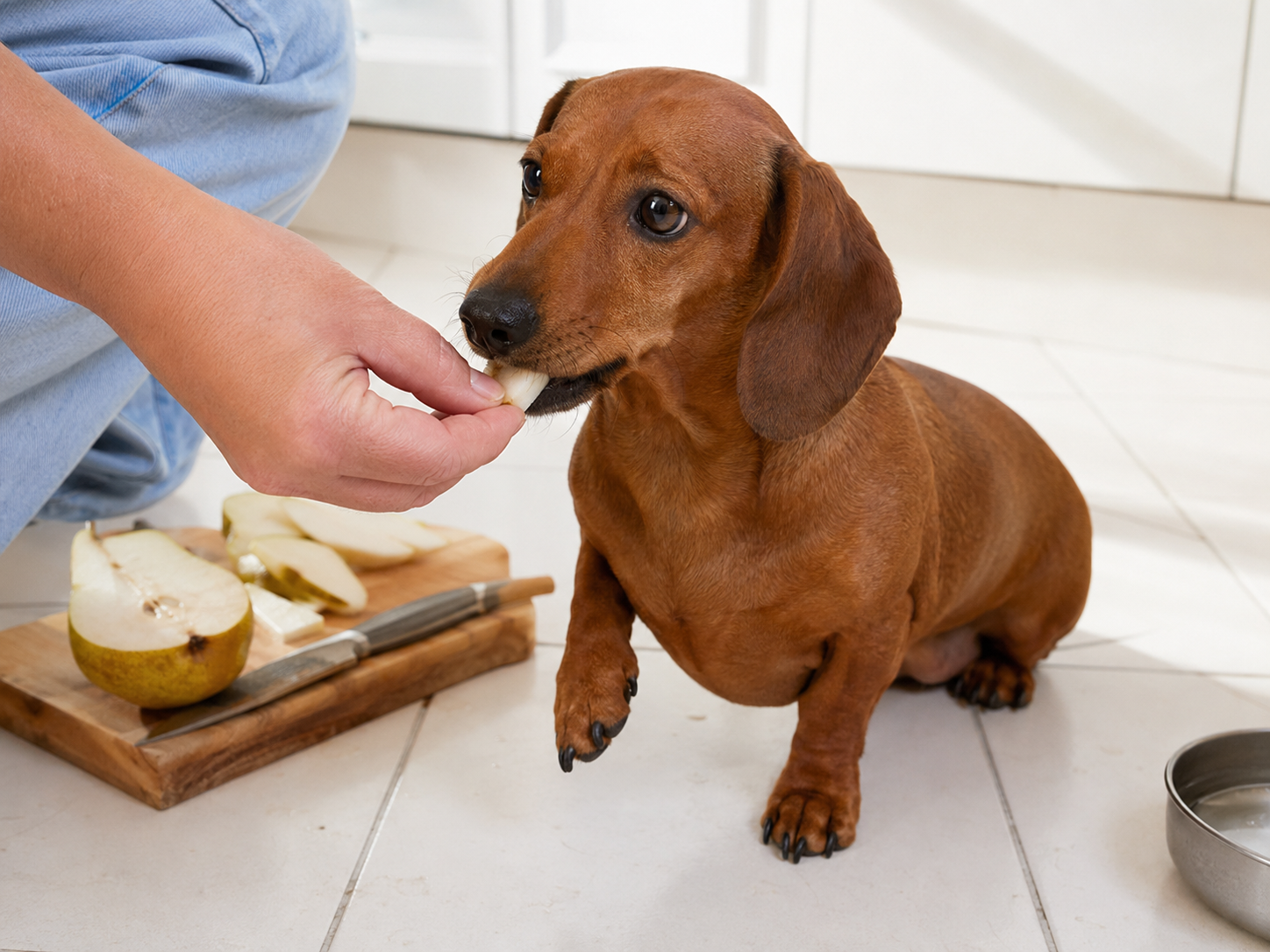
The pear has a timing problem. It’s rock-hard for days, perfect for about four hours, then quietly turns to regret in the fruit bowl. Here’s the thing dog owners should know: that narrow window of perfect ripeness isn’t just when a pear tastes best. It’s when a pear is safest for your dog, too. Hard fruit is a choking hazard, overripe fruit invites mold toxins, and the sweet spot in between is a genuinely good dog treat that doesn’t get nearly the attention apples do.
So yes, dogs can eat pears, and the interesting question is when and which parts. Ripeness is the safety feature. Treat it that way.
What a pear does for a dog
Most edible pears come from the Pyrus communis tree, native to Europe and parts of Iraq and now grown worldwide in dozens of varieties with broadly similar nutrition. The fruit carries fiber, natural sugar, vitamin C, potassium, copper, iron, and calcium. One of those is useless to your dog: unlike humans, dogs synthesize their own vitamin C and don’t need dietary top-ups. The rest pull real weight:
-
Fiber, concentrated in the skin. Pears deliver both soluble and insoluble fiber, which bulk the stool, prevent constipation, and feed the gut microbiome the nutrients it runs on.
-
Minerals across the board. Potassium, copper, iron, and calcium support heart health, normal blood pressure, muscle function, brain development, immune function, and red blood cell production.
-
Water, lots of it. A ripe pear is juicy enough to double as hydration, which makes small pieces a smart treat after hard play or on hot days.
The asterisk on all of this is sugar. Pears are sweet for a reason, and excess sugar in a dog’s diet means empty calories, weight gain, and elevated risk for diabetes, obesity, and arthritis over time. That’s why the serving size is “a few bite-sized pieces, occasionally,” with all treats combined staying under 10 percent of daily calories.
The ripeness rule, in three stages
Too hard. An unripe pear is dense enough that large chunks become a choking hazard or, swallowed, a candidate for intestinal blockage. If the fruit doesn’t yield to a thumb, it isn’t ready for a dog. When it is ready, cut it into bite-sized pieces regardless; soft and small is the format.
Just right. Soft, ripe flesh, cut small, skin in moderation. The skin is edible and carries much of the fiber, but a big fiber load on an unaccustomed gut produces gas, bloating, and diarrhea. If your dog is new to high-fiber snacks, start with peeled pieces and work up.
Too far gone. Moldy or rotten fruit is the sleeper hazard, and it matters double if you have a pear tree. Rot can carry tremorgenic mycotoxins, mold-produced toxins that cause tremors and worse in dogs. Windfall fruit on the ground under a backyard tree is exactly where dogs find it, so rake early and often, and bin overripe fruit where a nose can’t reach it.
“I tell people to test the pear the way they would for themselves, then cut it smaller than feels necessary,” says Dr. Priya Nair. “A dog gulps where we chew. The fruit that’s soft enough to enjoy is also the fruit that’s soft enough to be safe on the way down.”
The seed fine print
Pear seeds contain amygdalin, a cyanogenic glycoside, which is a compound the body converts to cyanide. Before you panic: the dose story is reassuring. The seeds have to be crushed to release the compound, and a dog would need to grind through a very large quantity of seeds for toxic effects. A swallowed seed or two is not an emergency. The same compound appears in the tree’s branches, so chronic branch-chewers should be redirected.
Still, the sensible practice is to core the fruit and skip the seeds entirely, the same habit you’d apply with apples. It costs nothing, and it removes the one genuinely toxic element of the fruit from the equation.
Where pears fit in the bigger treat picture
Fruit treats work best as a rotation, not a monoculture, and pears slot in alongside the other safe options: apples for crunch, blueberries for antioxidants, watermelon for hydration. The pear’s niche is the soft, sweet, juicy end of the spectrum, gentle on older mouths and easy to portion small.
The standing rules apply as always. New foods get introduced slowly and one at a time. The bulk of a dog’s calories come from a complete and balanced dog food, because that’s what actually meets their nutritional needs. And anything you’re unsure about gets a quick vet check or a call to a pet poison hotline before it goes in the bowl, because the list of foods that are fine for us and wrong for dogs, grapes, onions, garlic, avocado, is long enough to keep surprising people.
What newer research adds
Amygdalin, the compound in pear seeds, has picked up an odd second life worth knowing about. It’s been marketed in supplement form (sometimes called laetrile or “vitamin B17”) as an alternative cancer therapy, and research reviews have repeatedly found both a lack of anticancer evidence and real cyanide-toxicity risk, in humans and animals alike. The practical takeaway for pet owners: the trace amygdalin in a stray pear seed is a non-event, but concentrated amygdalin products have no place around dogs.
The more everyday update is on the orchard side. Veterinary toxicologists now treat moldy windfall fruit as a recognized seasonal exposure route for tremorgenic mycotoxins in dogs, which has turned “clean up under the fruit tree” from tidiness advice into genuine poison prevention. If you share a yard with a pear tree, autumn is your high-alert season.
References
- North Carolina State Extension: Pyrus communis
- Molecules: Amygdalin: Toxicity, Anticancer Activity and Analytical Procedures for Its Determination in Plant Seeds
- Merck Veterinary Manual: Tremorgenic Mycotoxicoses in Animals
- Harvard T.H. Chan School of Public Health, The Nutrition Source: Copper
- Tufts Cummings School Clinical Nutrition Service: The ABCs of Vitamin C