


Your Puppy Isn't Being Wild. They're Overtired.
The puppy tearing around the house biting everything at 8 p.m. looks like they need more exercise. They almost always need the opposite. Here's why the fix for a 'hyper' puppy is a nap, and why that nap does more than you think.

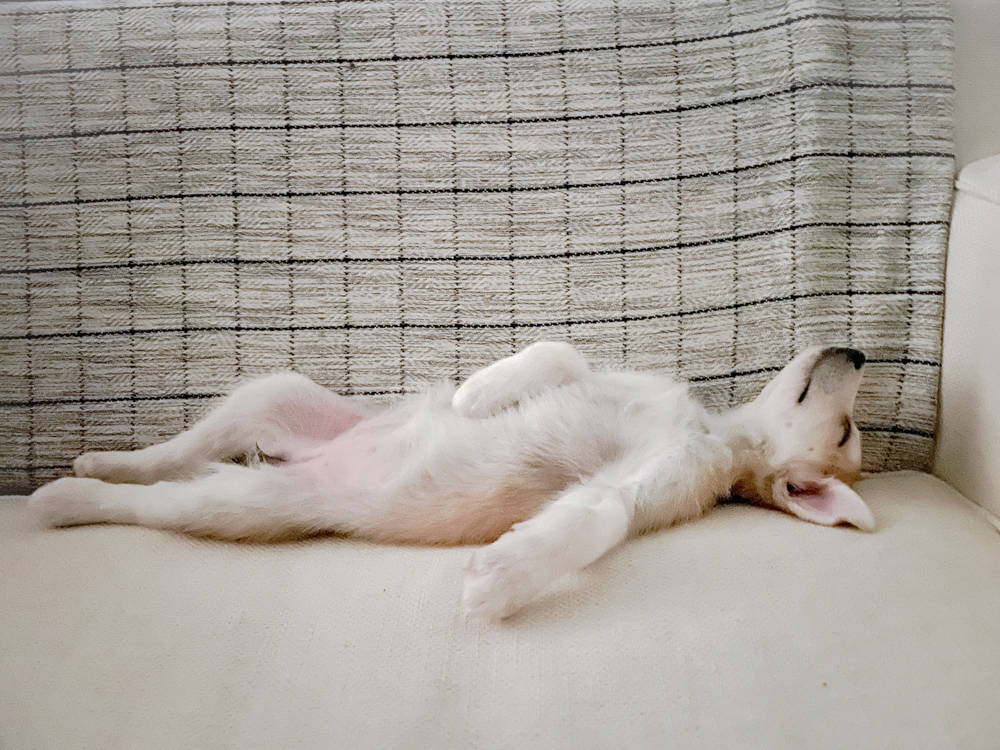
It is 8 p.m. Your puppy, who was a perfect angel an hour ago, is now rocketing around the living room, biting the couch, biting your ankles, biting the air, eyes a little wild. Every instinct says the same thing: this dog has too much energy and needs to burn it off. So you throw the ball, you wrestle, you take them out again. And somehow it gets worse.
Here is the counterintuitive truth that will change your evenings: a puppy acting completely unhinged is usually not under-exercised. They are overtired. And the more you rev them up trying to tire them out, the deeper you dig the hole. The fix for a “hyper” puppy is almost always the last thing it looks like they need, which is sleep.
Puppies sleep more than they’re awake, and that’s the point
Dogs need far more sleep than people, and puppies are in a league of their own. It is not unusual for an adult dog to sleep around 14 hours a day. Puppies often clock closer to 18. What throws owners is not the total, it is the shape of it: instead of one big overnight block, a puppy scatters their sleep across a long night plus a patchwork of naps all day long. Some of the deepest of those naps are the ones a puppy fights hardest to skip.
Contrast that with a mellow older dog who might take a solid two-hour nap every afternoon like clockwork. That kind of long, scheduled daytime sleep is actually less common as dogs age. In puppyhood, the sleep is enormous but broken into pieces, which is exactly why it is easy to under-count how much rest your puppy is actually missing.
The overtired puppy, decoded
Some signs a puppy needs a nap are obvious. Yawning, lying down, eyes drooping. But the confusing signals are the ones that get owners into trouble, because a tired puppy often does not look tired. They look feral.
That burst of loopy, frantic, can’t-settle behavior, the one that reads as “needs more stimulation,” is very often fatigue wearing a costume. Many puppies get intensely mouthy when they are tired, latching onto hands, clothes, furniture, anything. It looks like a puppy overflowing with energy. It is usually a puppy who is past the point of being able to self-regulate and desperately needs to be put down for a nap, the same way an overtired toddler does not calmly announce bedtime but instead melts down on the kitchen floor.
Once you learn to read it, the pattern is unmistakable. The dog is not asking for another game. They are asking, badly, to be helped to sleep.
Owners come to me convinced they have a high-energy problem, and what they actually have is a sleep-deprivation problem. The test I give them is simple: next time the evening chaos starts, don’t add stimulation, remove it. Crate or quiet room, dim the lights, let the puppy crash. Nine times out of ten the ‘hyper’ dog is asleep within minutes, which tells you what they needed all along.
Why the nap matters more than rest alone
Here is the part that reframes puppy sleep from a logistics issue into a training issue. Sleep is not just downtime for a puppy. It is when learning gets locked in.
Research on dogs has shown that sleep does for them what it does for us: it consolidates memory. In one line of work, dogs who were taught new commands and then allowed to sleep showed measurable improvement on those commands afterward, along with brain-activity changes during sleep that mirror the patterns seen in learning humans. Follow-up studies looking at sleep spindles, the brief bursts of activity during non-REM sleep that are considered markers of memory consolidation across mammals, found that dogs with more of them learned better, and that a dog’s typical spindle activity tracked their overall learning ability.
The practical translation is striking. That afternoon you spent teaching your puppy “sit” does not fully take hold while you are teaching it. A big part of it takes hold later, while the puppy is asleep. So the nap after a training session is not a break from the work. It is part of the work. A chronically under-rested puppy is not just cranky, they are a puppy whose brain is not getting the offline time it needs to make lessons stick.
Building rest into the day
You do not need a rigid military schedule, but you do need to treat sleep as something you actively provide rather than something that just happens. Give your puppy genuine opportunities to nap in a quiet, low-stimulation spot, and step in with enforced rest when you see the frantic, mouthy spiral starting instead of trying to play through it. A loose daytime rhythm of activity followed by rest also protects the overnight sleep that everyone in the house is counting on. Think of it as scheduling naps the way you would for a small child, because the underlying need is much the same.
When sleep is a symptom
One caveat keeps this from being “let them sleep endlessly and never worry.” Huge amounts of puppy sleep are normal, but a change in the pattern is worth attention. If your puppy suddenly needs far more sleep than usual, becomes hard to wake, or is lethargic alongside other signs like poor appetite, an upset stomach, or just seeming off, that is a reason to call your vet. The cause could be minor, such as needing higher-quality nutrition, or it could be something that needs treatment. The rule of thumb is that lots of sleep is fine, but a real shift in your puppy’s normal is a question for the vet, not a thing to simply watch.
The bottom line
The wild, biting, can’t-be-satisfied puppy is one of the most misread animals in the house. Reach for more exercise and you usually make it worse. Reach for a nap and the “energy” evaporates, because it was never surplus energy, it was exhaustion. Puppies sleep enormously for good reason, and that sleep is doing double duty, growing the body and cementing everything you are trying to teach. When your puppy loses their mind at the end of the day, the kindest and most effective response is not another round of fetch. It is bedtime.
Common questions
How much should a puppy sleep?
A lot. Puppies often sleep around 18 hours a day, usually spread across many short naps rather than a few long stretches. Adult dogs still average about 14 hours. If it seems like your puppy is asleep more than they're awake, that is normal and healthy.
Why does my puppy get crazy when they're tired?
Overtired puppies often ramp up instead of winding down, becoming frantic, mouthy, and unable to settle. It reads as excess energy but it is the opposite, the puppy version of an overtired toddler melting down. The answer is rest, not more play.
Should I wake a sleeping puppy?
Generally, let them sleep. Puppies do most of their growing and learning during rest, and sleep is when new training actually consolidates in the brain. The exception is keeping a loose daytime schedule so night sleep stays on track.
When is too much sleep a problem?
A sudden change, sleeping far more than usual, being hard to rouse, or lethargy paired with other symptoms, is worth a vet call. Causes range from something simple like needing better nutrition to something serious, so don't just watch a real change, ask about it.
Dr. Kohl is a board-certified veterinary dentist with a particular interest in preventive oral care. She reviews all dental health content at The Pet Times and contributes practical guides on home dental routines, professional cleaning, and oral disease prevention.
Meet our experts ↗Keep reading
 First DaysThe Only Puppy in the Litter Missed a Class. It Shows Up Years Later as a Bite.Dr. Nina Kohl · 9 min
 First DaysTwo Puppies Sound Twice as Sweet. Trainers Beg You to Reconsider.Dr. Mara Chen · 8 min
 First DaysStop Counting Your Puppy's Sleep Hours. Watch for the Change.Dr. Amara Solis · 8 min
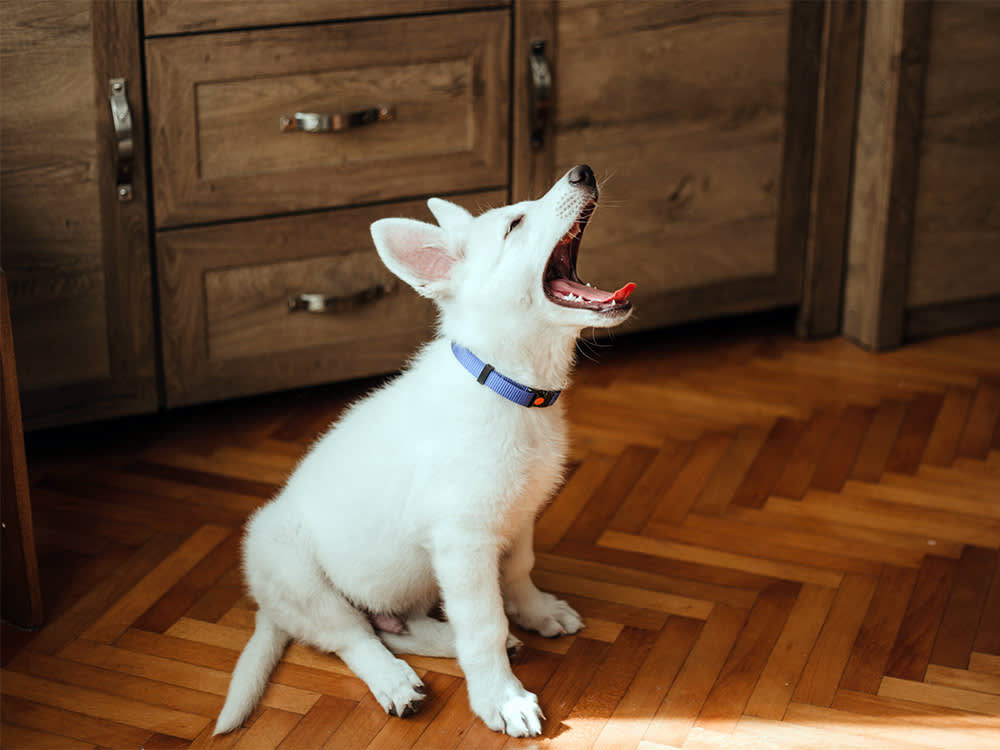 TrainingYour Puppy Is Talking to You. Here's the Translation.Dr. Nina Kohl · 8 min
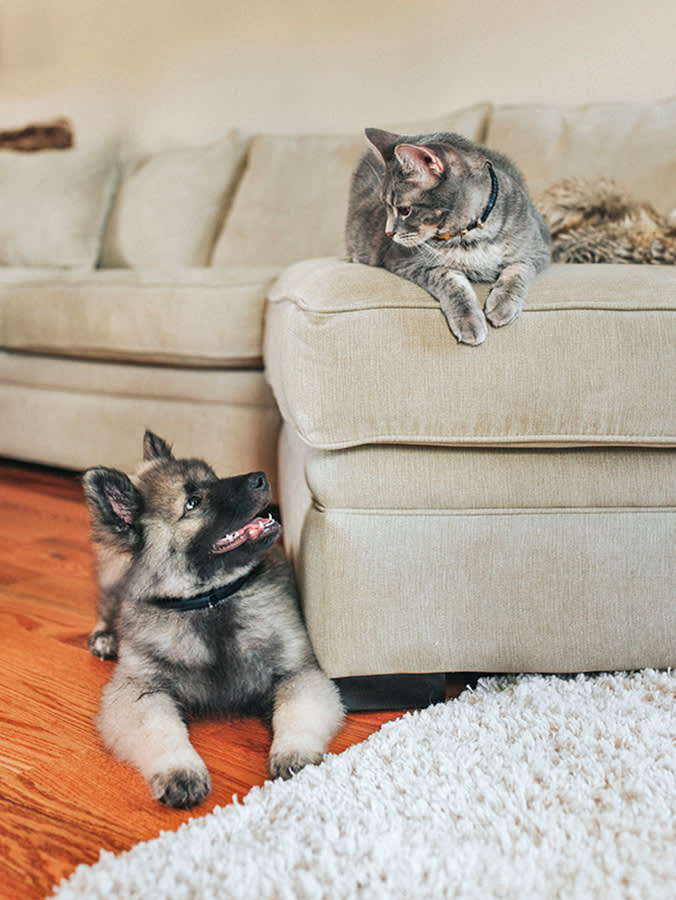 First DaysYour Puppy Thinks the Cat Is a Toy. Fix That Before They Ever Meet.Dr. Mara Chen · 9 min
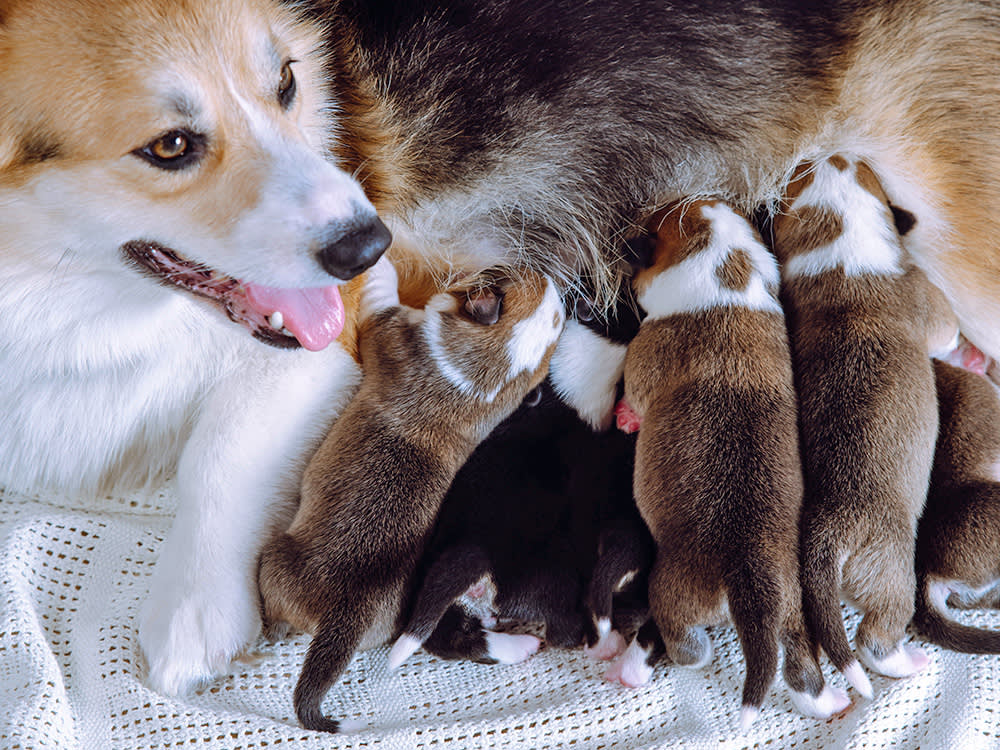 Health & WellnessThe Runt Isn't the Problem. The First 48 Hours Are.Dr. Priya Nair · 9 min