


Your Puppy Cries at Night for One of Four Reasons. Only One Means Get Out of Bed.
The 2 a.m. whimpering feels like an emergency every time. It usually isn't. Here's how to tell a 'take me out' cry from a 'I'll settle in a minute' cry, and how to get everyone sleeping again.

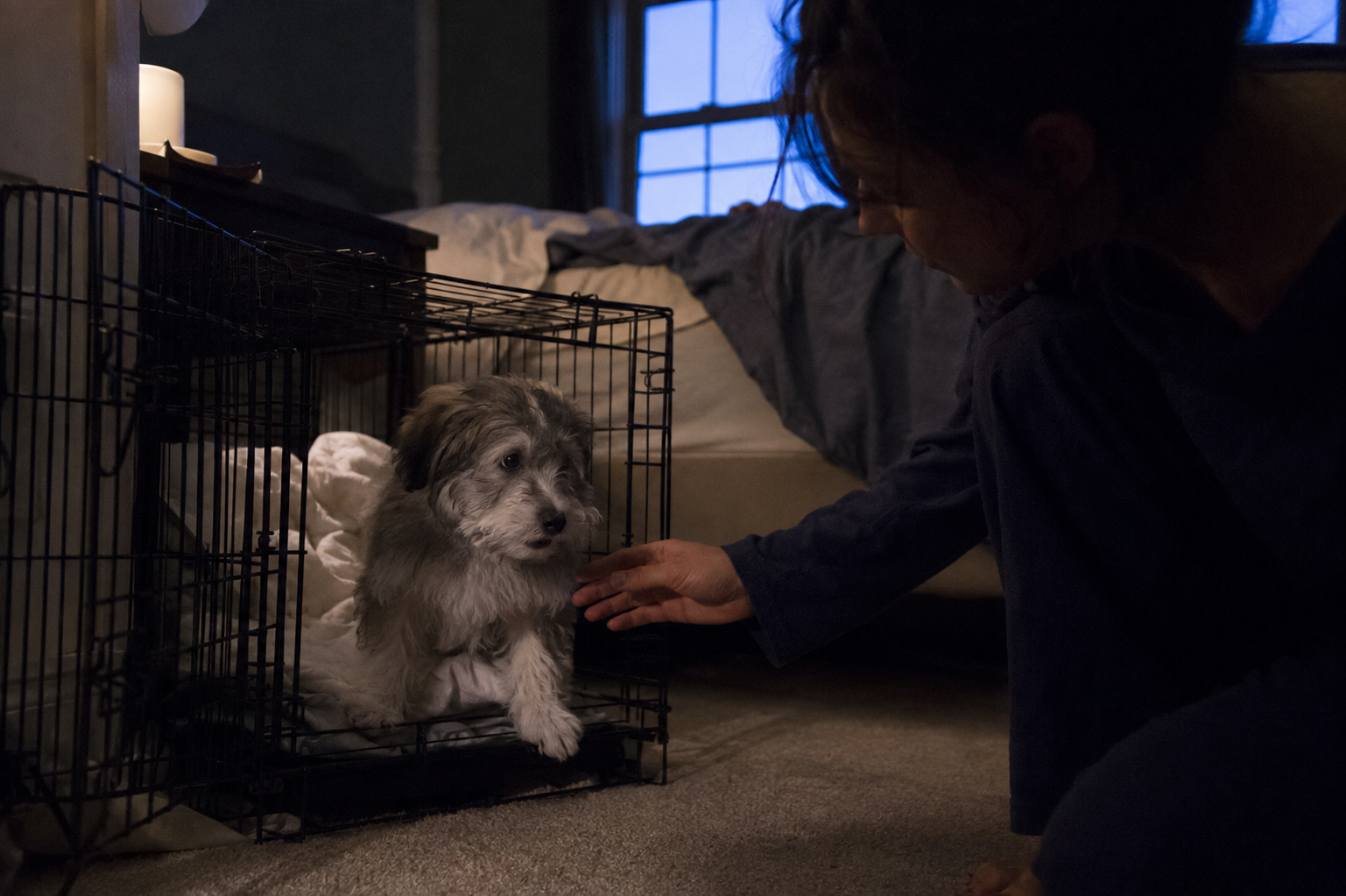
The first few nights with a new puppy come with a soundtrack, and it’s a rough one: a small animal in the dark, crying like the world is ending. Your instinct screams that something is wrong and you must fix it now. Usually, though, nothing is wrong. Your puppy has simply gone, in the space of a day, from sleeping in a warm pile of siblings to sleeping alone in a strange new place, and they’re telling you about it.
The useful skill isn’t stopping the crying, it’s reading it. Because of the four reasons puppies cry at night, only one of them actually requires you to get up.
The four reasons, and what each one is really asking for
Loneliness (the big one)
For most new puppies, this is it. They’ve spent their whole short life pressed against littermates and mom, and suddenly that comfort is gone. The cry is “I’m alone and I don’t like it.” It’s not a problem to solve so much as a transition to support. Plenty of daytime exercise and attention helps, and the single most effective move is putting the crate right next to your bed so your puppy can hear your voice and see you’re near.
Separation anxiety
A close cousin of loneliness, but more intense. An anxious puppy can cry for a long stretch, often escalating until someone comes, because working themselves up is the whole loop. Soothe with your voice, and if you’re going to let them out, wait for a pause in the crying to do it, so you’re not teaching them that noise is what opens the door.
Boredom
A puppy who hasn’t burned enough energy struggles to settle and can turn destructive. Puppies spend energy in short bursts through the day, so match that with mental and physical outlets at intervals. A well-exercised, well-occupied puppy has nothing left in the tank to complain with at bedtime.
Needing to go out (the one that gets you up)
This is the cry you don’t ignore. A puppy can hold their bladder roughly one hour for every month of age, so if it’s been longer than they can reasonably manage and they’re restless and crying, take them out. If a puppy genuinely needs to pee, they’ll keep crying until you let them out or they can’t hold it any longer and go in the crate, which sets back house-training. So when the crying starts and it’s been a while, the first test is always a quiet trip outside. If they go, that was the answer. If they don’t, it’s one of the other three.
The reassuring timeline
Here’s what nobody tells exhausted new parents at 3 a.m.: this ends, and faster than it feels. Adjusting to a crate routine generally takes no more than three weeks, and for many puppies the worst of the nighttime whining fades within about five nights. It won’t be linear, and it won’t be silent, but it’s temporary.
The approach that works is empathy plus consistency. You don’t have to be all-or-nothing about it. You’re adjusting to a puppy and your puppy is adjusting to a whole new life at the same time, and there’s no single right answer, only what works for your puppy, your home, and your schedule.
The mistake I see most is a parent springing into full rescue mode at the first whimper, which quietly teaches the puppy that crying summons company. Rule out the bathroom first, always. If that’s not it, be a calm, boring, reassuring presence nearby rather than a party that arrives every time they fuss. The crate by your bed does more than any gadget.
How to actually fix it
Crate-train, and mean it
Think of the crate as a crib: it keeps your puppy safe overnight and, with time, becomes a familiar comfort. It taps the natural denning instinct, travels well, and raises a more independent, less clingy dog. Start by letting your puppy explore it with toys and treats, then build up alone-time in small increments, never stretching past their bladder’s limit. Spring them from the crate before the crying starts when you can; if it does begin, wait for a lull to open the door so you’re not rewarding the noise. Keep every crate experience positive, and never use it as punishment.
Tire them out before bed
A puppy who’s had enough physical and mental enrichment during the day sleeps far better. Give them something to wind down with at bedtime, like an appropriate chew, to help them settle.
Get the crate size right
Aim for snug and welcoming while still leaving space to stand up, spin around, and stretch out comfortably. For a breed that’ll balloon in size, buy the adult crate now and wall off part of it, so it never gets big enough for your puppy to pee in one corner and sleep in the other.
Front-load the potty breaks
Limit water in the couple of hours before bed and take your puppy out right before the crate. Then set an alarm to match their capacity: about three hours for a three-month-old, four for a four-month-old, and so on. Most young puppies simply can’t hold it through the night at first, so plan around it rather than fighting it.
When crying is actually a red flag
Nighttime crying is normal. What’s not normal is crying that keeps escalating and comes with other symptoms. If the crying becomes persistent and intense and your puppy starts vomiting or turns lethargic, that can signal a medical issue or severe anxiety rather than ordinary adjustment. Trust your gut, and loop in your veterinarian or a qualified behaviorist sooner rather than later if something feels off.
What’s new since this was written
If the first weeks with your puppy have left you weepy, resentful, or overwhelmed, you’re in very good company. Research on the so-called “puppy blues” has found that something like half of new dog parents go through a stretch of anxiety, low mood, or regret after bringing a young puppy home, driven in large part by exactly this kind of sleep deprivation. It’s common, it’s temporary, and naming it helps. The nights get longer between wake-ups, the crying tapers, and the fog lifts, usually right around the time the crate stops being a battleground.
References
- Regional Animal Services of King County. “Dog Behavior Tips.” https://kingcounty.gov/en/dept/executive-services/animals-pets-pests/regional-animal-services
- Association of Professional Dog Trainers. “Puppy Socialization.” https://apdt.com/resource-center/puppy-socialization/
- Santos, N. R., et al. “A Review of Maternal Behaviour in Dogs.” Journal of Small Animal Practice, vol. 61, no. 2, 2020, pp. 85–92. https://doi.org/10.1111/jsap.13085
- Austin Animal Center. “Separation Anxiety Resource Guide.” https://www.austintexas.gov/department/aac-behavior-resources
Common questions
Why do puppies cry at night?
New puppies are used to sleeping piled against their littermates, so being alone triggers loneliness and separation distress. They also cry because they need to pee, want attention, or are bored with leftover energy.
How do I soothe a crying puppy?
First rule out a full bladder and take them out if it's been a while. If that's not it, move the crate next to your bed so they can hear and see you, which eases the loneliness driving most nighttime crying.
How long does crate training take?
Anywhere from about five nights to three weeks. Most puppies settle once the crate feels cozy and familiar, stocked with soft bedding, safe toys, and treats, and you build up crate time gradually.
Is it cruel to crate a puppy at night?
No, when introduced slowly and never used as punishment. A crate taps a dog's natural denning instinct and becomes a safe retreat that teaches independence, as long as your puppy is let out often enough for their age.
How many potty breaks does a puppy need overnight?
Use the one-hour-per-month-of-age rule: a three-month-old can hold it about three hours, so plan an overnight break on roughly that schedule.
Dr. Park is a board-certified emergency and critical care specialist. She reviews our health and safety content for clinical accuracy and contributes guides on recognising urgent conditions. Her focus is helping owners act quickly and correctly when it matters most.
Meet our experts ↗Keep reading
 First DaysThe '1 Hour Per Month' Puppy Rule, and When You Have to Break ItDr. Amara Solis · 8 min
 First DaysYou're Accidentally Teaching Your Puppy to PanicDr. Lena Park · 7 min
 TrainingYour Shy Dog Isn't Antisocial. You're Fighting Two Hidden Deadlines.Dr. Mara Chen · 9 min
 First DaysYour Puppy Isn't Manipulating You. Stop Letting Them Cry It Out.Dr. Nina Kohl · 6 min
 TrainingThe Puppy Mistake That Costs More Dogs Than Parvo DoesDr. Nina Kohl · 7 min
 First DaysOne Bad Meeting Can Undo Everything: How to Introduce a Nervous Cat to a DogDr. Lena Park · 9 min