


The Poinsettia Myth Is More Dangerous Than the Poinsettia
Poinsettias are the most over-feared plant of the holidays. The trouble is that the panic distracts cat owners from the festive plants that can actually kill, so here's the honest ranking.

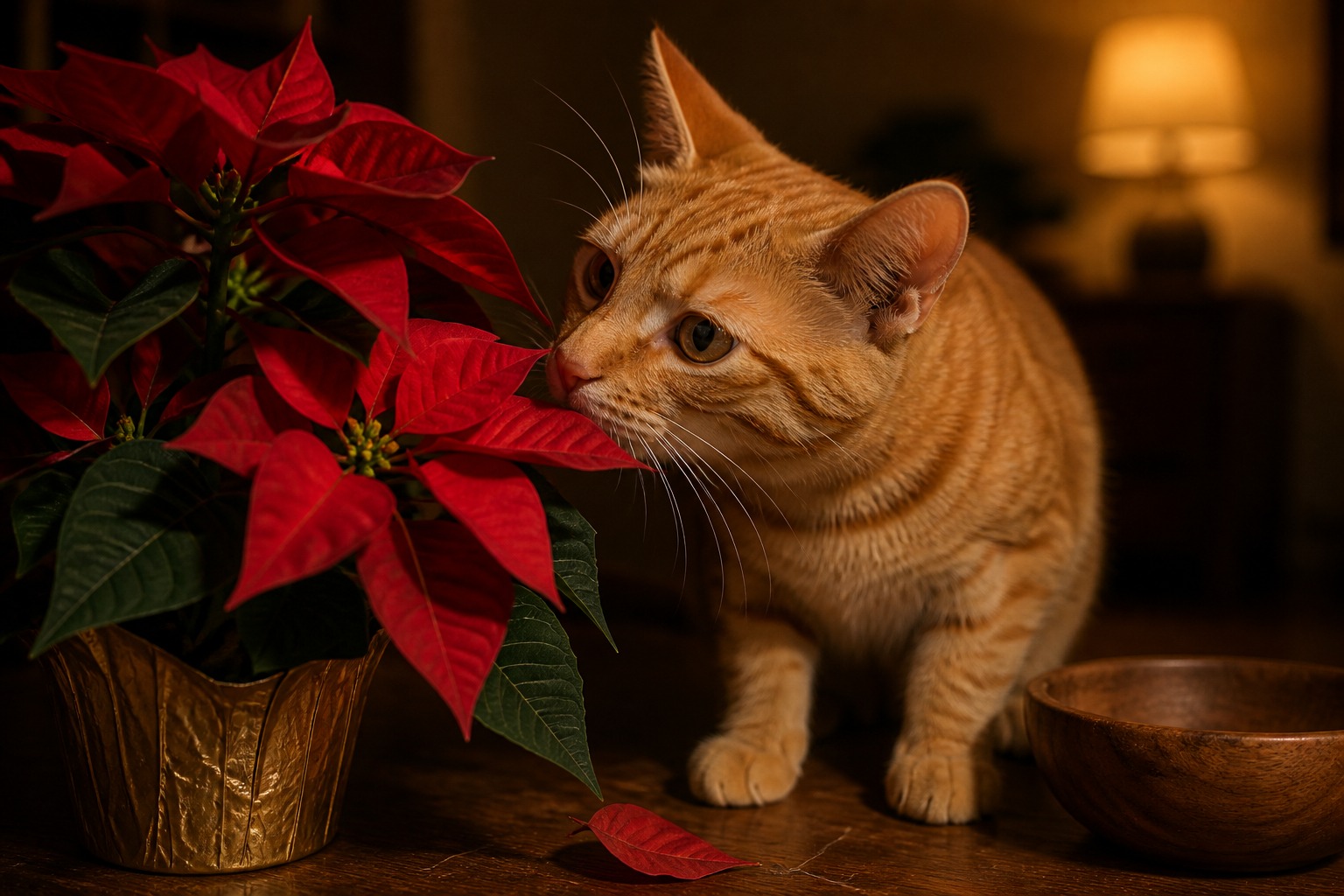
Every December, the poinsettia gets treated like a tiny red landmine. It shows up at your aunt’s holiday party, someone gasps that it is deadly to pets, and cat owners spend the season eyeing it nervously. Here is the uncomfortable truth: that fear is largely a myth, and the myth is doing real harm. Not because poinsettia is perfectly safe, it is mildly toxic, but because the energy spent fearing it is energy not spent on the holiday plants that can genuinely kill a cat. The most dangerous thing about a poinsettia is that it makes you look in the wrong direction.
Where the poinsettia panic falls apart
Start with the famous data point that should calm everyone down. One frequently cited analysis estimated that a 50-pound child would have to eat around 500 poinsettia leaves to approach a toxic threshold. Poinsettias are, in fact, mildly irritating to almost everyone, but the dose required for real trouble is absurd relative to how unpleasant the plant tastes.
Your cat is not a 50-pound child; it is closer to an 11-pound one. So the dose math is different, and yes, poinsettias are toxic to cats. But “toxic” here means irritating, not deadly. Even the ASPCA, which lists poinsettia as a toxic plant, describes its toxicity as “generally overrated,” noting the plant causes mouth and stomach irritation that sometimes leads to vomiting.
Poinsettia is the plant I spend more time talking owners down from than treating. A cat almost never eats enough to be in danger, because the sap is genuinely awful. The cases I worry about over the holidays are the lily ingestions that come in quietly while everyone’s watching the poinsettia.
What the toxin actually is, and why it self-limits
The irritant lives in the plant’s milky white sap, which runs throughout the leaves, stems, and flowers. That sap is not random plant juice; poinsettia is a member of the Euphorbia family, and its sap contains diterpenoid euphorbol esters along with saponin-like detergent compounds. Those are the same broad class of irritants found across euphorbias, which is why poinsettia sap can also bother skin and eyes on contact.
Crucially, the plant evolved this sap as a defense, to taste bitter and discourage anything from eating it. That bitterness is the cat’s built-in safety margin. A curious cat that takes an exploratory bite usually recoils, which is exactly why serious poisoning is so rare. If a cat does push past the taste, the likely result is drooling, vomiting, diarrhea, occasionally a bit of dizziness or reduced appetite, almost always confined to the gut.
What to do if your cat eats one
Don’t panic, but don’t ignore it. Watch for the common signs, drooling, vomiting, diarrhea, and reduced appetite, and keep a vet’s number handy. Call your veterinarian or the ASPCA Animal Poison Control Center at (888) 426-4435 for guidance. In most cases, treatment is supportive and can be done at home: keeping your cat hydrated and comfortable while the irritation passes. A cat with persistent vomiting may need anti-nausea medication or fluids, and only severe, unusual cases require hospitalization. Never wait out a known toxin ingestion without at least a phone call, but understand that for poinsettia specifically, the phone call is usually the whole treatment.
The plants that actually deserve your holiday fear
This is the part the poinsettia panic crowds out. If you are going to worry about one holiday plant around your cat, make it the right one.
- True lilies are the real emergency. Easter, tiger, Asiatic, and stargazer lilies, common in winter bouquets, can cause fatal acute kidney failure in cats from a tiny exposure: a couple of leaves, a lick of pollen, even vase water. If a cat is anywhere near true lilies, that is a same-day veterinary situation. This is the holiday plant that poinsettia’s reputation unfairly overshadows.
- Holly contains saponins in its berries and leaves, causing drooling, vomiting, diarrhea, and loss of appetite, more punishing than poinsettia.
- Mistletoe contains lectins and phoratoxins that affect the heart, and can cause low blood pressure and a slowed heart rate alongside GI upset.
- Pine Christmas trees give off pine oil, an essential oil; like many essential oils, pine is toxic to cats, especially in larger amounts. Fir or spruce are somewhat safer natural options, and a faux tree is safest of all.
Notice where poinsettia sits on this list: at the bottom.
Safer ways to decorate around a cat
If you want greenery without the worry, a few options are kinder to a curious cat. Christmas ferns are ASPCA-listed as non-toxic (though no cat should be grazing on any decor plant). The Christmas cactus is non-toxic to cats and dogs, with the caveat that it can still pose a choking or intestinal hazard. And artificial plants sidestep the sap problem entirely, with the same physical-hazard caveat if a cat chews on one.
For a real poinsettia you cannot bear to skip, the prevention rule is placement, not vigilance. Cats jump, so “high up” is not safe by default; a room with a door you can close securely is the only reliable spot. Some owners ring the base with aluminum foil, which many cats dislike walking on, as an extra deterrent.
The bottom line
Poinsettias are mildly toxic to cats, capable of an upset stomach but not the holiday tragedy their reputation implies. The ASPCA itself calls the danger overrated. The genuine risk is that fixating on this one festive plant pulls your attention away from the true lilies, holly, and mistletoe that can do far worse. Keep poinsettias out of reach if you like, but spend your real caution on the plants that have earned it, and keep the ASPCA Animal Poison Control number, (888) 426-4435, close through the season.
References
- ASPCA. “Toxic and Non-Toxic Plants: Poinsettia.” https://www.aspca.org/pet-care/animal-poison-control/toxic-and-non-toxic-plants/poinsettia
- ASPCApro. “4 Holiday Plants That Cause More Worry Than Warranted.” https://www.aspcapro.org/resource/4-holiday-plants-cause-more-worry-warranted
- ASPCA. “Which Lilies Are Toxic to Pets?” https://www.aspca.org/news/which-lilies-are-toxic-pets
- Pet Poison Helpline. “Poinsettia.” https://www.petpoisonhelpline.com/poison/poinsettia/
- ASPCA Animal Poison Control Center. https://www.aspca.org/pet-care/animal-poison-control
Common questions
Can a poinsettia kill my cat?
It is extremely unlikely. The dose required for serious harm is enormous relative to how bitter and off-putting the sap is, so cats almost never eat enough. The far greater holiday danger to cats is true lilies, which can cause fatal kidney failure from a tiny exposure.
What should I do if my cat eats a poinsettia?
Don't panic, but do watch for drooling, vomiting, diarrhea, or reduced appetite, and call your vet or the ASPCA Animal Poison Control Center at (888) 426-4435 for guidance. Most cases are managed at home with supportive care.
Which holiday plants are actually dangerous to cats?
True lilies are the emergency, capable of fatal kidney failure in cats. Holly and mistletoe are meaningfully more toxic than poinsettia, and pine and other essential-oil-bearing greenery can also harm cats. Poinsettia is near the bottom of the holiday danger list, not the top.
Not a substitute for your vet. Our guidance is educational. For urgent symptoms, contact a vet or emergency clinic right away. Editorial standards
Dr. Nair is a veterinarian focused on diet and feeding. She covers everyday nutrition, treats, and the many "can they eat this?" questions owners ask, grounding each answer in what is actually safe and sensible for dogs and cats.
Meet our experts ↗Keep reading
 Health & WellnessCarnations and Cats: The Flower Is the Least of Your WorriesDr. Mara Chen · 7 min
 TrainingPaper Is the Best Cat Toy in Your House. It's Also a Trap.Dr. Ravi Mehta · 7 min
 Health & WellnessCats Rarely Get Lyme. They Get Something Far Worse.Dr. Amara Solis · 8 min
 FoodWet Cat Food and the 2-Hour Rule: The Clock Starts the Second You Open the CanDr. Amara Solis · 7 min
 Health & WellnessThe Word 'Kennel Cough' Is Why Cat Owners Miss ItDr. Lena Park · 6 min
 Health & WellnessChocolate Hits Cats Harder Than Dogs. One Quirk Is Why You Rarely Hear About ItDr. Lena Park · 6 min