


Carnations and Cats: The Flower Is the Least of Your Worries
Carnations give cats a mild stomach ache at worst. The real danger is what they ride into your home with. Here is how to triage a bouquet before your cat does.

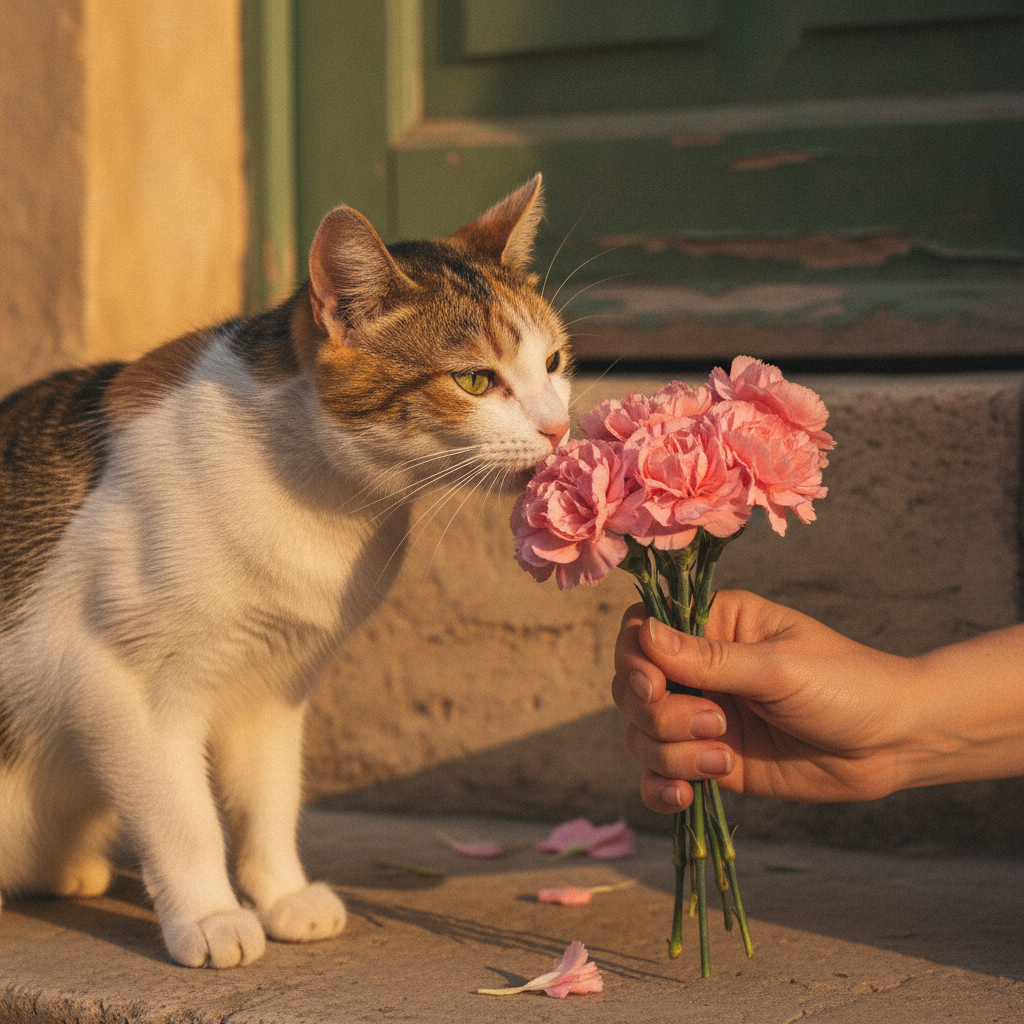
A carnation is one of the safest flowers your cat can get their teeth into. That sentence runs against every “deadly plants” list on the internet, but it is the useful truth, and getting it right matters more than it sounds. When people treat the carnation itself as the threat, they pluck the carnations, relax, and leave the actual danger sitting in the vase.
So let’s reframe the whole question. The flower is mild. The bouquet is the problem. Your job is not to fear carnations; it is to read what arrived with them before your cat does.
What a carnation actually does to a cat
Carnations, Dianthus caryophyllus, contain triterpenoid saponins in their sap. That is the real toxic principle, and naming it is an upgrade on the old “unidentified irritant” line, because it tells you exactly what to expect. Saponins are mild gut and skin irritants. When a cat chews the petals or leaves, the saponins inflame the lining of the mouth and stomach, and the body clears the irritated tissue the fastest way it knows: vomiting and diarrhea.
That is the whole mechanism. There is no organ toxin, no nervous-system effect, no delayed crisis lurking days later. The ASPCA classifies carnation in its low-severity tier, alongside its close relatives “pinks” and “sweet William,” which share the same Dianthus chemistry. The clinical picture is mild gastrointestinal upset and, sometimes, a mild contact dermatitis of the mouth.
What you will typically see:
- A short bout of vomiting or loose stool
- Drooling or lip-smacking
- A reddened, puffy, or sore-looking mouth from contact with the sap
- Mild lethargy while the stomach settles
These signs usually run their course in a few hours. Most cats never need a vet for a carnation alone.
A carnation is a stomach-ache plant, not an emergency plant. If a cat is bright, eating, and just had one queasy episode after sampling a carnation, I am far more interested in what else was in that vase than in the carnation itself.
The real danger is the bouquet, not the bloom
Here is the part the scary lists skip. Carnations almost never arrive alone. They are a florist’s filler flower, which means they show up bundled with whatever else makes the arrangement look full, and some of those companions are genuinely dangerous to cats. The carnation is the harmless thing that lulls you into trusting the whole bunch.
Run through what commonly shares a vase with carnations:
- Lilies (Lilium and Hemerocallis species) are the headline threat. Every part, including the pollen and even the water the stems sat in, can cause acute kidney failure in cats. A cat that brushes pollen onto their coat and grooms it off has been exposed. This is the single most important plant to pull from any bouquet.
- Alstroemeria (Peruvian lily) is a cheap, ubiquitous bouquet filler that looks like a small lily. It is not a true lily and is far less dangerous, but it still causes gastrointestinal upset and skin irritation, and its lily-like look fools people into either panicking or ignoring it.
- Baby’s breath (Gypsophila) is the classic white filler. It is low-toxicity but a known GI irritant, and cats love to bat at it.
- Eucalyptus and other aromatic greenery tucked in for scent can cause drooling, vomiting, and lethargy, and the essential oils are a separate concern for cats specifically.
So when a bouquet lands on your counter, the carnations are not your assignment. The lilies are. Reframing the task this way is the entire point: you stop wasting worry on the safe flower and spend it on the one that can hospitalize your cat.
Triage a bouquet before your cat does
Treat every new arrangement like an intake exam. This takes ninety seconds and is the most protective thing you can do.
- Pull the lilies first, on sight. Any true lily or daylily comes out immediately and goes in a sealed bag in an outside bin. Do not just set it aside; cats investigate trash too.
- Identify the unknowns. If you cannot name a stem, photograph it and check the ASPCA toxic-plant database or call a poison line before you decide it is fine. “Looks like a carnation” is not an ID.
- Strip the loose debris. Fallen petals, dropped pollen, and shed leaves are exactly what a cat finds on the floor later. Wipe the surface.
- Watch the vase water. Lily-contaminated water is toxic. Empty and refill if you removed any lilies, and keep the vase somewhere a cat cannot drink from it.
- Then, and only then, decide about the carnations. With the real hazards gone, a few carnations on a high, stable surface are a minor risk. If your cat is a determined chewer, skip them anyway, but you are now managing a stomach ache, not a kidney injury.
What to do if your cat eats a carnation
Stay calm, because the odds are strongly in your favor.
First, remove the plant and pick up any fragments so your cat cannot go back for more. Then estimate the amount: a single chewed petal and “she shredded the whole stem” are different conversations. Note the time and watch for vomiting, diarrhea, drooling, or a sore mouth.
Most cats settle within a few hours with no treatment. Call your veterinarian or the ASPCA Animal Poison Control Center at (888) 426-4435 (a consultation fee may apply) if the vomiting is repeated, your cat stops eating, seems painful, or turns lethargic. Those signs matter less because of the carnation and more because they suggest your cat may have eaten something else from the arrangement that you have not accounted for. When treatment is needed, it is supportive: anti-nausea medication and fluids to cover what is lost to vomiting and diarrhea.
Do not induce vomiting on your own. If a real toxin is involved, you want a professional deciding that.
Safer color that earns its place in a cat home
If you want blooms without the bouquet-triage routine, build from flowers that are genuinely cat-safe rather than merely mild:
- Roses (Rosa genus) are non-toxic and the natural stand-in for carnations. Mind the thorns, and do not confuse them with so-called “false roses” like the Christmas rose (Helleborus niger), which is toxic.
- Orchids (Orchidaceae) carry no feline toxins and last for weeks.
- Gerbera daisies (Gerbera species) bring bold color and sit on the ASPCA non-toxic list.
- Sunflowers (Helianthus) are non-toxic and dramatic enough to anchor an arrangement on their own.
The bottom line
Carnations are mildly irritating to cats and almost never the thing that hurts them. The danger in a flower delivery is what rides in alongside the carnations, above all the lilies. Stop fearing the safe flower, learn to triage the vase, and you have protected your cat from the risk that actually matters.
References
- “Carnation.” ASPCA Toxic and Non-Toxic Plants. https://www.aspca.org/pet-care/animal-poison-control/toxic-and-non-toxic-plants/carnation
- “Lilies.” ASPCA Animal Poison Control. https://www.aspca.org/pet-care/animal-poison-control/cats-plant-list
- “Animal Poison Control.” ASPCA. (888) 426-4435. https://www.aspca.org/pet-care/animal-poison-control
Common questions
What is actually dangerous about a carnation bouquet?
Almost always, it is the company the carnation keeps. Florist bouquets routinely tuck lilies, alstroemeria, baby's breath, or eucalyptus in among the carnations, and several of those are far more toxic to cats than the carnation itself. A single lily leaf can cause kidney failure. The carnation is the safe-looking decoy.
What happens if my cat eats a carnation?
Most cats get a short bout of drooling, vomiting, or loose stool and recover on their own within a few hours. Watch the amount eaten and your cat's behavior. Persistent vomiting, no appetite, or lethargy means call your vet, because at that point the carnation may not be the real culprit.
Can a reddened or swollen mouth come from a carnation?
Yes. The saponins in the sap can cause contact irritation, so you may see a reddened, puffy, or sore-looking mouth and lips after your cat chews the flower or leaves. It is uncomfortable but usually short-lived. If the swelling is significant or your cat is pawing at their face, have a vet look.
Not a substitute for your vet. Our guidance is educational. For urgent symptoms, contact a vet or emergency clinic right away. Editorial standards
Dr. Chen is a small-animal veterinarian who leads health and safety coverage at The Pet Times. She writes and reviews the bulk of our illness, condition, and safety content, translating clinical guidance into clear, practical advice owners can act on at home.
Meet our experts ↗Keep reading
 Health & WellnessYou're Decorating Your Cat's World With Smells It Can't StandDr. Lena Park · 6 min
 Health & WellnessYour Indoor Cat Can Still Get Fleas. Here's How They Sneak InDr. Mara Chen · 7 min
 Health & WellnessOnly 5% of a Flea Problem Lives on Your Cat. Here's the Other 95%.Dr. Ravi Mehta · 9 min
 TrainingYour Cat Isn't After Your Earwax. But the Q-Tip in the Trash Is a Real Problem.Dr. Priya Nair · 7 min
 FoodRaw Chicken for Cats Got Measurably More DangerousDr. Mara Chen · 6 min
 Health & WellnessYour Cat Isn't Being Weird. Plastic Bags Smell Like Food.Dr. Mara Chen · 7 min