


AI Pet Tech Splits Into Two Camps: One Worth Your Money, One Worth Your Skepticism
The flood of AI gadgets for pets isn't one trend, it's two. Some quietly improve veterinary medicine. Others are charming demos selling certainty they can't deliver. Here is how to tell them apart before you spend.

Affiliate disclosure. This article contains affiliate links. We may earn a small commission if you buy through a link, at no extra cost to you. How we handle recommendations.

If you shop for pet gadgets right now, you will be told that artificial intelligence has changed everything: cameras that read your dog’s mood, apps that translate barks, collars that scan poop. Some of that is real and genuinely useful. Some of it is a polished demo wrapped around a promise the technology cannot keep yet. The trouble is that both kinds sit on the same store shelf, use the same confident marketing language, and cost real money.
So here is a more useful way to think about the whole category than “look at all the cool stuff.” AI pet tech splits cleanly into two camps. The first is clinical and quietly boring: tools built on large datasets, validated against veterinary outcomes, often used by vets themselves. The first camp is where your dollars and your trust belong. The second is consumer-facing and exciting: it sells the fantasy of finally knowing exactly what your pet is thinking. That camp is fun, and you should treat its claims like a magician’s patter. This guide sorts the major products into those two camps so you can buy on evidence instead of vibes.
Camp one: the tools that are actually changing care
The least flashy AI in this space is the most trustworthy, because it has been pointed at a measurable problem and checked against the answer.
Biometric ID is the rare gadget that already works. A dog’s nose print is, like a human fingerprint, distinctive enough to identify the individual, and apps such as Petnow turn a phone photo into a permanent ID. The credibility here is in the numbers: Petnow trained its system on roughly 200,000 images of dog and cat snouts and faces, and it markets itself as the first ID app covering both species. Unlike a microchip, there is nothing to implant, nothing to register at the vet, and nothing to get damaged. It does not replace a chip for legal recovery yet, but as a free backup that lives in your pocket, it is a clear win.
AI is getting good at spotting pain we miss. Cats are evolutionarily wired to hide discomfort, which makes early illness hard to catch. Machine vision is closing that gap. Research published in Scientific Reports, drawn from cats at a veterinary hospital, found that the muscles around a cat’s mouth, more than the ears or eyes, are the strongest visual tell of pain, and tools like the Tably app score a cat’s face on cues including ear position, muzzle tension, and whisker set to estimate discomfort. This is the kind of AI worth getting excited about, because it gives a vet a structured signal instead of a hunch.
“The value of these tools is not that they replace an exam, it is that they catch the slow decline an owner sees every day and stops noticing,” says Dr. Lena Park, a veterinarian. “A cat that is a little more withdrawn each week is exactly the patient we lose to delay, and an objective score can be the nudge that gets them in early.”
Diagnostic and predictive medicine is going AI-first behind the scenes. Large veterinary diagnostic labs now run AI over bloodwork and imaging to flag cancers earlier and to predict chronic feline kidney disease before symptoms appear. You will probably never interact with this software directly; your vet does. But it is the most consequential AI in the entire category, and it is the reason “AI in pet care” deserves to be taken seriously even as the consumer gadgets overpromise.
Camp two: the products selling certainty they can’t deliver
Now the fun, oversold half. None of these are scams exactly. They are early technology marketed as if it were finished.
Bark translators are the headline example. Apps like Zoolingua and BarkGPT promise to convert your dog’s vocalizations into sentences. The science underneath is legitimately interesting, the field grew out of real research into prairie dog communication, which is genuinely structured. But “my dog’s bark contains information” and “this app can tell you your dog just said ‘I need to pee’” are very different claims, and only the first is established. Treat a bark translator as a toy that sometimes feels uncanny, not as a window into your dog’s inner monologue.
“Dogs communicate enormously through context, posture, and history with you, and you already read most of it better than any app,” says Dr. Lena Park. “I worry less that these tools are wrong and more that they teach owners to trust a screen over the animal in front of them.”
The “276 cat expressions” stat is real, the products built on it are not finished. A study of cats at a Los Angeles cat cafe catalogued 276 distinct feline facial expressions, far more than most owners assume, against 44 for humans. It is a wonderful finding. It also does not mean any app can yet reliably tell you what a given expression means in real time. Enjoy the science; hold the consumer claims loosely.
Camera “nannies” are useful as cameras, oversold as analysts. A good pet camera that lets you watch, talk to, and toss a treat to your pet is a real comfort, and the Furbo 360° Camera and Petcube both do that well. Their AI layer, which claims to flag “concerning behavior” like pacing or vomiting, is a helpful extra, not a diagnostic. Buy them for the eyes-on reassurance, and treat any AI alert as a prompt to look, not a verdict.
Other gadgets in this camp are genuinely handy on their own terms: facial-recognition pet doors like Petvation that admit your pet and lock out raccoons, smart litter boxes that log frequency and timing (a real early-warning signal for urinary trouble), and laser toys that engage a bored cat while you are out. The rule holds across all of them: useful as tools, unreliable as mind-readers.
The buyer’s filter: one question before you tap “purchase”
Here is the single test that sorts camp one from camp two. Ask: is this product measuring something physical, or interpreting something mental?
Measuring physical things, a nose print, a face’s muscle tension, litter-box frequency, heart rate, is what AI is genuinely good at, and those products tend to deliver. Interpreting mental states, translating a bark into a sentence, telling you your cat is “feeling sad,” is where the technology is still mostly aspiration, and where the marketing runs furthest ahead of the evidence.
The catch nobody puts on the box: over-diagnosis
There is a real downside even to the good tools, and it is the opposite of what you would expect. The more your pet is monitored, the more “abnormalities” you will see, and not all of them matter.
“These devices can absolutely catch problems earlier, and that saves lives,” Dr. Park says. “But they can also turn a healthy, slightly-off day into a 2 a.m. spiral and an unnecessary visit. The skill is learning which alerts are signal and which are noise, and that still takes a human who knows the animal.”
The honest summary is that AI gives pet owners a kind of power we have never had, and like any new power it rewards judgment over reflex. Spend on the tools that measure, stay skeptical of the ones that claim to interpret, and remember that the best sensor for your pet is still the person who lives with them.
References
- Petnow. “World’s First ID App for Dogs and Cats.” PR Newswire. https://www.prnewswire.com/news-releases/petnow-unveils-the-worlds-first-id-app-for-dogs-and-cats-301715997.html
- Finka, L. R., et al. “Geometric morphometric analysis of cat facial pain expression.” Scientific Reports. https://www.nature.com/articles/s41598-023-35846-6
- Scott, L. & Florkiewicz, B. N. “Feline Facial Expressions During Intraspecific Interactions.” Behavioural Processes (cat cafe study). https://phys.org/news/2023-10-housecats-hundreds-facial-interact-cats.html
- HealthforAnimals. “Global Trends in Pet Health.” https://healthforanimals.org/reports/pet-care-report/global-trends-in-pet-health/
Jordan Ellis is a certified professional dog trainer with a decade of experience working with rescue organisations and private clients. They specialise in anxiety, reactivity, and positive reinforcement methods, and review all training and behaviour content at The Pet Times.
Meet our experts ↗Keep reading
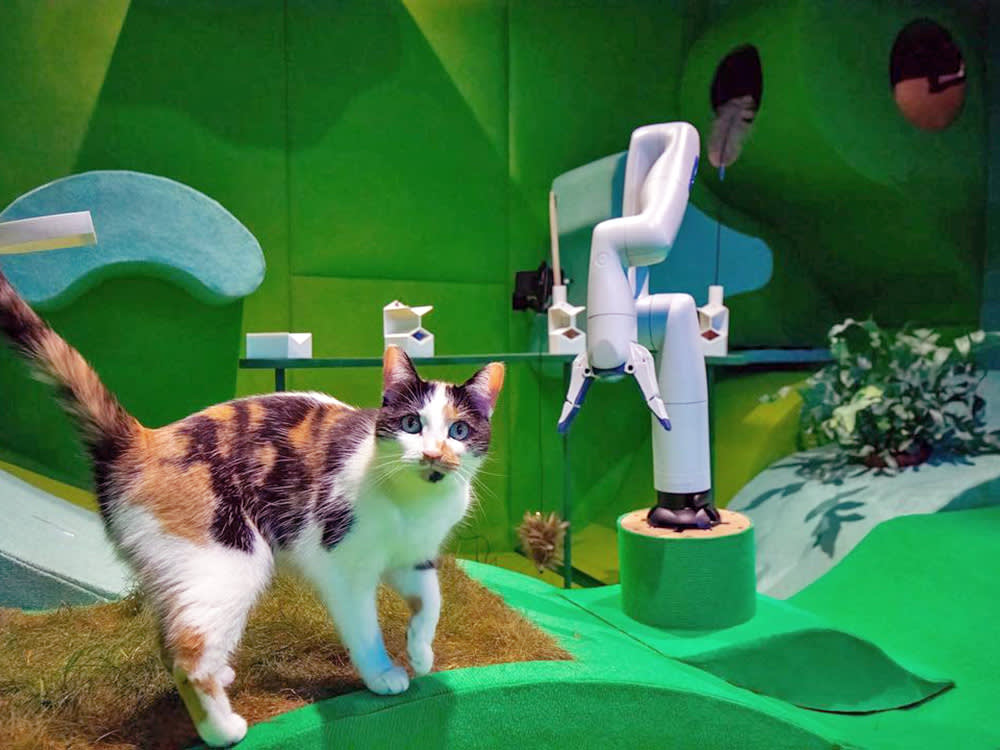 LivingThe 'AI Cat Utopia' That Actually Ran on PeopleJordan Ellis · 6 min
 Product PicksSkip the 'Pet Cam.' The Best One Is a Security Camera.Marcus Webb · 5 min
 Product PicksTikTok Sold You the Demo, Not the Dog. 7 Gadgets That Survive Real Life.Sasha Ford · 8 min
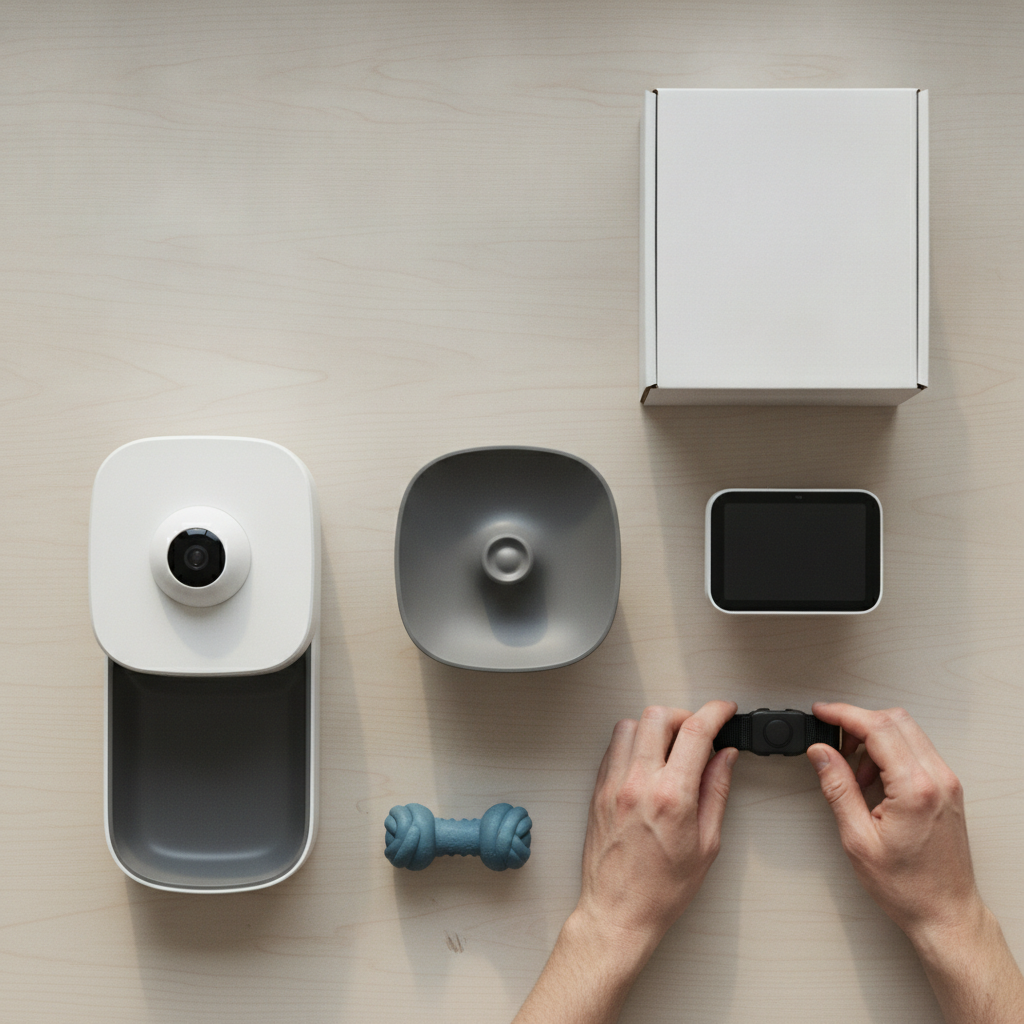 Product PicksThe Pet Tech Worth Buying, Judged on Subscriptions, Durability, and Whether It WorksMarcus Webb · 9 min
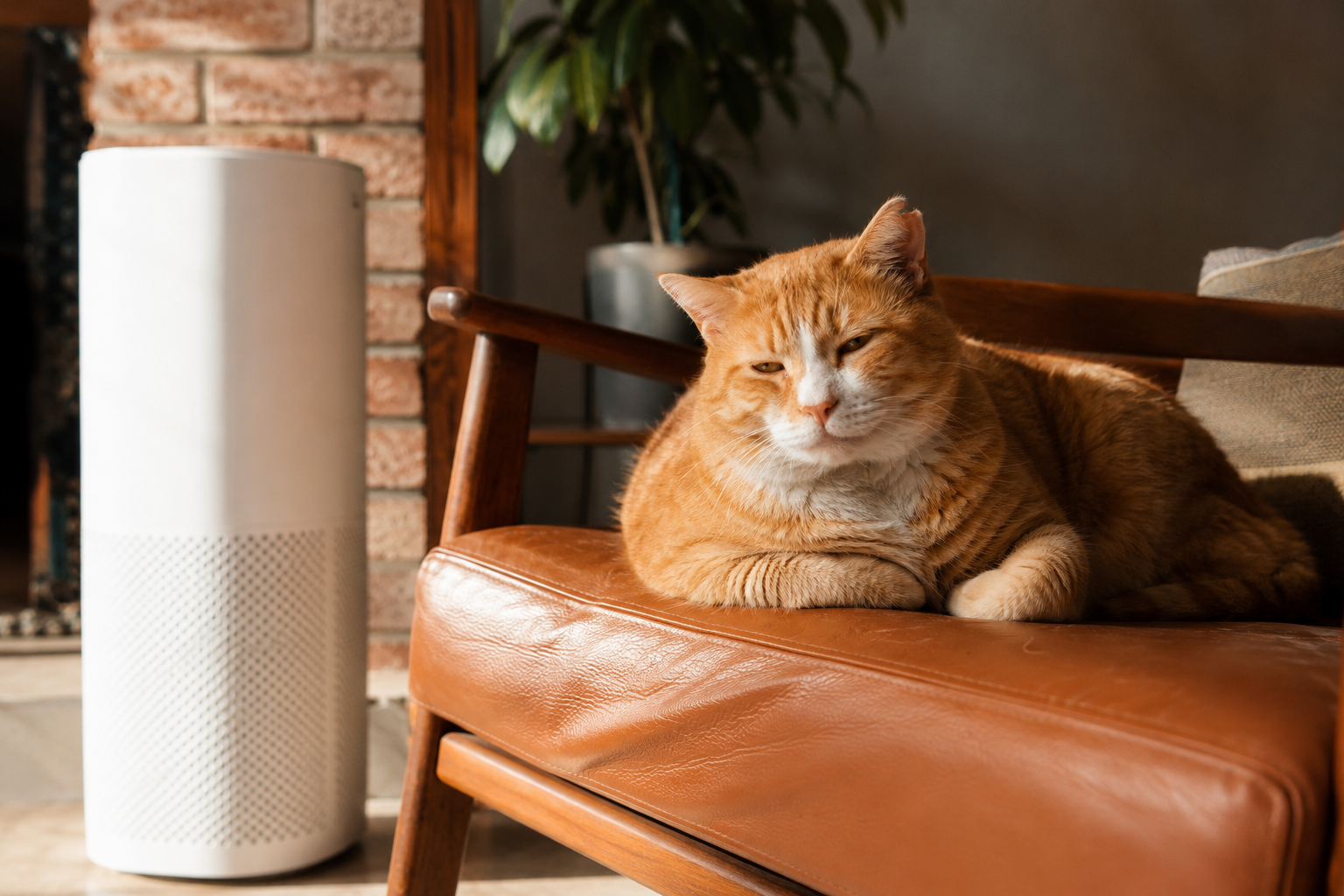 Product PicksHow to Actually Buy an Air Purifier for a Pet Home (Plus 7 We'd Pick)James Okafor · 8 min
 Product PicksAirTags Still Aren't Pet Trackers. But the 2026 Model Closed Two Big GapsMarcus Webb · 6 min