


You Were Told to Bank Your Puppy's Stem Cells. The Company That Sold That Doesn't Anymore
Stem cell therapy for pets is closer to your vet's freezer than it has ever been, and it arrived by abandoning the thing owners were being sold: your dog's own banked cells. Here's what actually changed, and what it means if you paid.

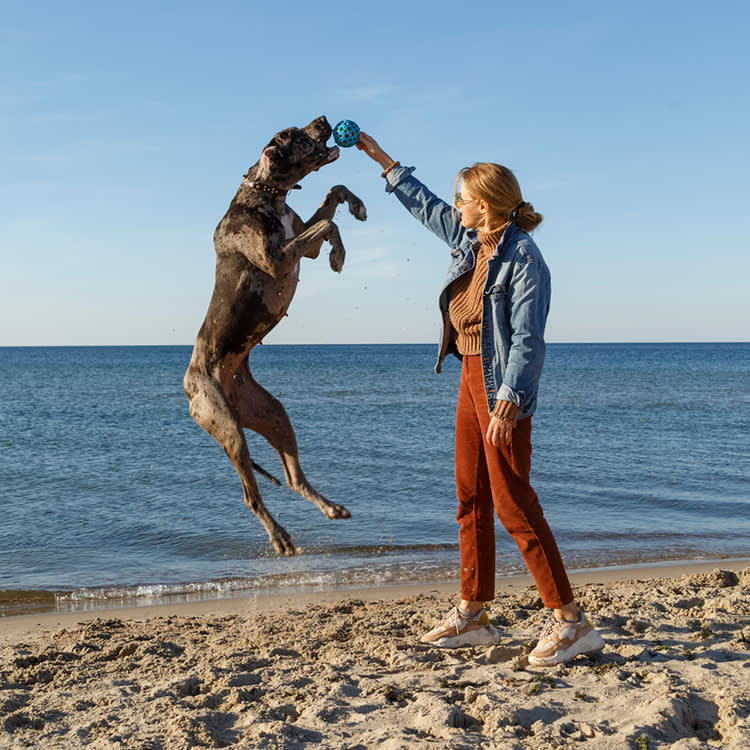
A few years ago the pitch went like this. Your puppy is about to be spayed or neutered. The tissue that comes out of that surgery is packed with stem cells, and the vet is going to throw it in the trash. For a subscription fee, a company called Gallant would collect it instead, freeze it in a San Diego lab, and hold it for the day your dog is old and arthritic and needs it back.
It was a good pitch. It had a deadline built into it, which is the mark of a good pitch: your dog only gets spayed once, so decide now or lose the window forever.
The window closed. And it turned out not to matter, because the science went somewhere else entirely.
What the pitch cost, for the record
The original offer, as sold: $45 a month, dropping to $10 a month after the first year, or a one-time lifetime payment of $990, which the company said was the most popular option. The collection itself was usually folded into the price of the spay or neuter, at the vet’s discretion. If your pet was already fixed, they could bank fat tissue collected during a dental or another routine procedure instead.
The company’s CEO, Dr. Linda Black, came to it with real credentials, a veterinary degree plus a PhD in cell and molecular biology, and a stint at VetStem Biopharma, the company that pioneered the space. Her origin story was an early arthritis trial: inject stem cells into stiff canine joints, come back thirty days later, find most of the dogs moving easily and back to patrolling the yard for squirrels.
None of that was hype. The problem was never whether stem cells work. It was the delivery model.
The thing nobody says out loud about banking
Personal banking, the “store your own dog’s cells” model, has an obvious appeal and a quiet flaw.
The appeal is intuitive: they are your dog’s cells, so no rejection risk, nothing foreign. The flaw is everything else. You are paying, for years, for a service whose value depends on a therapy that does not exist yet, for a disease your dog may never get. You are buying an option on a future product. And you are freezing one specific animal’s cells, which means every treatment has to be built one dog at a time, from that dog’s own tissue, on that dog’s schedule.
That is a terrible way to build a medicine. It cannot be standardized, it cannot be batch-tested, it cannot be dose-controlled, and it cannot sit in a freezer at your vet’s clinic waiting for a patient to walk in.
So Gallant stopped
Today, Gallant does not sell stem cell banking. Look at what the company is now and it is a therapeutics company with a pipeline, a clinical trial network, and a continuing-education platform for veterinarians. The subscription is gone.
What replaced it is the opposite approach: allogeneic therapy. Off-the-shelf. Donor cells, grown and standardized in advance, in a vial, ready to use on any patient who needs one. Your dog contributes nothing and waits for nothing.
The company’s own framing now is a vial of stem cell therapy sitting in every clinic’s freezer, ready when a pet needs it. That is a completely different product from the one owners were subscribing to, and it is a much better one.
Owners hear ‘stem cells’ and picture something bespoke and futuristic, grown from their own animal. The version that is actually going to reach your vet is the boring one, a standard dose from a vial, the same for every patient. Boring is what regulatory approval looks like. Boring is what you want.
Where it stands now, concretely
This is not speculative anymore, and the specifics matter.
Gallant’s lead product targets refractory feline chronic gingivostomatitis (FCGS), a brutal, painful inflammatory disease of the mouth that can leave a cat unable to eat or groom, and that often resists everything else, including having most of the teeth removed.
- The FDA has completed the technical sections for both safety and effectiveness for that therapy.
- That puts it on track for potential conditional approval in early-to-mid 2026, which would make it the first FDA-approved, ready-to-use (allogeneic) stem cell therapy in veterinary medicine.
- In the pivotal field study, more than 75 percent of treated cats improved on quality of life, and close to half showed meaningful healing in the mouth.
- The company closed an $18 million Series B in 2025, led by Digitalis Ventures.
Dogs are behind cats here, which is a reversal of the usual order in veterinary medicine. Gallant’s canine and feline osteoarthritis programs have been granted expanded conditional-approval-pathway eligibility, with the company targeting conditional approval around 2028. A randomized, placebo-controlled pilot of intravenous umbilical-derived stem cells in dogs with naturally occurring OA reported statistically significant improvement on owner-reported outcome measures at days 60 and 90.
Note the delivery route in that last one: intravenous. Not an injection into the joint. That is a meaningful shift, and if it holds up it changes what treatment day looks like for an arthritic dog.
What this means if you already paid
If you banked your pet’s tissue under the old model, you are not a mark and you did not get robbed. You bought a real service that stored real cells. But it is worth being clear-eyed about what you own: a frozen sample whose value depends on an autologous (own-cells) treatment pathway that the field is actively moving away from, because the off-the-shelf version is the one that can clear the FDA.
If you are being pitched banking today, by anyone, the questions to ask are blunt ones. What specific, approved therapy will these cells be used in? If the answer is a future one, you are buying an option, and you should price it that way.
And what it means for the rest of us
The honest version of the stem cell story in 2026 is less thrilling than the 2023 version, and much more useful.
The 2023 version said: act now, bank your puppy, unlock a limitless future. Dr. Black herself described the potential as “somewhat unlimited,” a whole spreadsheet of conditions waiting to be worked through.
The 2026 version says: one disease, in cats, is close to a real approval, on the strength of a real field study, using a product any vet can stock. Osteoarthritis is a couple of years behind it. Everything past that is still a spreadsheet.
That is how medicine is supposed to arrive. One indication at a time, with data attached.
The part that has not changed
Two things from the original story are still true and still worth knowing.
The ethics are not the human-embryo debate. These are adult stem cells from tissue, not embryonic ones. There is no destruction of embryos anywhere in this, and no ethical controversy attached to the source.
Stem cells are not a magic solvent. They work by modulating inflammation and signaling repair in tissue that is inflamed or degenerating. That is why the near-term targets are inflammatory and degenerative conditions like gingivostomatitis and osteoarthritis, rather than anything and everything.
The word ‘regenerative’ does a lot of unearned work in marketing. Ask what condition, ask what trial, ask what the FDA has actually signed off on. For one feline mouth disease we are nearly there, and that is genuinely exciting. For your dog’s bad hip, ask again in a couple of years.
This article is general information, not veterinary advice. Stem cell therapies for pets are still moving through FDA review, and availability, evidence, and appropriateness vary by condition. Talk to your vet before pursuing any regenerative treatment.
References
- “FDA Completes Safety for Gallant’s First Ready-to-Use Stem Cell Therapy for Refractory FCGS.” PR Newswire.
- “Gallant Advances Canine Osteoarthritis IV-Delivered Stem Cell Therapy with Promising Pilot Data and Expanded FDA Conditional Approval Pathway Eligibility.” PR Newswire.
- “Gallant Closes $18 Million Series B to Bring Ready-to-Use Stem Cell Therapies for Pets to Market.” PR Newswire.
- “First ready-to-use stem cell therapy achieves FDA ‘technical section complete’.” dvm360.
- FDA Center for Veterinary Medicine, Conditional Approval of New Animal Drugs.
Not a substitute for your vet. Our guidance is educational. For urgent symptoms, contact a vet or emergency clinic right away. Editorial standards
Dr. Mehta is a board-certified veterinary nutritionist who evaluates pet food formulations, ingredient quality, and the science behind dietary trends. He writes and reviews all nutrition content at The Pet Times, including our food rankings and feeding guides.
Meet our experts ↗Keep reading
 Health & WellnessAlternative Pet Therapy Is Really Two Things. Knowing Which Saves You MoneyDr. Priya Nair · 7 min
 Health & WellnessYour Dog's Anxiety Might Start in the Gut, Not the BrainDr. Mara Chen · 5 min
 Health & WellnessYour Stiffening Dog Doesn't Need a Spa Day. Five Minutes of This Does MoreDr. Amara Solis · 10 min
 Health & WellnessThe Middle Path Between 'Wait and See' and Surgery for Your DogDr. Ravi Mehta · 7 min
 Health & WellnessHomemade Dog Ear Cleaner: The Ingredients to Skip Matter More Than the RecipeDr. Amara Solis · 9 min
 Health & Wellness"Twitchy Cat Syndrome" Looks Terrifying. The Research Says Most Cats Recover.Dr. Lena Park · 7 min