


Your Grief Needs a Job. 11 Ways to Give It One.
A memorial isn't about preserving your pet. It's about giving grief somewhere to go. Pick the ritual that matches what your grief is actually doing, not the one that looks meaningful online.

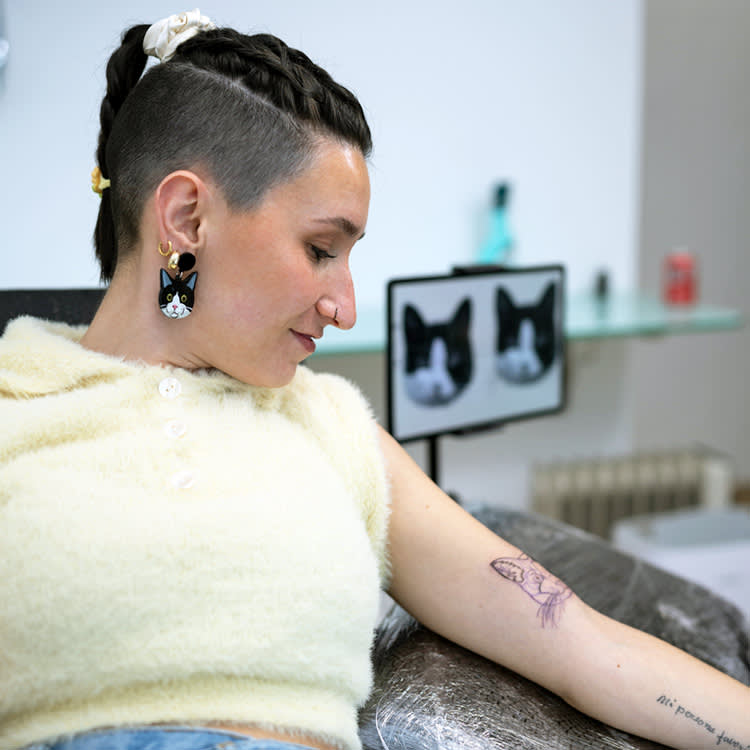
Spend ten minutes on TikTok after losing a pet and you will be handed a hundred ideas. Ash tattoos. Paw print casts. Memorial gardens. Portrait commissions. Shrines with candles.
They are all real, and most of them are lovely. But scrolling through them tends to produce a very specific feeling, which is a sort of low-grade panic that you are about to choose the wrong one, and that choosing the wrong one means you loved them less.
So let’s take the pressure off, because there is a way to think about this that makes the choice obvious.
A memorial is not for preserving your pet. Your pet is preserved. That work is done, and you did it, over years, and it is not at risk. A memorial is for your grief, which is a live thing currently rattling around your house with nowhere to go and nothing to do.
Grief that has no job tends to find one anyway, and the jobs it picks itself are usually bad: rearranging the timeline of the last week over and over, relitigating a decision you already made, going into a room to look for something that isn’t there.
So the useful question is not “what is the most meaningful memorial.” It is: what is my grief actually doing right now, and what would give it something better to do?
Answer that and the right ritual picks itself.
First: there is no clock on this
Before any of it, the thing that needs saying.
The relationship you had with your animal was frequently more intimate than most of your human relationships, in a very literal sense. They were physically on you. They were there for the ordinary hours nobody else saw. Grieving that intensely is not an overreaction, it is a proportionate response to what was actually lost.
Take however long you need. There is no timetable for losing a constant companion, and anyone implying there is has not lost one.
It is also worth knowing in advance that what you need will change, and that this is not a betrayal. The shrine you build in week two may feel unbearable in month six, or it may quietly become a place you walk past without noticing. Neither of those changes the memory or the relationship. It just means you are somewhere else in your own healing, and the ritual should be allowed to move with you.
The memorial is not a verdict on how much you loved them. It is a container. If the container stops fitting, you are allowed to get a different one, and it does not undo anything.
For grief that needs something to hold
This is the most common shape it takes, and the most physical. When the animal is gone, the thing that goes with them is touch. The weight on the bed. The head under your hand. Grief that keeps reaching for something is grief that needs an object.
1. Wearable ashes
Rings, pendants, and bracelets that hold a small amount of your pet’s ashes. The whole point is tactile. When the physical relationship is gone, having something you can actually touch or hold when you need to is genuinely regulating, and it is a large part of why this option is so enduringly popular.
2. A repurposed dog tag
The most underrated idea on this list, and the cheapest. Turn their tag into a keychain, a rearview mirror charm, or something small you will see every day. It carries their name in their own metal, and it is in your hand every time you leave the house.
3. A memory box
Collar, favorite toy, photos, a paw print. A box means you can go to the memory deliberately, when you want it, rather than being ambushed by it at the back of a closet. That distinction, between grief you choose and grief that jumps you, matters more than it sounds.
4. A paw or nose print
A clay impression, taken at the vet or at home. If you are reading this before the end, ask about it beforehand. It is one of the very few things you cannot go back and get.
For grief that needs somewhere to be
Some grief is not reaching. It is displaced. There is a shape of absence in the house and it will not resolve. That grief needs a place.
5. A memorial garden
Plant something in their name: flowers, a shrub, a tree. It is one of the most common things people do, and being common does not make it less meaningful.
The reason it works so well is that it converts grief into tending. Grief that wants to do something now has a thing to do, weekly, forever, and the thing it does is make something grow. Some people mix a small amount of their pet’s ashes into the soil, so the garden is literally continuous with the animal.
6. A shrine, or just a corner
When they are gone, there is an energy missing from the house, and you feel it in every room. So give the absence a location. A shelf, a corner, a small table. Toys, the collar, a photograph. Light a candle on anniversaries if that is your kind of ritual.
The value is containment. If the absence lives somewhere, it does not have to live everywhere.
7. Do the thing you used to do together, in their place
If you and your dog ran a particular trail, put a painted stone at the trailhead. If your cat watched the sunset from one specific window, put a flower box under it. If you walked the same loop every morning, walk it.
This is my favorite category, because it is the one that ties the memory to the actual world you still have to live in. It takes a route you have been avoiding because it hurts and turns it back into a route you can use.
For grief that needs to be witnessed
Some of the worst of pet loss is how alone it is. People take a day off when a grandparent dies. Nobody takes a day off when a dog does, and yet you may be more wrecked. That grief does not need an object or a place. It needs other people to know.
8. Commission artwork
An oil painting, watercolor, digital piece, sketch, wood carving, or clay sculpture. What makes this a witnessing ritual rather than an object is that you are asking another human being to look carefully at your animal and take them seriously. Somebody who never met your dog will spend hours on their face.
Some people choose a tattoo instead, and there is a version where the ink is mixed with the pet’s ashes, so the animal is permanently, literally with them.
9. A digital memorial
Photos, stories, memories, shared. A slideshow, a tribute page, a post. Digital tributes let friends and family celebrate the animal alongside you, and for a lot of people that is the only place the loss gets acknowledged out loud at all.
10. Give in their name
This is the addition I would push hardest. Sponsor a shelter kennel, fund a rescue’s medical care, or pay an adoption fee for an animal nobody is choosing, in your pet’s name.
It is a different kind of ritual, because it is the only one that produces another animal on a sofa somewhere. It takes grief, which is inert and inward, and converts it directly into an outcome. Senior dogs and animals with medical needs are the ones sitting longest. Your dog’s name on that is not nothing.
11. Write the account
Not a poem. The actual account. What happened, what you decided, what you were thinking, what the room was like, what you wish you had said. Write it down once, properly, and then put it away.
People carry the last days as an unsorted loop precisely because they have never told it end to end. Getting it out of the loop and onto a page is one of the most reliably useful things you can do, and it costs nothing.
One idea I would skip
The AI recreation.
You can now generate a video or an image of your dead pet moving, and it will be uncanny and briefly overwhelming and it is being marketed hard to exactly the person reading this article.
Be careful. Every ritual on the list above works by giving grief a true thing to do: tend a garden, hold an object, tell the story, help another animal. A synthetic animation of your pet does the opposite. It gives grief a false object, and the mind is very willing to attach to it. What it produces is not comfort so much as a loop you can now run indefinitely, which is precisely the thing grief was already trying to do on its own.
Photographs are memory. A generated video is not a memory of anything. It never happened, and you know it never happened, and some part of you keeps watching anyway.
If it helps you, it helps you, and I am not going to argue with anyone about their own grief. But of everything currently being recommended to bereaved pet owners, it is the one I would think hardest about before starting.
And on getting another one
At some point somebody will suggest a new pet, and it will land as either a gift or an insult depending entirely on the day.
The question worth sitting with is not when is it appropriate. It is: am I considering this because I want another animal, or because I am trying to get out of grieving this one?
Both can be true at once, and there is no shame in it. But a new animal is not an exit from grief, and if that is the job you have given them, they will not be able to do it, and it will not be their fault.
Also consider the animals still in your house, who have lost someone too, and who may or may not want a new housemate. They get a vote.
The part nobody says
There is nothing that takes away the pain of the loss. Nothing anyone says. Nothing you do. No ritual on this list, and no ritual on any list.
That sounds bleak and it is actually the most useful sentence in this article, because it means you can stop searching for the thing that fixes it. It does not exist, and the searching itself is exhausting.
Accept that the pain is there. Then ask a much smaller and much more answerable question: what do I need to support myself while I carry it?
That is what a memorial is for. Not to make it stop. To give it somewhere to go while it runs its course.
References
- Packman, W., et al. “Continuing bonds and psychosocial adjustment in pet loss.” Journal of Loss and Trauma, vol. 17, no. 4, 2012, pp. 341–357. https://doi.org/10.1080/15325024.2011.635585
- Park, R. M., et al. “Human-Animal Bond and Pet Loss Grief: A Systematic Review.” Anthrozoös, 2021.
- Cornell University College of Veterinary Medicine. “Pet Loss Support Hotline.” https://www.vet.cornell.edu/hospitals/companion-animal-hospital/pet-loss-support-hotline
- Tufts Cummings School of Veterinary Medicine. “Pet Loss Support Hotline.” https://vet.tufts.edu/pet-loss-support
- Association for Pet Loss and Bereavement. https://aplb.org/
Dr. Kohl is a board-certified veterinary dentist with a particular interest in preventive oral care. She reviews all dental health content at The Pet Times and contributes practical guides on home dental routines, professional cleaning, and oral disease prevention.
Meet our experts ↗Keep reading
 LivingThe Dating App Just for Dog People Had a Great Idea. It Still Didn't Make It.Marcus Webb · 5 min
 LivingYour Cat Ruins Your Meditation by Sitting on Your Chest. That's the Practice.Jordan Ellis · 5 min
 LivingThe Shelter Crisis Is Really a Cost-of-Living CrisisJames Okafor · 5 min
 LivingShoot Your Pet Like a Cover Star: 7 Phone-Portrait Rules From a ProSasha Ford · 4 min
 LivingStop Blaming Dogs for the Birth Rate. A 23-Million-Person Study Says the Opposite.Tom Hadley · 5 min
 LivingYour Pet Has a Carbon Pawprint. Don't Let It Wreck Your Peace.Leila Torres · 6 min