


Stop Blaming Dogs for the Birth Rate. A 23-Million-Person Study Says the Opposite.
The tired take is that young people are getting puppies instead of babies. A massive Taiwanese study that linked pet records to tax files found something almost backwards: for a lot of couples, the dog comes first, as a kind of rehearsal.

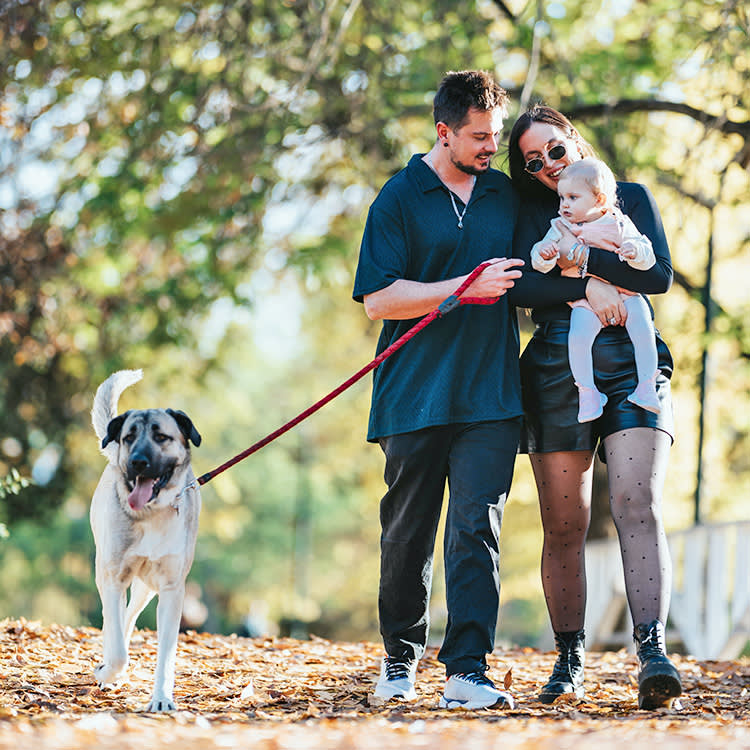
You’ve heard the complaint, probably from a politician or a relative across the holiday table: young people are raising dogs instead of children, and that’s why the birth rate is falling. It’s a tidy story. It’s also, according to one of the largest studies ever done on the question, close to the opposite of what’s actually happening.
Researchers in Taiwan set out to test the accusation head-on, and what they found suggests dogs aren’t standing in for babies at all. For a lot of people, the dog is what comes before the baby.
A study big enough to settle an argument
Taiwan is a natural place to ask the question, because it has one of the lowest birth rates on the planet, with fertility now well below the level needed to keep the population stable. Plenty of forces feed that trend, the cost of living, shifting expectations around gender and work, and yet pets keep getting scapegoated.
So a team at National Taiwan University went looking for hard evidence instead of vibes. They linked the country’s pet registration records to administrative tax files, building a panel that spanned a decade and covered 23 million people along with millions of registered cats and dogs. That’s not a survey of a few hundred households. That’s close to an entire nation’s worth of pets and people, tracked over time.
One of the researchers, Ming-Jen Lin, has captured the cultural mood with a joke about a big park in Taipei: spot a stroller rolling by, and the odds are better that there’s a dog or a cat tucked inside than an actual baby. Funny, and exactly the assumption the data was built to interrogate.
What they actually found
When the numbers came in, the “pets replace kids” story fell apart, at least for dogs. Owning a dog wasn’t a substitute for having children. Instead, the pattern ran the other way: lots of couples adopted a dog and then went on to have kids, and dog owners turned out to be considerably more likely to become parents than people with no animals at all.
There’s a nuance worth being honest about. The complement effect held for dog parents, not cat parents, cat owners were actually somewhat less likely to have children. The researchers’ explanation is intuitive: caring for a dog demands more structure, time, and hands-on responsibility than caring for a cat, which makes it a closer dress rehearsal for the chaos of a newborn. In other words, the dog functions as a kind of “practice child,” a way for people on the fence to find out whether they can handle the responsibility before committing to the far bigger one.
The study also caught the relationship running in reverse. While adopting a dog was linked to a higher chance of having a child later, having a child made people less likely to go on to adopt a dog, presumably because a new baby uses up exactly the bandwidth a new puppy would need.
What the newer analysis adds
The working paper behind the coverage, titled “Cats, Dogs, and Babies,” was posted in late 2025 by economists Kuan-Ming Chen, Ming-Jen Lin, Hau-Hung Yang, and Shirley Yu-Hsuan Yen, and it puts real figures on the pattern. By their estimates, adopting a dog raised the probability of a subsequent birth by about 33 percent, consistent with that practice-child idea, while a new baby in the home meant dog ownership climbed by roughly 21 percent afterward. Statistically, they conclude, children and dogs behave as complements, things that tend to go together, not substitutes competing for the same slot in a person’s life. (As a working paper, it hasn’t yet completed peer review, so treat the exact percentages as strong early evidence rather than a closed case.)
The takeaway
None of this means everyone should run out and get a dog to jump-start a family, and there are plenty of entirely valid reasons a person decides against having children. But the next time someone insists that puppies are why nobody’s having babies anymore, you’ve got something better than an eye-roll. A study covering millions of real households found that dogs aren’t the reason the birth rate is falling. If anything, they may be helping some people take the first step toward a bigger family.
References
- Chen, Kuan-Ming, Ming-Jen Lin, Hau-Hung Yang, and Shirley Yu-Hsuan Yen. “Cats, Dogs, and Babies: Quasi-Experimental Evidence on Substitutes or Complements from Linked Administrative Records.” SSRN working paper, 2025. papers.ssrn.com
Tom Hadley writes about training and behavior, helping owners understand what their pets are trying to tell them. His work covers everyday manners, decoding common behaviors, and the small changes at home that make dogs and cats easier to live with.
Meet our experts ↗Keep reading
 Living8 'Foster Fails' Who Were Never Really Going AnywhereNina Vasquez · 9 min
 LivingShould You Co-Parent a Pet With Your Ex?Sasha Ford · 8 min
 LivingEverybody Got a Second Dog. Her Order Book Was the First to Know.Jordan Ellis · 6 min
 FoodChefs Don't Cook Their Dogs Gourmet Meals. They Upgrade the Kibble, SafelyLeila Torres · 6 min
 LivingYour Pet Is Basically a Prescription. Here Are 7 Ways the Science Backs ItDr. Amara Solis · 8 min
 LivingThe Dating App Just for Dog People Had a Great Idea. It Still Didn't Make It.Marcus Webb · 5 min