


When a Hurricane Comes, the Deadly Mistake Is Having Nowhere to Put Your Pet
Most owners won't evacuate without their animals, and many would skip a shelter spot to stay with them. Here's the plan and the go-bag to build now, long before a storm is named.

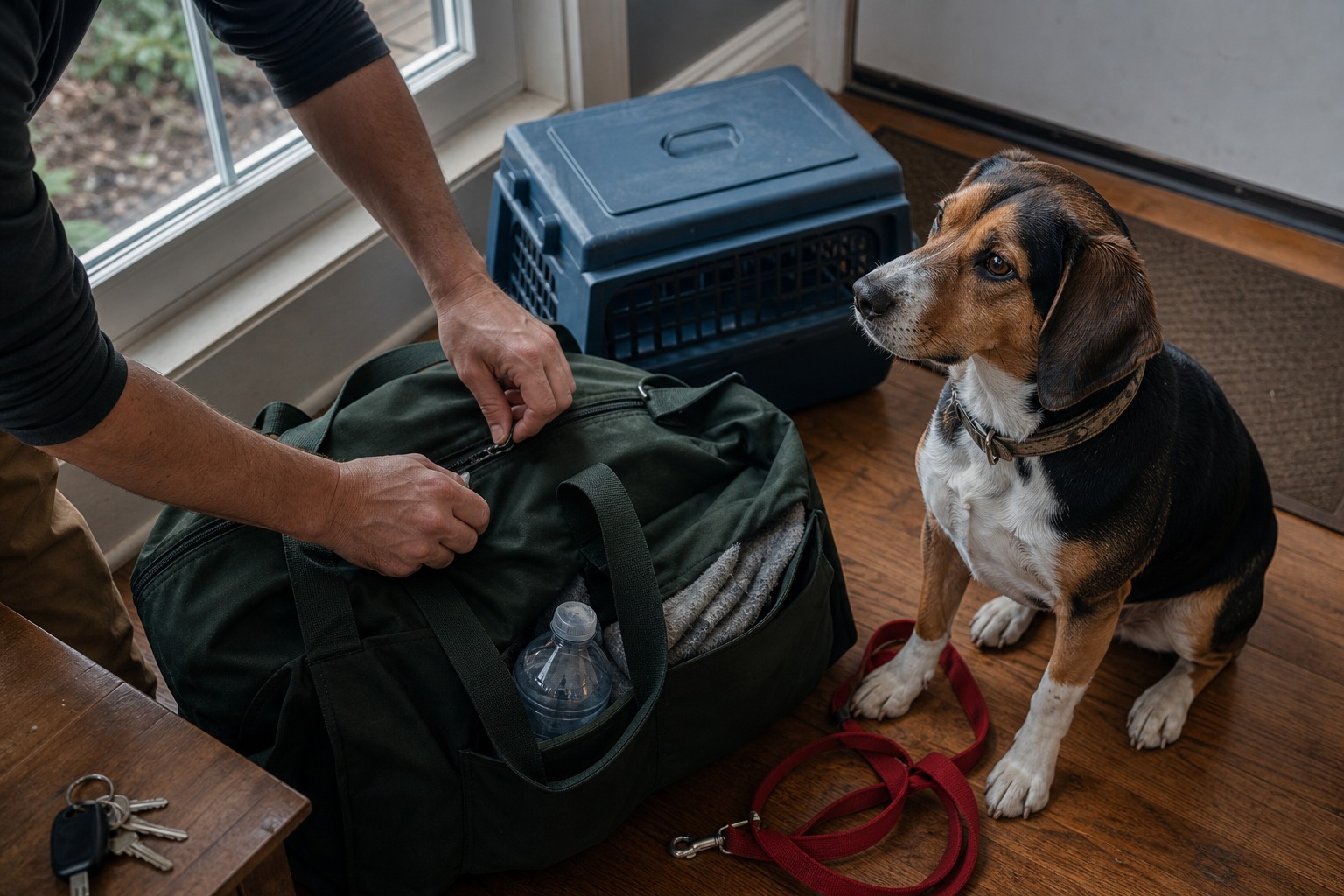
Here is the statistic that should shape every hurricane plan you make: in a survey by PetSmart Charities, roughly nine in ten pet owners said they would not leave home during a storm if they couldn’t bring their animal, and many would even give up a spot in a human shelter rather than be separated. That instinct is understandable. It is also how people end up riding out a Category 3 in a house that should have been evacuated.
So the single most useful thing you can do is remove the choice entirely, by deciding in advance exactly where your pet goes when you leave. Do that, and the storm becomes a logistics problem instead of an impossible decision. The forecasts, meanwhile, keep raising the stakes. NOAA has repeatedly warned of above-average Atlantic hurricane seasons, driven in part by unusually warm ocean waters that scientists tie to a changing climate.
The families who ride out a storm best are the ones who got bored preparing for it in the off-season. When a watch goes up, you want to be grabbing a bag you packed months ago, not standing in an empty pharmacy aisle looking for gauze.
Make the plan before the season, not before the storm
The whole idea is to do your thinking while you’re calm. Set an annual reminder to assemble your supplies before hurricane season starts, so you’re never scrambling as a system spins up offshore.
The centerpiece of that plan is a destination. Never leave a pet behind or alone through a tropical storm. If you can, arrange with a trusted friend or relative outside the likely evacuation zone to take your animal. Ask your veterinarian, groomer, or a local boarding facility whether they can house pets in an emergency. And find pet-friendly emergency shelters ahead of time rather than hoping one turns up; your local animal shelter, animal control office, or vet can usually point you to the ones near you. Keep that list, with phone numbers, somewhere you can grab it fast.
It helps to know the system is on your side here. Since the federal PETS Act passed in 2006, state and local governments seeking certain FEMA emergency funding have had to account for pets and service animals in their evacuation planning, which is a big reason pet-friendly shelters and rescue provisions exist at all today. It doesn’t guarantee a spot for your dog, but it means you’re not asking for something unheard of.
Keep the microchip current
A storm scatters animals, and a microchip is only as good as the phone number attached to it. Confirm your pet’s chip is registered and up to date with your microchip company, and add two or three emergency contacts to the record. Reunions after a major hurricane routinely hinge on exactly that detail, an owner unreachable but a backup contact who answers.
The go-bag
If you have to move quickly, you want to reach for one pre-packed bag rather than assemble supplies under pressure. Stock it with a crate, a portable bowl, comfort items, bottled water, and a spare leash and collar. Add medical and vaccination records and a current photo of your pet. Tuck in a first-aid kit, covered below. And round it out with general emergency supplies: a flashlight with extra batteries, disposable gloves, an instant cold pack, and resealable plastic bags.
One piece people forget is a handoff sheet, in case you’re injured or separated from your animal. In a sealed bag, include a photo, feeding instructions, allergies, medications, your contact information, two or three emergency contacts, and a copy of vaccinations plus your vet’s details. Assume that whoever ends up with your pet may have no power and no working phone, so everything they need should be on paper.
Build a real first-aid kit
A pet first-aid kit is not optional, and it’s worth opening it once before you ever need it so you know where everything is. Start with a pet-specific first-aid manual from a reputable source such as the AVMA, AAHA, or the Red Cross.
From there, stock the basics: assorted gauze pads, non-stick bandages, adhesive tape, cotton balls and swabs, tweezers, blunt-tipped scissors, and a digital thermometer. Add antiseptics, including hydrogen peroxide, isopropyl alcohol, and a sterile saline eye wash. For wounds, keep elastic and conforming bandages, Telfa pads, and vet wrap, along with styptic powder to stop bleeding and a hemostat or needle-nose pliers for removing foreign objects.
Then the medications. Pack at least a two-week supply of anything your pet takes regularly, and check the kit periodically so nothing expires. You may want antihistamines on hand too, but only dose them on your veterinarian’s guidance. Finish with a few specialty items: a tick remover, activated charcoal in case of a toxin, a card of emergency numbers, an emergency blanket, splints, and a pill cutter for pets on medication.
Stay informed
The earlier you know a storm is coming, the more of this plan you can actually execute. Learn the dates of hurricane season for your area, and lean on trusted local and national sources, weather alerts and reputable news apps, rather than social-media rumor. Downloading the FEMA app is an easy way to get real-time alerts and safety resources in one place.
None of this is dramatic work. It is a boring afternoon of packing and a few phone calls made in fair weather. That is exactly why it holds up when the weather turns.
References
- National Oceanic and Atmospheric Administration (NOAA), Atlantic Hurricane Season Outlooks. noaa.gov
- Federal Emergency Management Agency, “Prepare Your Pets for Disasters.” ready.gov/pets
- Pets Evacuation and Transportation Standards (PETS) Act of 2006, Public Law 109-308. congress.gov
- ASPCA, “Disaster Preparedness.” aspca.org
- American Veterinary Medical Association, “Pets and Disasters.” avma.org
Not a substitute for your vet. Our guidance is educational. For urgent symptoms, contact a vet or emergency clinic right away. Editorial standards
Dr. Mehta is a board-certified veterinary nutritionist who evaluates pet food formulations, ingredient quality, and the science behind dietary trends. He writes and reviews all nutrition content at The Pet Times, including our food rankings and feeding guides.
Meet our experts ↗Keep reading
 Health & Wellness'Just a Quick Walk' Can Give Your Dog Heatstroke. Here's the Playbook.Dr. Priya Nair · 9 min
 Health & WellnessThe Go-Bag Won't Save Your Pet. Training Will.Dr. Priya Nair · 7 min
 Health & WellnessYour Hair Treatment Can Kill Your Cat. The Bottle Isn't the Problem.Dr. Nina Kohl · 8 min
 First Days8 New-Pet To-Dos That Only Matter at 2 A.M.Dr. Nina Kohl · 8 min
 Health & WellnessThe Flea Product That Sends Cats to the ER: Advantage vs. AdvantixDr. Lena Park · 7 min
 Health & WellnessThe Pain Cream in Your Medicine Cabinet Can Kill a Cat Who Never Touched ItDr. Ravi Mehta · 4 min